










The Azores: a Travel Guide for Tourists and Investors


The Azores are an autonomous region of Portugal located in the Atlantic Ocean. Tourist interest in the archipelago emerged relatively late, only after the liberalization of the aviation market in 2015, when restrictions on the number of flights were lifted, and free pricing was introduced for EU air carriers.
By 2022, the region was receiving more than 1 million tourists annually, around 60 percent of whom were international visitors. By 2025, the market had moved beyond its rapid growth phase and stabilized as a mature system with predictable seasonal price fluctuations.
In this article, we examine what makes the Azores attractive to tourists and analyze the current state of the local real estate market.
A Brief Introduction to the Azores
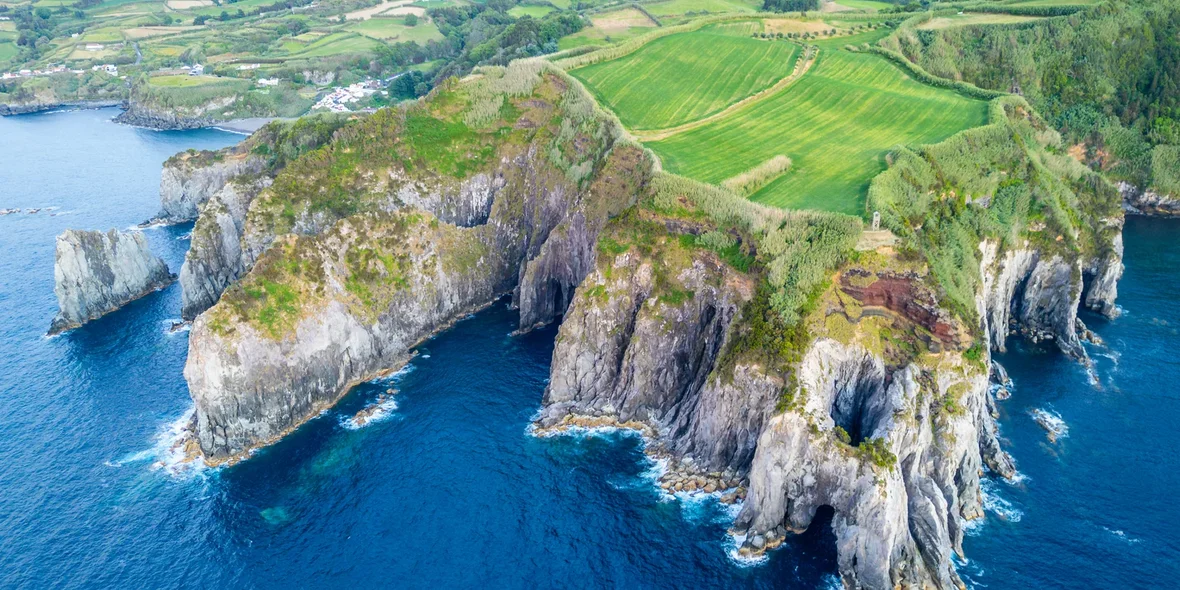
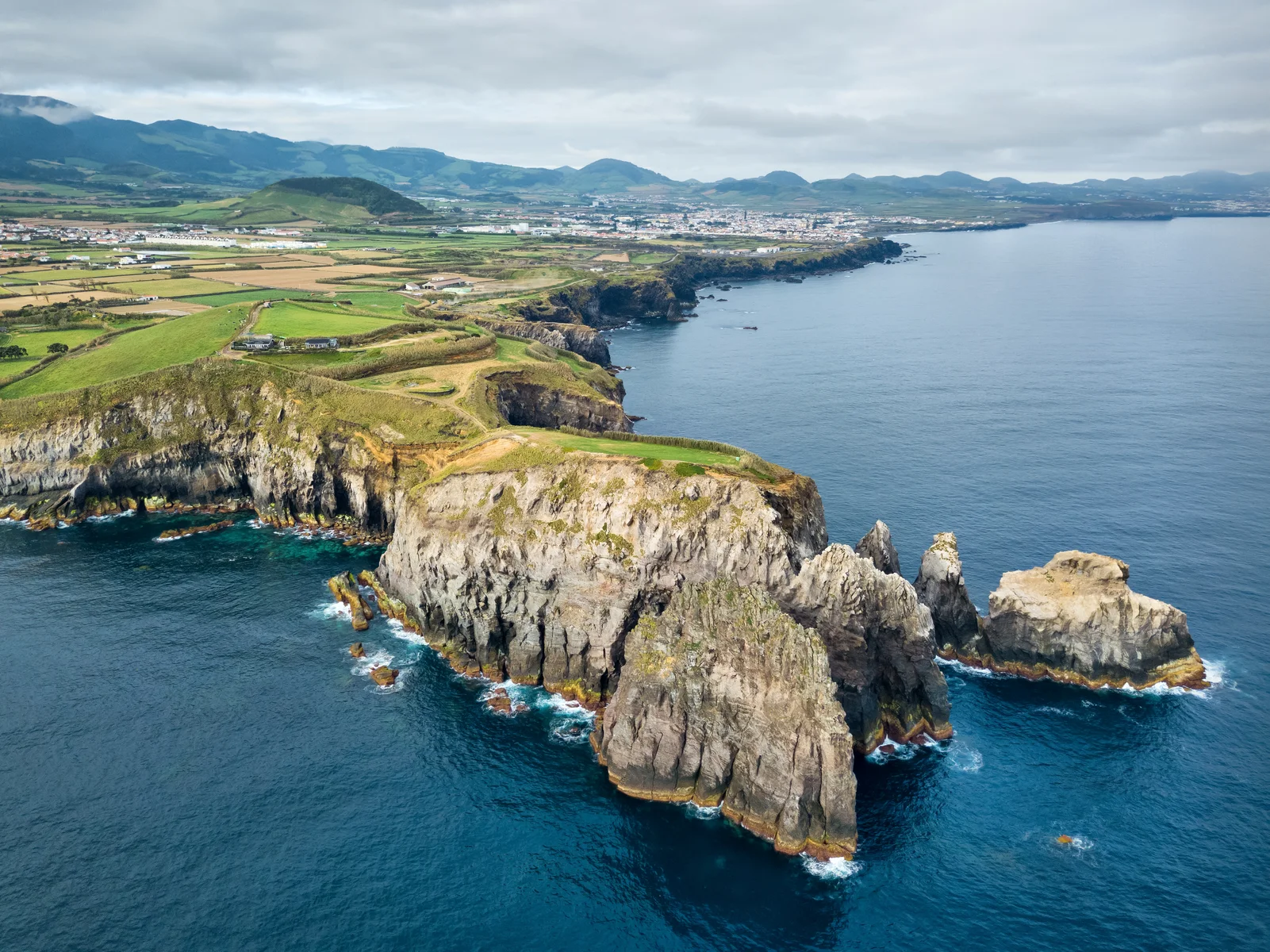
The Azores differ from other regions of Portugal primarily due to their geographic location. The archipelago lies approximately 1500 km from Lisbon. It consists of nine islands, all formed at the junction of lithospheric plates and therefore of volcanic origin. This geological background has shaped a distinctive landscape that includes:
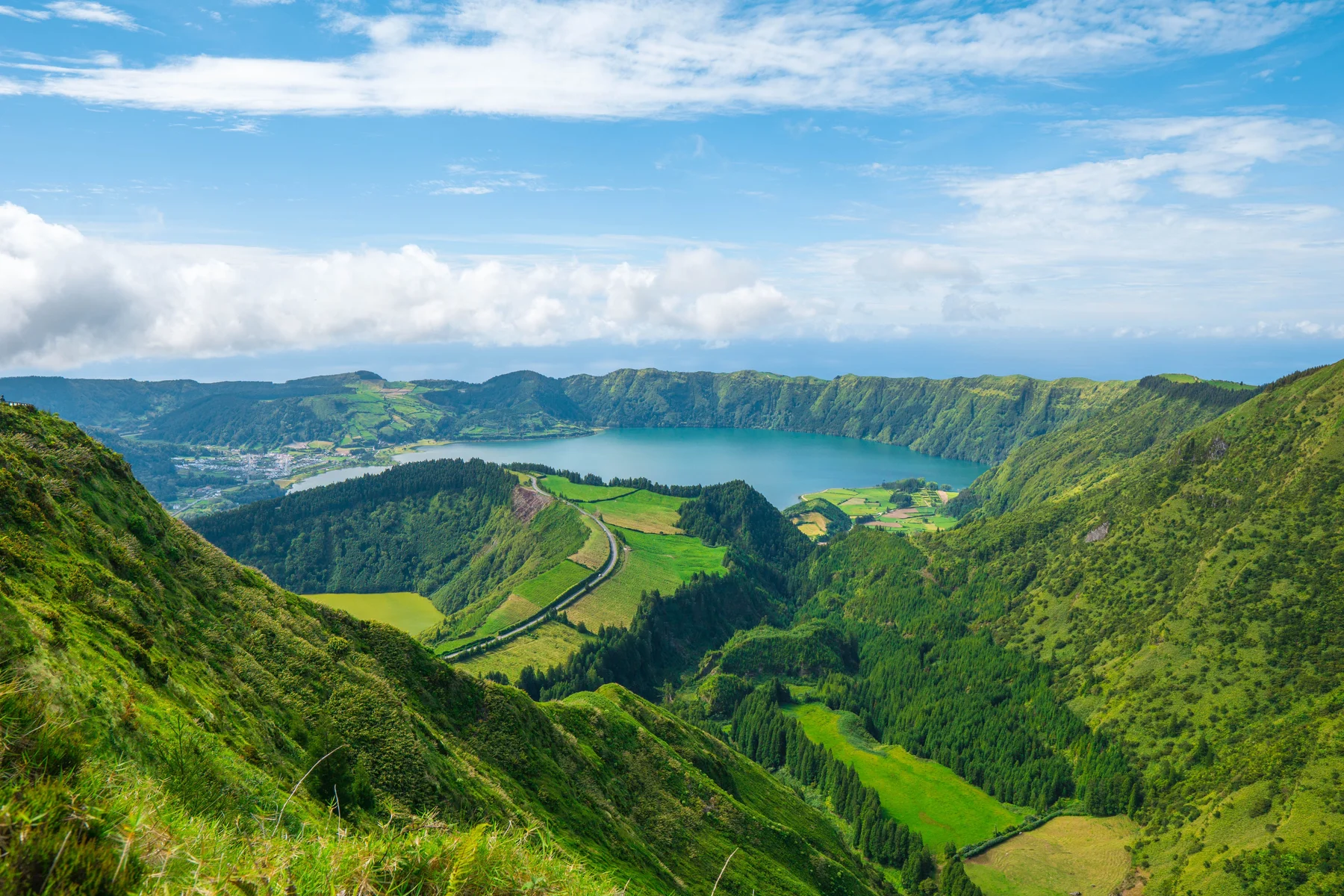
- volcanic calderas, some of which filled with water and became lakes;
- lava fields that created steep basalt cliffs along the coastline;
- thermal springs;
- sharp elevation changes within very small land areas.
The highest point in all of Portugal is Mount Pico. It rises 2351 meters above sea level. The volcano is considered active, although its last recorded eruption occurred in 1720.
The climate is oceanic and humid. There is no pronounced seasonality, and average air temperatures typically remain within 19 to 22 °C. Extreme heat is rare, and even during such episodes temperatures do not exceed 30 °C. Swimming in the ocean is comfortable mainly in summer, when water temperatures reach 22 to 24 °C. In winter, average sea temperatures are around 17 °C.
As mentioned above, the archipelago consists of nine islands. They are conventionally divided into the Eastern group (São Miguel, Santa Maria), the Central group (Faial, Pico, Graciosa, São Jorge, Terceira), and the Western group (Flores, Corvo). Distances between these groups are significant. Travel between islands from different groups can take up to six hours by ferry or about one hour by plane. Below is a brief overview of each island.
- São Miguel. The largest island of the archipelago and home to the regional capital, Ponta Delgada. Its main landmarks are the crater lakes of the Sete Cidades area and the geothermal zone of Furnas with its hot springs. This island receives the highest number of tourists.
- Santa Maria. A quieter island suited for travelers who have already visited São Miguel and are looking for a more relaxed environment.
- Terceira. The second most important island, with the historic center of Angra do Heroísmo. Urban life is more pronounced here, and tourism is focused primarily on cultural heritage rather than natural attractions.
- Pico. An island dominated by the volcano of the same name. Vineyards are located on its slopes, while wineries operate at the base. Tourism often revolves around hiking to the summit and wine tastings.
- Faial. A port island and the main hub for yachting in the archipelago. It is frequently used as a transit point when traveling to other islands.
- São Jorge. An island with a distinctive landscape characterized by steep cliffs and so-called fajãs, which are flat coastal terraces at the base of the cliffs.
- Graciosa. Often described as a quiet island with a rural way of life. Its main natural features are volcanic landforms and caves, but these are not sufficient to attract mass tourism, so visitor numbers remain low.
The list is completed by Flores and Corvo. By Azorean standards, their landscapes are relatively ordinary, which is why they attract little attention from mass tourism. Corvo is visited slightly more often due to its status as the smallest island in the archipelago, but stays there are usually brief.
Tourist Appeal of the Azores
The Azores are particularly attractive as a nature-based tourism destination. Travelers do not come here for classic beach holidays, as such options are already abundant in mainland Portugal and neighboring Spain. Instead, the archipelago attracts visitors interested in:
- hiking along natural trails;
- whale and dolphin watching;
- geothermal areas;
- lakes, waterfalls, cliffs, mountains, volcanoes, and the Atlantic Ocean itself.
The average visitor in the Azores spends more time actively exploring the islands than staying in hotel rooms or visiting entertainment venues. As a result, the core audience consists of travelers aged 30 to 55, mainly couples, small groups, and independent tourists. Family travel is less common, as there are very limited activities specifically designed for children.
Seasonality in the Azores exists but is relatively mild:
- High season. May to September. Peak tourist numbers and the most favorable weather conditions.
- Shoulder season. April and October. A balance between weather quality and visitor density.
- Low season. November to March. Significantly fewer tourists and more unpredictable weather.
Tourist demand is unevenly distributed across the archipelago, with the largest share concentrated on São Miguel. Most mainland flights arrive there as well. The remaining demand is primarily divided among Terceira, Pico, and Faial, which tourists typically visit for several days. The other islands are niche destinations and cater to a very narrow segment of travelers.
The Azores Real Estate Market
The real estate market of the Azores is structurally dominated by the secondary segment, which accounts for approximately 80–85 percent of all transactions across the archipelago. New construction is constrained by several factors:
- a limited number of development projects;
- complex terrain;
- low population density outside key urban centers.
On the smaller islands of Graciosa, São Jorge, Flores, and Corvo, the primary market is virtually absent, although isolated private projects do exist. At the same time, the renovation and reconstruction of older houses is gaining momentum.
In São Miguel and Terceira, new construction is mainly represented by small apartment buildings of two to four floors, typically comprising six to twenty units. The standard apartment format is T1 to T2, meaning one to two bedrooms, with total areas ranging from 60 to 100 square meters. In coastal areas of São Miguel, detached houses and duplexes for one or two families are also being developed.
Average property prices in the Azores:
|
Island |
Price €/m² |
|
São Miguel |
1900–2600 |
|
Terceira |
1600–2200 |
|
Faial |
1500–2100 |
|
Pico |
1500–2100 |
|
Santa Maria |
1500–2000 |
|
São Jorge |
1300–2000 |
|
Flores |
800–1800 |
|
Graciosa |
900–1800 |
|
Corvo |
900–1500 |
Prices for Flores, Graciosa, and Corvo are indicative only, as limited supply makes it difficult to determine a reliable average.
For investors and second-home buyers, the key factor is not the island as a whole but specific municipalities where demand and premium supply are concentrated. At present, São Miguel and its municipalities clearly lead in this respect.
Property prices in municipalities of São Miguel:
|
Municipality |
Price €/m² |
|
Ponta Delgada |
2,374 |
|
Lagoa (São Miguel) |
2,373 |
|
Ribeira Grande |
1,810 |
|
Vila Franca do Campo |
2,315 |
The highest liquidity and occupancy rates for rental properties are observed in Ponta Delgada. In Terceira, the most attractive city for investment is Angra do Heroísmo, where average prices are around 1,565 €/m². The third leading location is the island of Faial, specifically its main town of Horta, with an average price of approximately 1,537 €/m².
Most in-demand property types:
- Urban apartments. The most liquid segment, typically purchased for long-term rental or permanent residence.
- Oceanfront houses. Particularly popular among foreign buyers. Liquidity is lower than for apartments, and prices vary significantly depending on location and property condition.
- Land plots. Acquired relatively rarely, as not all plots are suitable for development. In addition, they are subject to municipal zoning restrictions and require clearly established ownership rights.
Average short-term rental rates per night:
|
Location |
Price € |
|
São Miguel (Ponta Delgada) |
85–130 |
|
Terceira (Angra) |
75–110 |
|
Pico / Faial |
90–150 |
|
Flores |
90–140 |
|
Smaller islands |
60–100 |
When purchasing property for short-term rental, it is important to note that municipal registration is required. In some municipalities, restrictions are in place on the issuance of new rental licenses.
Long-term rental rates in the Azores:
|
Location |
Rent €/m² |
|
Ponta Delgada (São Miguel) |
12.0 |
|
São Miguel (average) |
11.0–11.5 |
|
Angra do Heroísmo (Terceira) |
9.5–10.5 |
|
Horta (Faial) |
9.0–10.0 |
|
Smaller islands |
7.0–9.0 |
After all expenses, net yields from long-term rentals typically amount to 4–5 percent per year. On the smaller islands, vacancy periods often reduce this figure to 2–4 percent.
Legal Aspects of Purchasing Real Estate in the Azores
From a legal standpoint, buying property in the Azores does not differ from the rest of Portugal. Foreign nationals are free to purchase real estate without restrictions related to citizenship or residency status.
To complete a transaction, the buyer must have:
- a Portuguese tax identification number (NIF);
- a bank account with a Portuguese bank;
- a valid identity document or passport.
Before purchasing, it is essential to verify the legal status of the property, including:
- whether the property is properly registered in the land registry;
- whether its actual characteristics correspond to those stated in the documentation;
- whether there are any encumbrances or liens.
If all checks are satisfactory, the parties sign a preliminary purchase agreement known as the CPCV. This contract specifies the price, deadlines, deposit amount, and termination conditions. The legal formalities are certified by a notary, after which ownership is registered in the state registry. Due to the remoteness of certain islands, parts of the process in the Azores are often carried out through a legal representative acting under a power of attorney.
Associated transaction costs are identical to those applied throughout Portugal. The main expense is the property transfer tax, IMT.
IMT rates by property value:
|
Property value € |
IMT rate |
|
up to 92,407 |
0% |
|
92,407 – 126,403 |
2.4% |
|
126,403 – 172,348 |
5.6% |
|
172,348 – 287,213 |
7.2% |
|
287,213 – 550,836 |
8.0% |
|
above 550,836 |
8.0% plus a fixed amount |
On mainland Portugal, the maximum IMT rate reaches 10 percent. In the Azores, it is capped at 8 percent due to a preferential regional regime that provides a 20 percent reduction. In addition, higher tax thresholds apply when purchasing a primary residence.
IMT rates in the Azores for a primary residence:
|
Property value € |
IMT (Azores) |
|
up to 115,772 |
0% |
|
115,772 – 158,533 |
2.0% |
|
158,533 – 215,688 |
5.0% |
|
215,688 – 287,213 |
7.0% |
|
above 287,213 |
8.0% |
In addition to IMT, a stamp duty (Imposto do Selo) of 0.8 percent of the transaction value is payable. This tax is always applied, and no regional discounts are available.
Other applicable taxes and charges:
- Annual property tax (IMI). Paid annually. The rate is set by the municipality and ranges from 0.3 to 0.45 percent for urban property and 0.8 percent for rural property.
- Rental income tax. The standard rate is 28 percent of net rental income.
- Capital gains tax on sale. If a property is sold for more than its purchase price, 50 percent of the capital gain is included in the taxable base and taxed at 28 percent for non-residents.
Author

I write informative articles about real estate, investments, job opportunities, taxes, etc.