









Areas of Outstanding Natural Beauty in the United Kingdom


In the United Kingdom, there is a distinct category of territories designated not as nature reserves, but as landscapes of exceptional natural and cultural value. These areas are known as Areas of Outstanding Natural Beauty (AONB) and include rural districts, hills, coastlines, and traditional British landscapes preserved in their historic form.
These areas are not closed conservation reserves. Within their boundaries there are villages, farms, and residential properties; people live there permanently and the property market operates as usual. However, land use and development are subject to stricter regulation than in standard administrative areas.
In this article, we explain what Areas of Outstanding Natural Beauty in Britain are, where they are located, and how this status affects property values.
What Are Areas of Outstanding Natural Beauty in the United Kingdom
AONB status in the United Kingdom is a form of landscape protection established under the National Parks and Access to the Countryside Act 1949. The Act introduced a distinction between national parks and protected landscapes intended for permanent residence and economic activity.
Responsibility for managing these areas is assigned to local authorities and national administrations. They also make decisions regarding new residential construction and the reconstruction of existing properties within AONBs.
As a result, Areas of Outstanding Natural Beauty remain living, inhabited territories with an active property market, but the protection regime directly influences the character of development and the pace of change.
Advantages and Disadvantages of Property in AONBs
Purchasing property in an Area of Outstanding Natural Beauty differs from buying a home in an ordinary rural district of the United Kingdom. The differences extend beyond the transaction process itself.
Advantages of Property in AONBs:
- Preserved environment. Restrictions on development and infrastructure expansion mean that the character of the landscape changes slowly. Large-scale housing estates, industrial facilities, and dense new residential quarters are extremely rare within AONBs. This reduces the risk of a rapid deterioration in the surrounding environment of existing homes.
- Supply constraints and long-term price resilience. New construction in AONBs is significantly limited. Planning authority data show that the share of refused applications for new housing in protected landscapes is consistently higher than in standard planning areas. As a result, market supply remains constrained, which over the long term supports the value of existing properties.
- Appeal for long-term residence. AONBs are often chosen by buyers focused on quality of life. This creates relatively stable demand from families, retirees, and second-home purchasers. These areas typically experience fewer sharp price fluctuations than districts undergoing intensive development.
- Architectural coherence. Requirements concerning materials, building scale, and external appearance help preserve the traditional architecture of villages and small towns. For owners, this means a more uniform built environment and a lower probability of disproportionate or visually intrusive structures appearing nearby.
Disadvantages of Property in AONBs:
- Restrictions on construction and alterations. Any changes to a property, including extensions, façade modifications, roof replacement, or installation of external lighting, may require additional approvals. Planning procedures generally take longer and require more detailed justification than outside AONBs.
- Higher maintenance costs. The use of traditional building materials and compliance with architectural standards often increase repair and maintenance expenses. In some areas, preference is given to locally sourced stone, natural clay tiles, or timber elements, all of which are more expensive than standard modern alternatives.
- Limited rental yield. Although demand for property in AONBs remains strong, long-term rental yields are typically below the national average. This is largely due to high acquisition prices and restrictions on short-term letting introduced to protect local communities and housing availability.
- Social and regulatory risks. In many protected landscapes, pressure on the housing market from second-home owners and short-term rentals has intensified. In response, local councils have introduced additional measures, including restrictions on property use and higher local taxation rates. For investors, this creates an element of regulatory uncertainty.
Where Areas of Outstanding Natural Beauty Are Located in Britain
Areas of Outstanding Natural Beauty are distributed unevenly across the United Kingdom. There are 46 AONBs in total, of which 34 are located in England.
Most of them are concentrated in:
- the south-west of England, including Cornwall, Devon, and extensive coastal landscapes;
- the south-east, including the Chiltern Hills, Kent Downs, and Surrey Hills;
- central rural regions characterized by traditional agricultural landscapes.
In Wales there are 4 AONBs, covering approximately one quarter of the country’s coastline. These territories are typically characterized by:
- a lower density of settlements;
- a stricter approach to new development;
- a smaller proportion of second homes compared with southern England.
In Northern Ireland there are 8 AONBs, covering around 20 percent of the region’s land area. They include both coastal landscapes and inland mountainous areas.
The Most Well-Known Areas of Outstanding Natural Beauty in Britain
Although all Areas of Outstanding Natural Beauty have equal legal status, their public profile and market significance differ in practice. Below are several of the most prominent examples.
Cotswolds
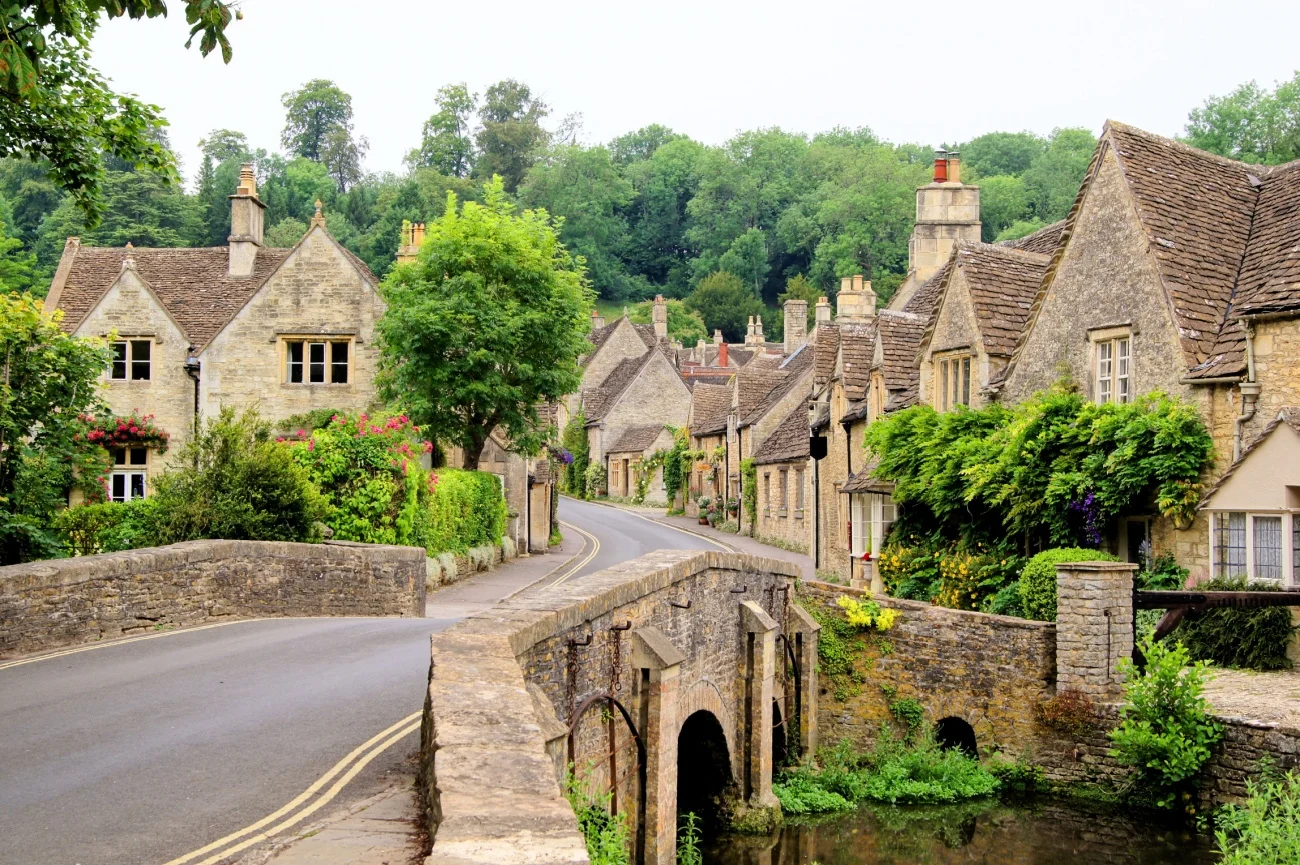
Photo source: revigorate.com
The Cotswolds is the largest AONB in England and one of the most populated. Its area exceeds 2000 square kilometres and includes dozens of villages and small towns. The landscape is defined by limestone hills and rural buildings constructed from locally quarried stone, which have become a visual hallmark of the region.
Proximity to London and Oxford makes the Cotswolds one of the most expensive protected landscapes in terms of residential property values, with price levels consistently above the national rural average.
Jurassic Coast
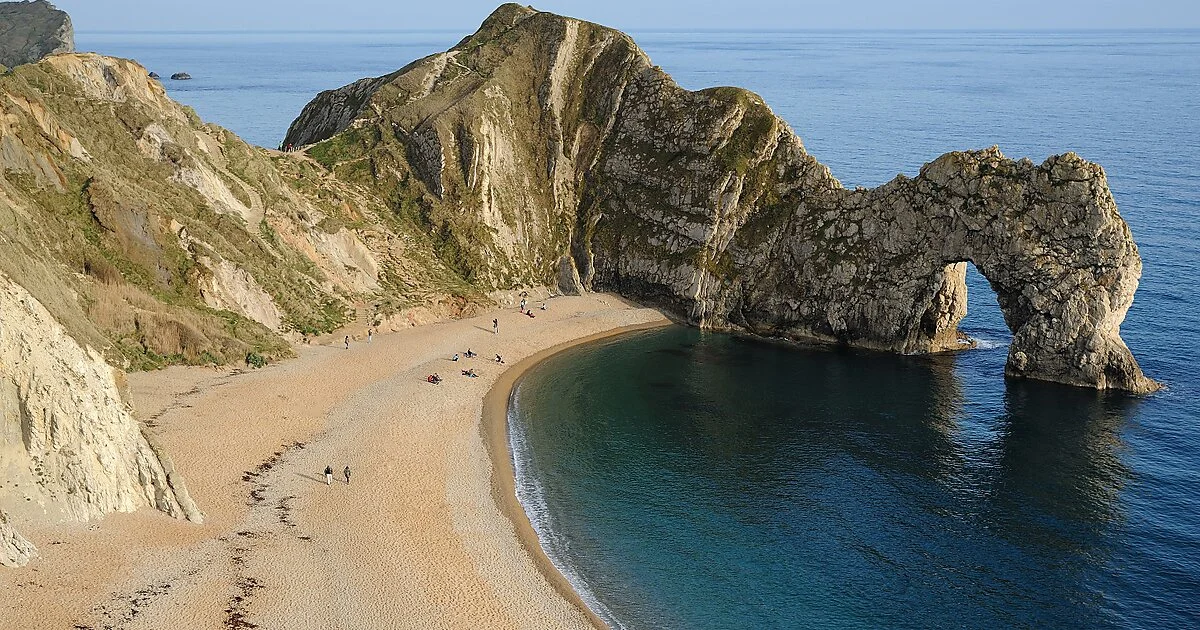
Photo source: blog.vestigio.co.uk
The Jurassic Coast stretches along the shores of Dorset and Devon for 155 kilometres and represents nearly 185 million years of geological history. It is the only AONB in Britain that is also designated as a UNESCO World Heritage Site.
Its visual and scientific value is closely linked to active natural processes, particularly coastal erosion, which continues to reshape the shoreline each year.
Chiltern Hills
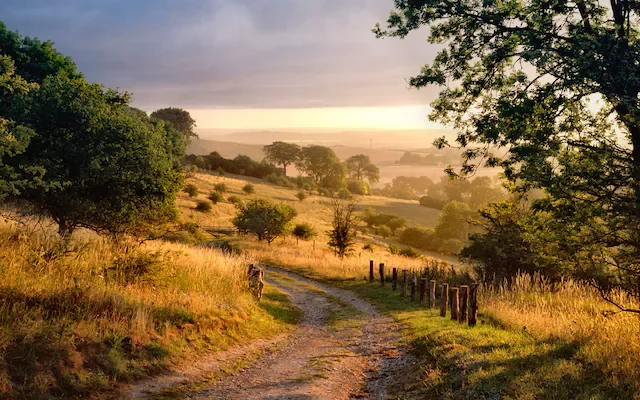
Photo source: ru.advisor.travel
The Chiltern Hills are located to the north-west of London and are considered one of the most accessible AONBs for residents of the capital. More than 40 percent of the territory is covered by beech woodland, while the chalk hills play an important role in supplying groundwater to south-east England.
High transport connectivity makes the region particularly popular among permanent residents and commuters working in London.
Cornwall Area of Outstanding Natural Beauty
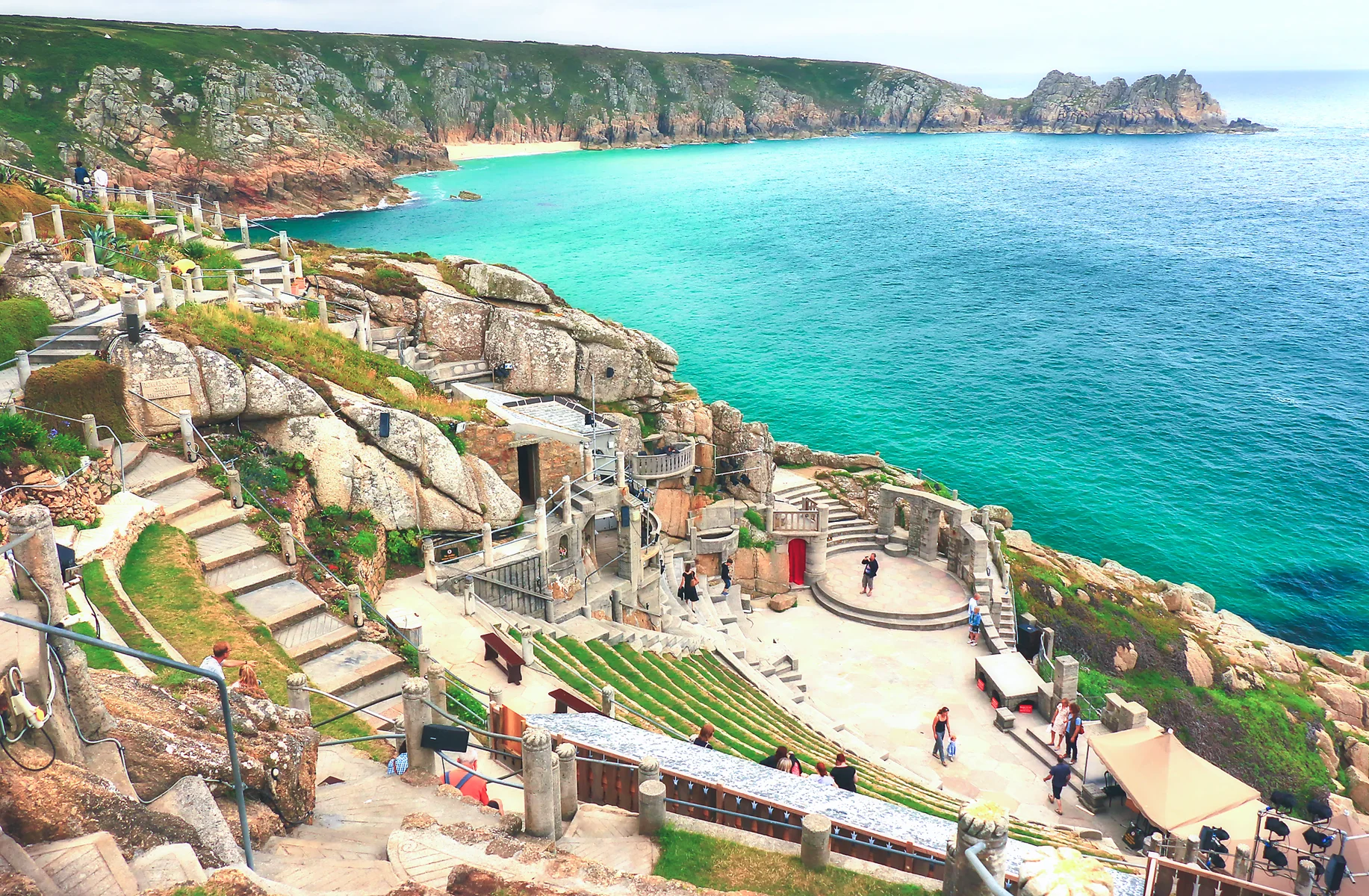
Photo source: britishrambling.com
The AONBs in Cornwall cover a substantial portion of the county’s coastline. Their primary value lies in dramatic coastal scenery, cliffs, and small fishing settlements.
The region faces significant pressure from tourism and second-home ownership, which directly affects property prices and housing affordability for local residents.
Giant's Causeway
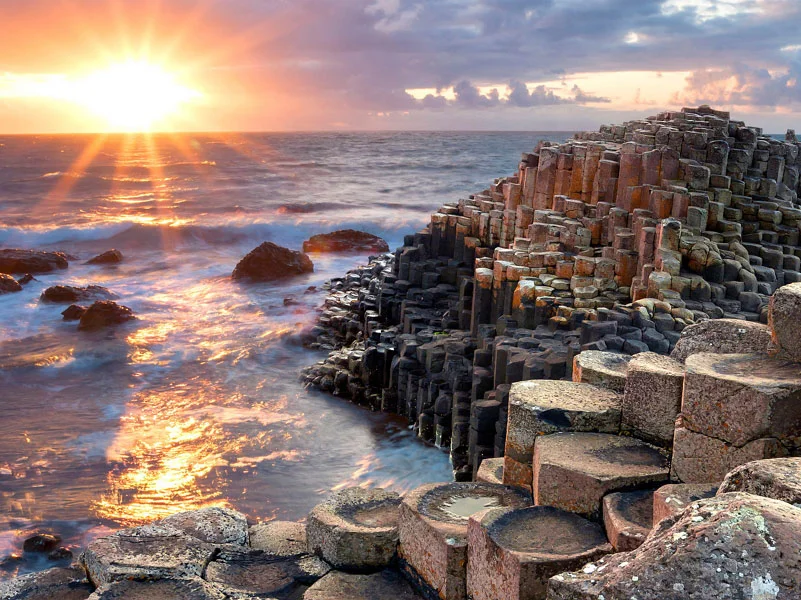
Photo source: travel-more.com
This protected landscape on the northern coast of Northern Ireland is best known for its basalt columns, formed around 60 million years ago as a result of volcanic activity.
The site has high scientific value and is one of the most visited natural attractions in the region, while remaining part of a lived-in and agriculturally active environment.
Property Prices in Areas of Outstanding Natural Beauty
House prices in Areas of Outstanding Natural Beauty are shaped by both general market forces and specific regulatory constraints. As a result, homes in these protected landscapes are typically priced well above comparable properties in standard rural or urban locations.
Average house prices in selected AONBs:
|
Area of Outstanding Natural Beauty |
Approximate Average House Price |
Commentary |
|
Surrey Hills |
≈ £750,000 |
The most expensive AONB. |
|
Chiltern Hills |
≈ £613,000 |
Highly sought-after area within commuting distance of London. |
|
High Weald |
≈ £490,000 |
Woodland and rural landscape in south-east England. |
|
Cotswolds |
≈ £463,300 |
The largest AONB, popular with buyers and tourists. |
|
Kent Downs |
≈ £449,000 |
Rural landscape with access to southern England. |
|
North Wessex Downs |
≈ £435,000 |
Attractive to buyers seeking countryside living. |
|
Dorset Area of Outstanding Natural Beauty |
≈ £350,000 |
More affordable, partly located along the coast. |
|
South Devon Area of Outstanding Natural Beauty |
≈ £327,000 |
Among the more accessible protected landscapes in price terms. |
AONB designation imposes stricter planning and development controls. This limits the supply of new housing and contributes to sustained price levels. At the same time, many AONBs are located within reach of major urban centres, strengthening demand from buyers who work in cities but prefer to live in rural surroundings.
According to research by Nationwide Building Society, the average house price in AONBs in England and Wales is approximately 15 percent higher than comparable properties outside protected landscapes.
The Future of Areas of Outstanding Natural Beauty in the United Kingdom
The approach to managing Areas of Outstanding Natural Beauty in the United Kingdom is gradually evolving. While AONBs were originally conceived primarily as a landscape conservation instrument, current environmental policy increasingly treats them as core components of Nature Recovery Networks aimed at restoring ecosystems and improving ecological connectivity.
Due to their substantial size and relatively intact landscapes, AONBs are now used for:
- restoration of meadows and chalk grasslands;
- protection of pollinators and rare species;
- revival of traditional rural landscape features such as hedgerows and historic shelterbelts.
Despite their importance, including for the property market, no significant expansion of the AONB network is expected in the foreseeable future.
The last new designation was made in 1995. Since then, changes have been limited to minor boundary extensions or mergers of existing areas. Current landscape protection policy focuses on qualitative improvement rather than quantitative growth of AONBs. As a result, housing within these areas is likely to continue demonstrating stable price growth.
Frequently Asked Questions About Areas of Outstanding Natural Beauty
How many Areas of Outstanding Natural Beauty are there in the UK?
There are 46 AONBs in the United Kingdom: 34 in England, 4 in Wales, and 8 in Northern Ireland. Scotland applies a different system of protected landscapes, so AONB status does not exist there.
Are Areas of Outstanding Natural Beauty nature reserves?
AONBs are protected landscapes, but they were designed from the outset to accommodate residential and economic activity. Settlements, roads, farms, and private homes are located within their boundaries, and the property market functions in a standard manner.
Can you buy property in an AONB?
Property transactions in AONBs follow the same legal procedures as elsewhere in the United Kingdom. The key distinction is that land use and building alterations are subject to stricter planning controls aimed at preserving landscape character and visual integrity.
Is it possible to build a new house in an AONB?
The possibility of new construction depends on the specific location and local authority planning policy. Applications for new housing are assessed more rigorously than outside AONBs. Priority is typically given to development within existing settlements, to the conversion or reconstruction of existing structures, and to projects that do not increase the visual impact on the open landscape.
Author

I write informative articles about real estate, investments, job opportunities, taxes, etc.