








Madagascar Real Estate Investment: Insider Interview with CEO Thomas Ottosen on Frontier Market Opportunities in 2026


Madagascar's real estate market remains one of Africa's best-kept secrets — a vast island nation with over 4,800 kilometers of coastline, rapid population growth, and property prices that are a fraction of what investors pay in Mauritius or the Seychelles. Yet despite its potential, the market remains largely informal, decentralized, and challenging for international buyers to navigate without proper guidance.
In this interview, we speak with Thomas Ottosen, founder of Madagascar Invest, a firm specializing in connecting foreign investors with the best Madagascar real estate opportunities. We discuss the current state of the market in 2026, the legal framework protecting international capital through 99-year renewable leases, and where the most compelling opportunities lie for investors seeking high-yield coastal properties or middle-income residential developments. This conversation offers practical insights into one of the Indian Ocean's most undervalued real estate markets.
Madagascar Real Estate Market Overview
— How would you describe the current state of Madagascar’s real estate market in 2026? What are the primary drivers of growth right now?
— Madagascar’s real estate market is best classified as an emerging market, and some would even go so far as to call it a frontier market. In practical terms, this means the market is highly decentralized and largely unorganized. There are no truly centralized real estate portals where buyers can easily browse verified properties for sale. Instead, many transactions still take place directly between buyer and seller, or through informal intermediaries.
In many cases, a public notary is not even used during property transactions. This leads to significant issues, particularly with properties being sold without proper title or clear ownership history. For international investors, this makes caution absolutely essential. One of the core missions of Madagascar Invest is to help address exactly this problem. We always work with licensed public notaries to ensure that every transaction is conducted fully in accordance with Malagasy law.
One of the primary drivers of growth in Madagascar’s real estate market is the country’s strong demographic trend. When I first arrived in Madagascar in 2016, the population stood at approximately 26 million. By 2026, it is estimated to have reached around 33.5 million, representing an increase of roughly 29% in just ten years.
Because the supply of real estate within any country is finite, rapid population growth—combined with a slowly expanding middle class—has a profoundly positive effect on long-term real estate values.
Additionally, Madagascar is increasingly being discovered by international investors as a high-potential emerging real estate market. This is already resulting in noticeable price appreciation in areas that are particularly attractive to foreign buyers, especially beachfront and tourism-focused locations such as Nosy Be, Sainte Marie, and Foulpointe.
— We’ve seen a surge in interest toward the Indian Ocean region. In your opinion, what makes Madagascar a “hidden gem” compared to more established markets like Mauritius or the Seychelles?
Madagascar is a hidden gem that is, in many ways, hiding in plain sight. It is a massive country—larger than France and Belgium combined—yet it remains significantly underdeveloped, even when compared to its island neighbors, Mauritius and the Seychelles.
Mauritius and the Seychelles are both very small countries by comparison. While they certainly offer attractive beachfront real estate opportunities, Madagascar offers similar coastal characteristics on an entirely different scale—and at far lower price points.
The real estate sectors in Mauritius and the Seychelles are far more mature and developed, but that also means prices are significantly higher and growth potential is generally more conservative. Madagascar, on the other hand, offers international investors the rare combination of scale, affordability, and long-term upside, which is increasingly difficult to find in today’s global real estate markets.
— Which sectors are currently showing the most resilience: luxury residential, mid-scale real estate, or commercial real estate?
— Madagascar does have a nascent luxury residential market, particularly in upscale and internationally oriented locations such as Nosy Be, where European capital is increasingly present. Demand for high-end villas and luxury residences is clearly rising, making this a segment worth monitoring closely.
Commercial real estate remains strongest in Madagascar’s major urban centers, particularly in Antananarivo, the capital, and Tamatave (Toamasina), the country’s main port city.
That said, the segment where Madagascar truly stands out is middle-class residential real estate. Many international investors are drawn to Madagascar precisely because it allows them to invest with relatively modest budgets. This aligns very well with domestic demand, as Madagascar’s middle class continues to grow. For this reason, middle-income residential housing appears to be the most resilient real estate sector in Madagascar over the next 10 to 20 years.
— Foreign investors often worry about land ownership laws in Madagascar. Could you clarify the benefits of the 99-year lease (Bail Emphytéotique) and how it protects international capital?
— Foreign investors of any nationality are allowed to acquire property in Madagascar through a 99-year renewable lease (bail emphytéotique). In practice, this leasehold structure allows the investor to exploit the property in almost exactly the same way as a freehold title.
The leaseholder may build on the land, develop it, sell it, or transfer it to heirs. The lease can be passed down to children, who retain full rights to the property. When the 99-year term expires, it can be renewed for a nominal administrative fee.
In everyday use, there is no practical difference between a 99-year lease and a freehold title, other than the fact that the lease is time-limited. As such, it offers strong legal protection for international capital while remaining fully compliant with Malagasy law.
Returns and Investment Opportunities by Budget
— What is the typical Return on Investment (ROI) for rental properties in prime locations like Nosy Be or Antananarivo this year?
— ROI varies significantly depending on location, property type, and occupancy rates. In prime tourist destinations such as Nosy Be, well-located short-term rental properties can typically generate gross rental yields in the range of 10–20%, assuming reasonable occupancy levels.
In Antananarivo, where demand is more business- and long-term–oriented, rental yields tend to be slightly lower but more stable, often ranging between 8–12% gross. Net returns will depend on operating costs, management structure, and taxation, but compared to many developed markets, Madagascar still offers very competitive cash-flow potential.
— If an investor has a budget of $200,000 to $500,000, what kind of “exclusive opportunity” could you point them toward in today’s market?
— With a budget in this range, I would generally recommend looking at real estate in established tourism hubs such as Nosy Be, but also in slightly less saturated markets like Sainte Marie and Foulpointe, which remain off the radar for many investors.
Nosy Be is certainly the safest real estate market in Madagascar from a risk perspective. However, many emerging market investors are not necessarily looking for safety alone—they are looking for opportunity. In my opinion, the most compelling opportunities are rarely found in the most talked-about locations.
By Malagasy standards, Nosy Be has already become somewhat saturated, with prices rising sharply for the most attractive properties. The strongest upside potential is often found in up-and-coming coastal areas, where beachfront land can still be acquired at relatively modest prices.
Acquiring a larger beachfront property in such an area—either for future development or long-term holding—is, in my view, one of the most attractive real estate strategies in Madagascar today.
— Could you highlight one or two standout developments currently in your portfolio that exemplify the future of Malagasy luxury living?
— When people think about real estate development in Madagascar, they usually think of beachfront projects—and for good reason. Madagascar has one of the longest coastlines in Africa, with approximately 4,828 km of coastline, and some of the most beautiful and affordable beaches in the world.
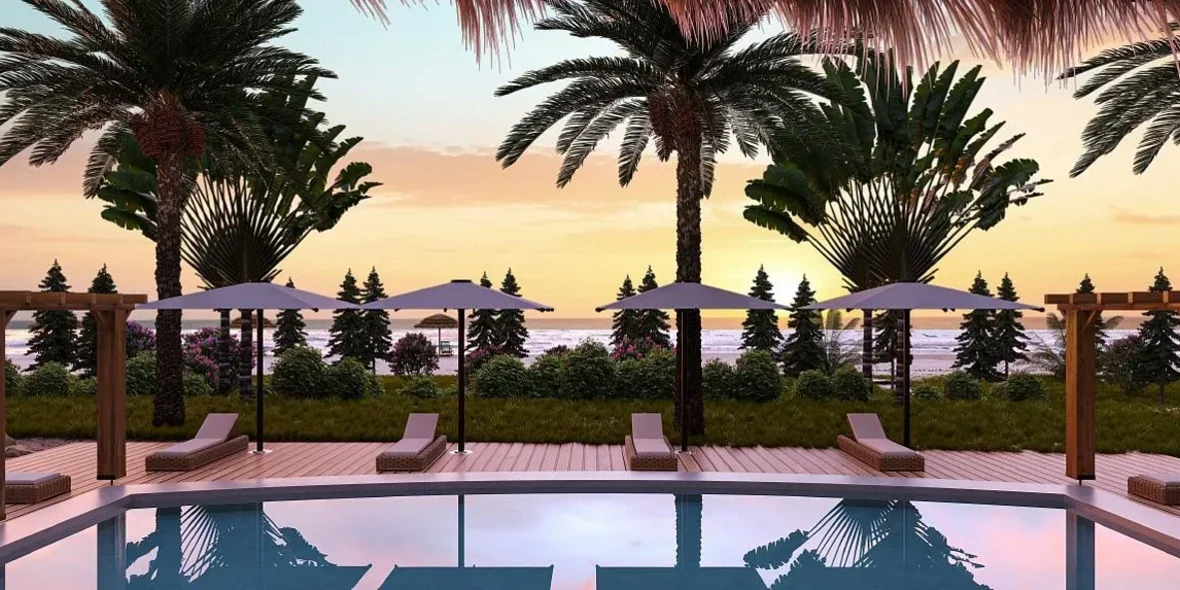
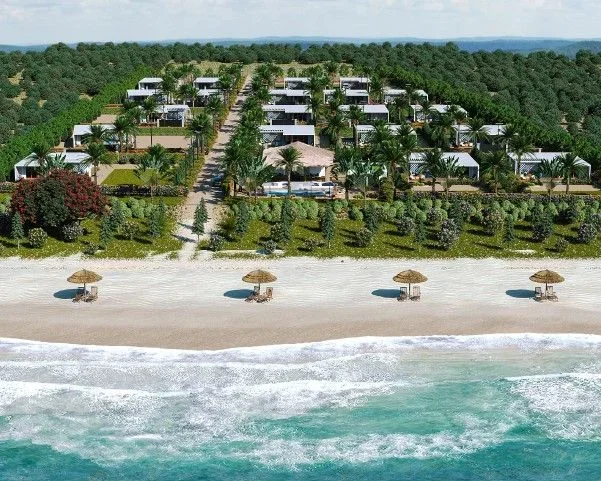
One notable beachfront development is Lechia Estate, located near Tamatave on Madagascar’s east coast. The project combines luxury beachfront living with close proximity to the country’s second-largest city and its full range of amenities.
For investors seeking a more remote and nature-oriented experience, Arven Estate, located further north near Mahambo, offers a more affordable entry point into a beachfront development. This project focuses on proximity to nature and an international community, while still offering direct beach access.
Regardless of the type of development a client is interested in, Madagascar Invest works closely with each investor to identify the most suitable opportunity for their specific goals.
Risk Mitigation Strategies and Future Market Outlook
— What are the most common pitfalls for first-time investors in the region, and how does your team help mitigate these risks?
— The most common pitfalls are similar to those found in many frontier and emerging real estate markets: scams are common, documentation is often incomplete or difficult to verify, and identifying quality opportunities requires strong local knowledge and presence on the ground.
Madagascar Invest mitigates these risks by acting as a trusted intermediary between local sellers and international buyers. We verify all properties through licensed public notaries, guide clients through each step of the transaction, and manage the process until the buyer has a secure legal title. In addition, we assist eligible investors with residency by investment in Madagascar.
— Looking ahead, where do you see the Madagascar real estate market in the next five years? Is there anything a savvy investor should know right now?
— Over the next five years, I expect Madagascar’s real estate market to become more structured, more transparent, and increasingly international. While it will remain an emerging market, professional players will continue to enter the space, especially in tourism-driven and residential sectors.
One key point savvy investors should understand is that Madagascar rewards those who move early and take a long-term view. The combination of population growth, limited formal housing supply, vast coastal land availability, and still-low entry prices creates a compelling asymmetric opportunity.
For investors willing to navigate a frontier market with the right local partners, Madagascar offers something that is increasingly rare globally: real assets, real scarcity, and real upside.
Author

I am responsible for editorial work. I write expert interviews and guides.