









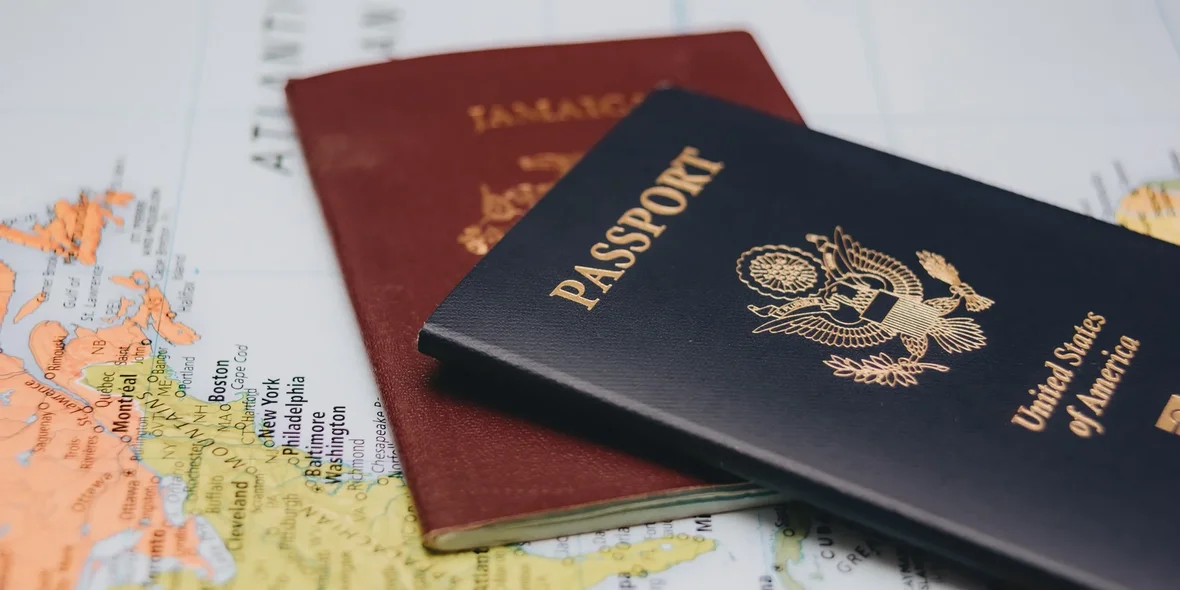
How to Travel with Two Passports of Different Countries


Thanks to globalization, the number of people with dual or multiple citizenships has increased worldwide, currently making up 5-7% of the adult population. Various countries are expanding naturalization programs, offering passports to investors, skilled professionals, and through other schemes.
At the same time, travelers face more complex visa regulations. The EU is tightening border controls, the UK is enforcing stricter visa requirements for citizens of certain countries, and the US is introducing additional criteria for participants in its visa-waiver program.
This is where a second passport comes in handy: one document may offer visa-free access to the Schengen Area, while the other may provide entry to the UK or the US. However, these advantages only work when the traveler understands which passport to use and when.
In this article, we discuss when to use a second passport and where it may not be recognized at all.
Attitudes Toward Dual Citizenship in Different Countries
Countries can set their own legal rules, which determine which passport should be used within their borders. Broadly speaking, countries can be divided into three groups:
- Countries fully recognizing dual citizenship. These include most EU countries, the UK, the US, Canada, Australia, Israel, Turkey, and Caribbean nations. Such countries do not restrict citizens’ rights but require compliance with their own entry and exit rules.
- Countries partially recognizing dual citizenship. For example, Germany used to require new citizens to renounce their previous citizenship (with exceptions for EU countries and Switzerland), but as of 2024, the policy has been relaxed.
- Countries not recognizing dual citizenship. This group includes Saudi Arabia, China, India, Indonesia, Kuwait, Kazakhstan (except in rare cases), and some African countries. In these jurisdictions, holding a second passport may be considered invalid, and attempting to enter or exit using a different document could be seen as a legal violation.
Most countries (including the US, UK, Canada, and EU member states) require their citizens to cross borders using only their passports. This is a legal obligation, not just a recommendation, as a person is considered a citizen of a country when on its territory. Entering or exiting with a foreign passport may be interpreted as an attempt to conceal citizenship status.
Migration systems in various countries track not only passports but also a person’s identifying data: name, date of birth, country of birth, biometric data, visa history, and border crossings. Therefore, it is not permissible to use one passport to bypass restrictions imposed by another.
Which Passport to Use for Departure and Entry
The logic here is straightforward: you must depart from your country of citizenship using the passport of that country, even if you have a second passport with a more advantageous visa regime.
If a person resides in a country where they are not a citizen, the passport used for departure should be the one through which the visa, residence permit, or any valid passport with residency authorization was issued.
The airline checks the passenger's right to enter the final destination because if entry is denied, the carrier is responsible for returning the passenger at their own cost. Therefore, the passport of the country you are traveling to should be presented during check-in and boarding.
Examples:
- Traveling to Japan. Present the passport that grants visa-free entry or a visa to Japan.
- Traveling to the UK. Use the passport that allows entry without a visa or contains a UK visa.
- Traveling to the Schengen Area. Present the passport that allows visa-free entry or a valid Schengen visa.
For entering another country, use the passport that provides the best entry conditions. For instance, if a person holds Spanish and Argentine citizenship, departing from Barcelona and traveling to the US, they will use their Spanish passport to depart from Spain and show their Argentine passport when checking in at the US airport, as the Argentine passport allows ESTA (visa waiver).
Which Passport to Use for Transit
The transit situation is slightly different. The airline will check the passport provided to verify your right to enter the final destination. Therefore, if you have two passports, the carrier will choose the one that ensures entry, not just transit.
There are three types of transit:
- International transit without leaving the transit area. The checks are minimal, and the passport doesn’t matter. However, some countries require a transit visa even when staying in the transit area. In this case, use the passport you showed the airline.
- Transit with a transfer between terminals. This involves actual entry into the country, even if it’s for just a few hours. Here, you should present the passport that grants entry, but it may be helpful to show the second passport as well, especially if the booking and entry are based on different documents.
- Overnight stop or long transit with a city exit. If you leave the airport, the full entry regime applies, just like a regular trip. In this case, you need to present the passport that allows you to stay in the transit country.
Risks of Holding Dual Citizenship
Traveling with two passports can often help resolve some migration challenges. However, it is important to consider the potential risks and consequences associated with dual citizenship.
For example, we mentioned that some countries consider it illegal for their citizens to hold a second passport and allow entry only with the local document. In this case, presenting the second passport may lead to:
- Administrative violations.
- Fines.
- Revocation of the visa for the second country.
Additionally, if a country prohibits dual citizenship, the holder of the passport may not be able to receive consular protection from other countries of which they are also a citizen. A clear example is Poland, where holding two passports is allowed, but a person with a Polish passport is regarded solely as a Polish citizen, even if they hold other nationalities. This means they are subject to Polish law, and other jurisdictions cannot be applied to them.
Some countries view holding a second passport as a violation of the law:
- China. China generally does not recognize dual citizenship, and if a person obtains another passport, their Chinese passport will be annulled.
- India. Indian law does not allow full dual citizenship, and if this is discovered, the national document loses its validity.
- Japan. Dual citizenship is permitted only until the age of 22, after which the person must choose one nationality and renounce the other.
Having two passports can sometimes lead to complications if one citizenship restricts entry to the country of the other nationality. In such cases, some countries may prevent entry or even refuse a visa if it is revealed that you hold citizenship from an adversarial country.
For example, if you hold an Israeli passport and attempt to enter a country that does not recognize it, this may be discovered when filling out a visa application. In such cases, it might be better to avoid mentioning the second citizenship if it is not required for the visa or registration process.
The same applies to specific stamps in the passport. For instance, stamps indicating travel to countries under international sanctions (such as North Korea, Iran, Syria, or Iraq) may serve as grounds for entry refusal to countries like the US or the UK, although this is not always the case.
Discrepancies in Passport Data
Travelers with dual passports often encounter situations where personal details do not fully match across documents. This is not always an error, as different countries use varying transliteration standards. However, the requirements for data accuracy have become stricter, and biometric systems can now detect even small discrepancies, which in turn creates problems at border control.
Even a single additional letter can lead to:
- Mismatched booking and passport information.
- The airline's security system identifying the passenger as "another person".
- The need for manual verification, which sometimes results in boarding denial.
The same issues arise when the last names in the passports differ, often due to marriage. The presence of a patronymic in one document and its absence in another can also raise concerns.
Since 2023, most major airlines have implemented automated systems such as Advance Passenger Information (API) and Passenger Name Record (PNR) that verify:
- Exact name and surname match with the ticket.
- Passport number.
- Date of birth.
- Gender.
- Citizenship.
- Biometric data (on specific routes).
If any parameter raises doubts, the ticket will be flagged for verification by security personnel. The officer must ensure that both passports belong to the same person and that no discrepancies appear to be an attempt to conceal identity.
In such cases, it is recommended to carry the following documents:
- Marriage/Divorce certificate. Confirms a change of surname.
- Notarized translation of the name change document. Especially important if the change was made outside the country of citizenship.
- Old passport (if available). Helps trace the sequence of changes.
- Documents for the child's citizenship. Often required when a parent and child have different surnames, especially if traveling with minors.
Passport Validity
Travelers with two passports often assume that having a second valid document automatically resolves issues with an expiring or expired first passport. In practice, this is not always the case:
- Departure from the country of citizenship: It is impossible to leave the country with an expired passport. Countries require their citizens to depart with their own valid passport; otherwise, the airline may deny boarding, even if the second passport is valid.
- Entry into the country of citizenship: Entry is usually possible even with an expired passport. In many countries, a citizen can return home with an expired passport or even without one, as long as they have proof of citizenship or a temporary travel document (emergency passport).
- Transit through other countries with an expired passport: It is impossible to transit with an expired passport. Transit control will mark the document as invalid. The second passport can be used, but only if the booking details match it.
For this reason, most countries require that a passport be valid for at least three months after the planned departure (e.g., the EU). For entry into the US, UK, Australia, and several Asian countries, the requirement increases to six months. The optimal validity period is typically one year.
If a visa is stamped in a passport that is valid for only 2-3 months, in most cases, the visa will need to be transferred to a new passport (through the consulate).
Frequently Asked Questions About Traveling with Two Passports
Which passport should I use for departure?
Citizens must depart from their country using their national passport; this is a legal requirement. The second passport is only useful for transit and entry into another country.
Can I depart on one passport and enter on another?
This is standard practice, as long as the entry passport meets the visa requirements and is listed in the booking. The key is that the route must make sense, and there should be no contradictions in the documents.
Which passport should I show to the airline during check-in?
You should show the passport that grants entry to the final destination. This is the document the airline will use to ensure they aren't held responsible for deporting a passenger.
What should I do if the transit country requires a visa for only one of my nationalities?
Choose the passport that allows transit without a visa. However, it is important that the booking details match the passport you plan to present at the border control.
Can I hide my travel history by using a second passport?
Modern control systems cross-reference data such as biometric information and birth dates, and in some regions, they also check previous documents. Violations are recorded regardless of which passport is presented.
If the visa is in one passport, can I enter with another?
Entry is only allowed with a passport containing a visa. The second passport can be used as proof of identity, but not as a substitute for the visa.
What should I do if the surnames differ between my passports?
Bring supporting documents that confirm the name change, such as a marriage certificate, court order, or notarized translation. Without these, the airline may refuse boarding.
What should I do if one passport is about to expire?
Most countries require that your passport be valid for at least 3–6 months. The second passport does not compensate for this requirement if it is used for entry.
Can I enter a country with a foreign passport if I am a citizen of that country?
Most countries require their citizens to enter and exit using their national passport.
What should I do if the ticket is issued for one passport, but I want to enter with another?
If the details differ, the airline will not allow boarding. The booking needs to be adjusted or created with the passport intended for entry.
Do I need to carry both passports at all times?
During transit, security checks, and layovers, both passports may be required to confirm your identity.
Author

I write informative articles about real estate, investments, job opportunities, taxes, etc.