








Abandoned Cities of the World: Top 8 with Stories and Photos


Abandoned buildings and cities, unlike museums, preserve the past not through curated artifacts but in the exact state in which life within them was abruptly interrupted. Interiors, infrastructure, urban layouts, and traces of everyday life remain unchanged for years and sometimes for decades.
Some of these abandoned structures are demolished and replaced with new developments, while others are left to the mercy of nature. Many such sites become legendary, though for very different reasons.
As a rule, they are linked to a specific turning point: a technological disaster, the closure of a city-forming enterprise, a military conflict, or the forced relocation of residents.
In this feature, we have collected not only iconic abandoned sites that still exist today but also those that disappeared long ago.
Top 8 Famous Abandoned Places in the World
Not every abandoned site becomes significant beyond its local context. Most ruins remain merely the result of decline or an unsuccessful project. Legendary locations are almost always tied to a specific event or decision: an accident, the collapse of an industry, a political agreement, or an armed conflict.
Most importantly, a site becomes legendary when it is talked about and repeatedly revisited. That is exactly what we intend to do.
Pripyat, Ukraine
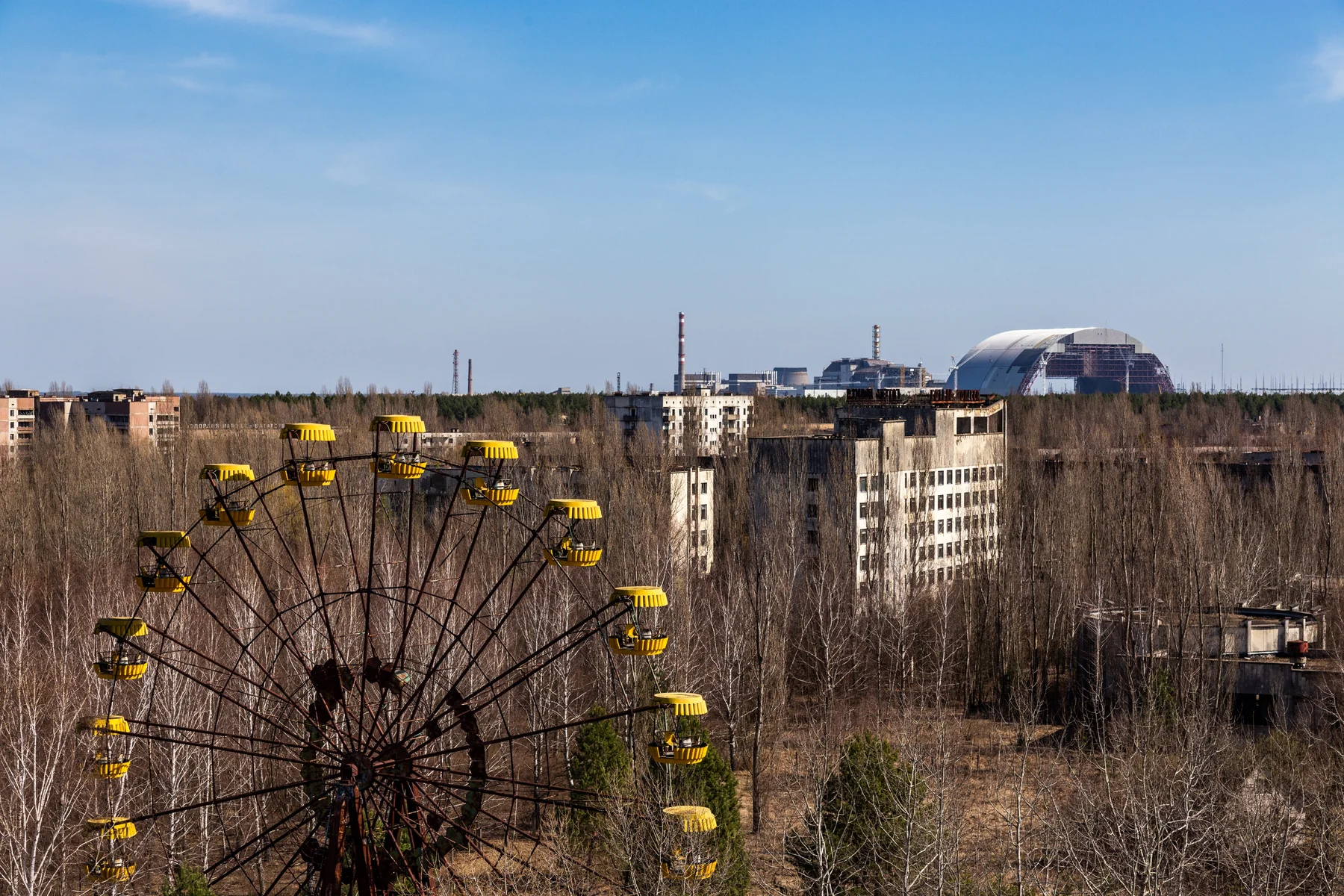
Pripyat was a city of nuclear workers, founded in 1970 to house employees of the Chernobyl Nuclear Power Plant. By the mid-1980s, the population had reached approximately 49,000 people, mostly young specialists and their families. The city offered everything required for daily life: residential districts, schools, kindergartens, a cultural center, and sports facilities.
Pripyat was in a phase of rapid development. New neighborhoods were under construction, an amusement park was preparing to open, and the service infrastructure continued to expand. However, on April 26, 1986, the accident at the fourth reactor of the Chernobyl Nuclear Power Plant completely changed the city’s fate.
The evacuation began the day after the disaster and lasted less than two days. Residents were initially told that the evacuation was temporary, which is why apartments, schools, and public institutions were left filled with personal belongings, documents, and everyday items. After the evacuation, only looters, scientists, and thrill seekers returned to Pripyat.
Today, Pripyat remains uninhabited, along with the surrounding Chernobyl Exclusion Zone. Nearly forty years have passed since the evacuation, and during this time, more than 70 percent of the buildings have fallen into a state of structural disrepair. Full radiation safety is theoretically possible no earlier than in 300 to 500 years, while the most optimistic forecasts suggest a minimum of 210 years.
Despite this, Pripyat has become a site of scientific research and tightly controlled tourism. Tens of thousands of people visit the Exclusion Zone every year, and the city itself has turned into a symbol of an era and of humanity’s vulnerability in the face of atomic energy.
Hashima Island (Gunkanjima), Japan
Hashima is a small island off the coast of Nagasaki. For a long time, it remained uninhabited, but everything changed in the early 19th century when underwater coal deposits were discovered nearby.
To develop these reserves, extensive infrastructure was built, including housing for miners. By the 1950s–1960s, more than 5,000 people lived on an island with an area of less than 0.07 km² (7 hectares). For comparison, a small urban park typically covers about 5–10 hectares.
Despite its extremely limited size, the island had everything required for a full-fledged life: multi-story residential buildings, schools, a hospital, shops, and public spaces. Hashima became one of Japan’s earliest examples of large-scale construction of reinforced-concrete high-rise apartment buildings, designed specifically to withstand harsh marine conditions and frequent typhoons.
The turning point came in the 1970s, when the Japanese economy began shifting from coal to oil. This transition dealt a critical blow to the island’s economy, which depended entirely on mining. In 1974, coal extraction was officially halted, and within the following two months, the entire population left the island.
After the closure, Hashima’s infrastructure remained without maintenance for more than 40 years. A significant portion of the buildings is now in a state of severe structural deterioration due to steel reinforcement corrosion, concrete erosion, and constant exposure to salt-laden sea air.
In 2015, Hashima was added to the UNESCO World Heritage List as part of the “Sites of Japan’s Meiji Industrial Revolution,” granting it the status of a protected historical monument. However, this designation did not lead to any restoration efforts.
Nevertheless, visits to the island continue, although in a highly restricted format. Tourists are allowed to access only a small section of reinforced routes equipped with metal walkways, and only in calm weather. The rest of the island remains closed.
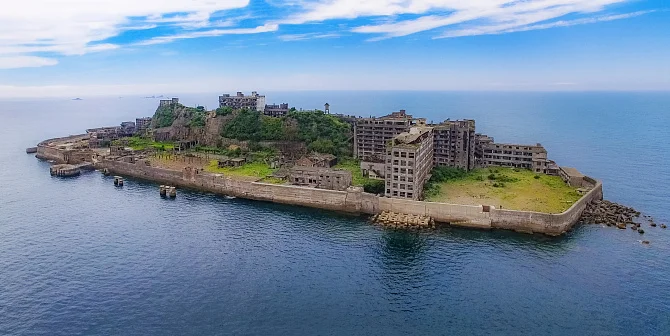
Photo source: redeveloper.ru
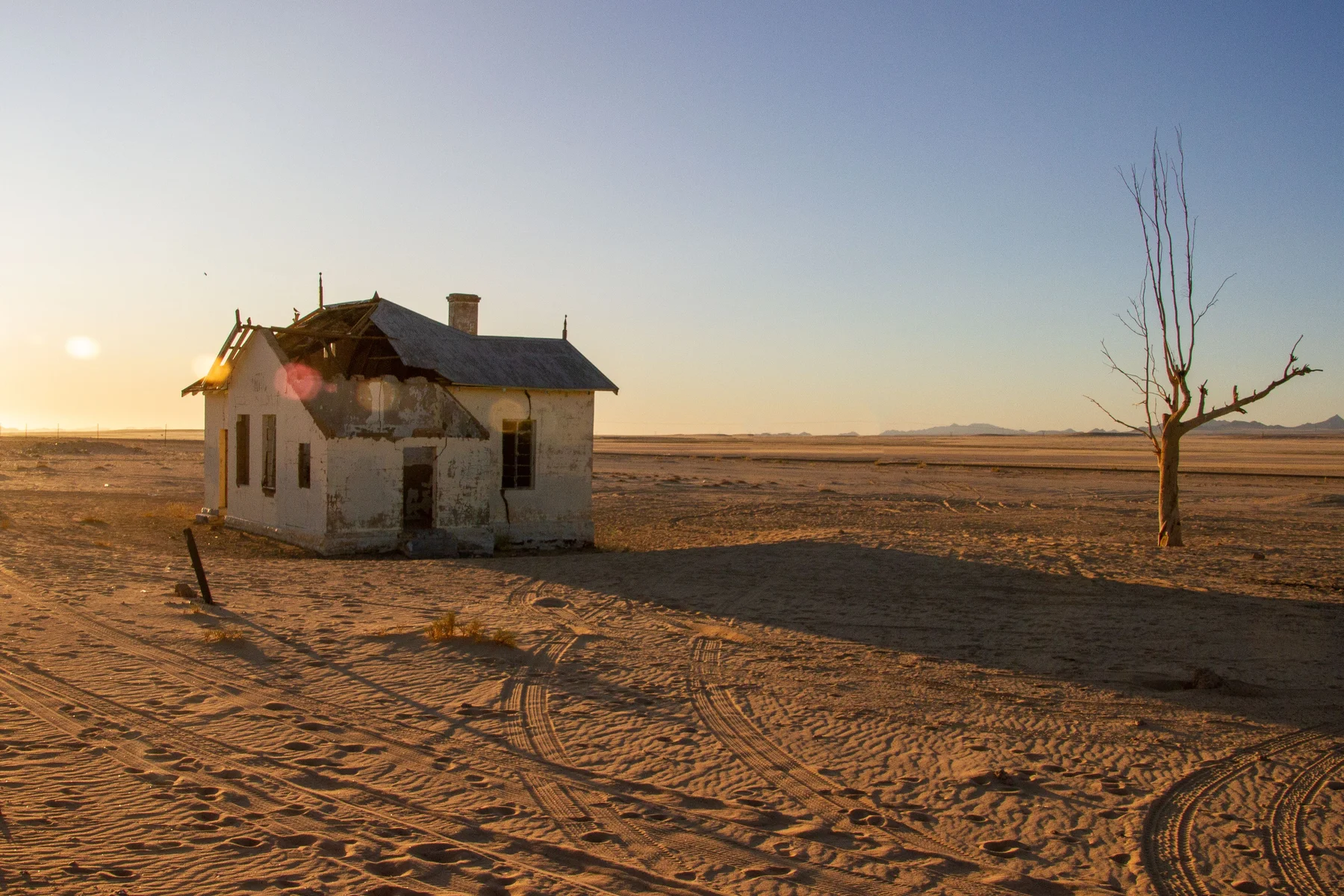
Kolmanskop, Namibia
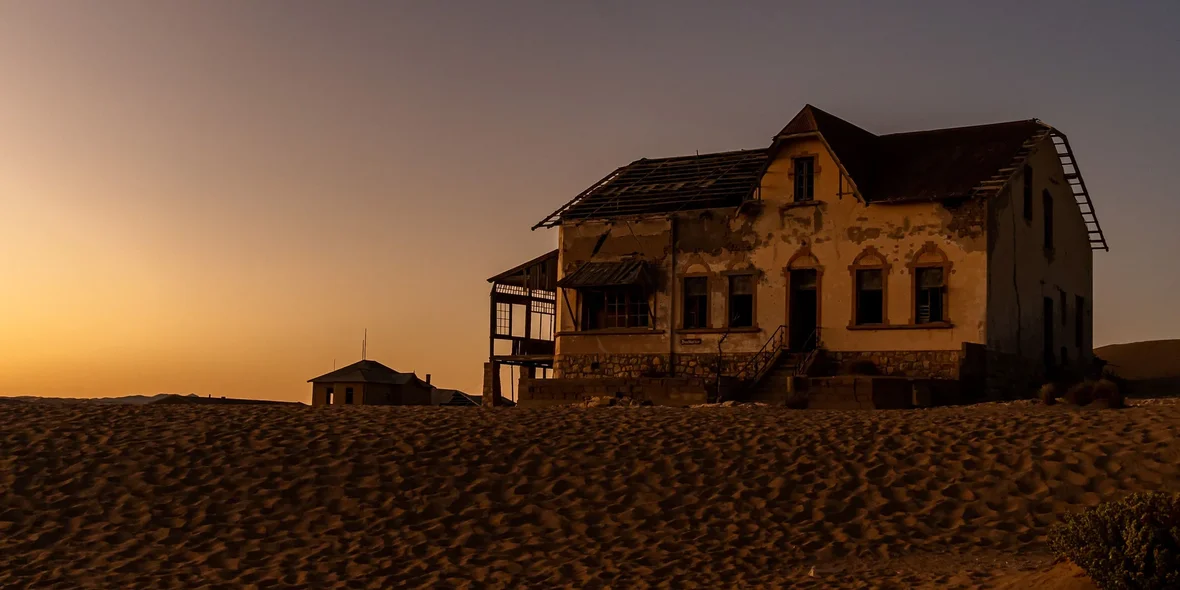
Kolmanskop emerged in the early 20th century as a settlement supporting diamond mining in the Namib Desert. With the start of diamond extraction, significant financial resources flowed into the area, bringing with them extensive infrastructure: residential houses, a school, a hospital, shops, and social clubs.
For the first decades, the settlement prospered. However, more promising diamond deposits were later discovered elsewhere, making mining in the Kolmanskop area economically inefficient and ultimately unprofitable. This triggered a steady outflow of residents, and by the mid-20th century, the settlement was effectively abandoned.
After people left, the desert began reclaiming the town. Sand penetrated buildings through windows and doorways, gradually filling entire rooms. This process created a rare visual phenomenon: the town is not merely decaying, but slowly being buried beneath layers of desert sand.
Today, Kolmanskop exists as a preserved ghost town. Permanent residence is prohibited, yet since the 1980s, it has been open to tourists. The inevitability of the desert consuming the town only adds to its appeal, making Kolmanskop one of the most striking examples of abandonment shaped by natural forces.
Kayaköy, Turkey
Kayaköy is located in southwestern Turkey, near the Aegean Sea coast. Until the early 20th century, it was a large Greek settlement with a stable local economy. The village contained hundreds of stone houses, schools, churches, and public buildings, while the population numbered several thousand residents.
The abandonment of Kayaköy was the result of a political decision in the 1920s, when Greece and Turkey agreed to a compulsory population exchange. The Greek residents were forced to leave the settlement, and subsequent attempts to repopulate it with new inhabitants proved unsuccessful.
Unlike many industrial ghost towns, Kayaköy was not subjected to systematic demolition. Its stone buildings, street network, and terraced layout have remained largely intact and preserved in their original form.
Today, Kayaköy is a protected historical site and part of the cultural heritage zone of Muğla Province. The village is officially uninhabited, but the area is under state control, and any construction or modification activities are strictly regulated.
The stone houses demonstrate a high level of structural resilience and, despite more than 100 years of exposure and multiple earthquakes, many remain in a condition suitable for habitation. The site is open to visitors and attracts tens of thousands of tourists annually. There are no plans to restore the village for permanent living, which has turned Kayaköy into a symbol of forced depopulation.
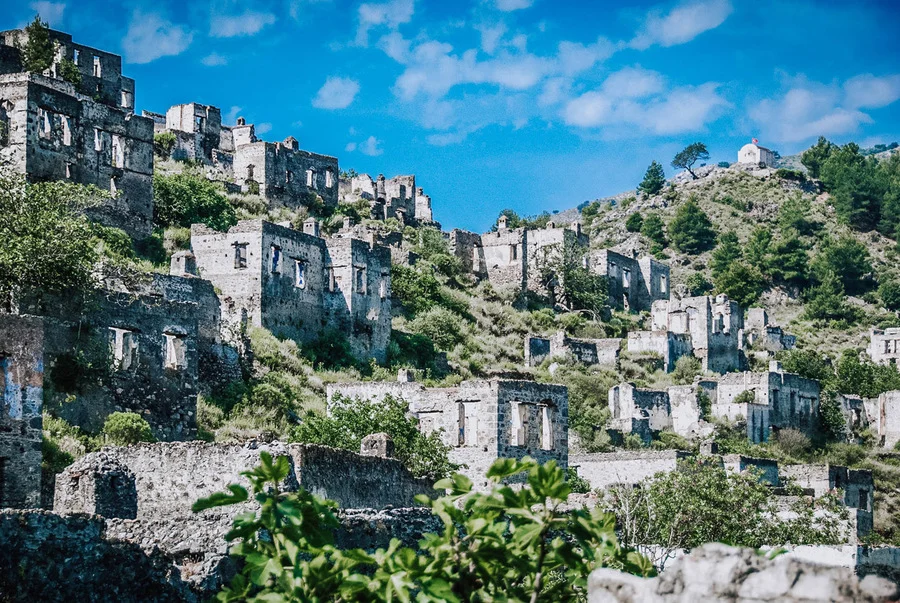
Photo source: perito.media
Tskaltubo, Georgia
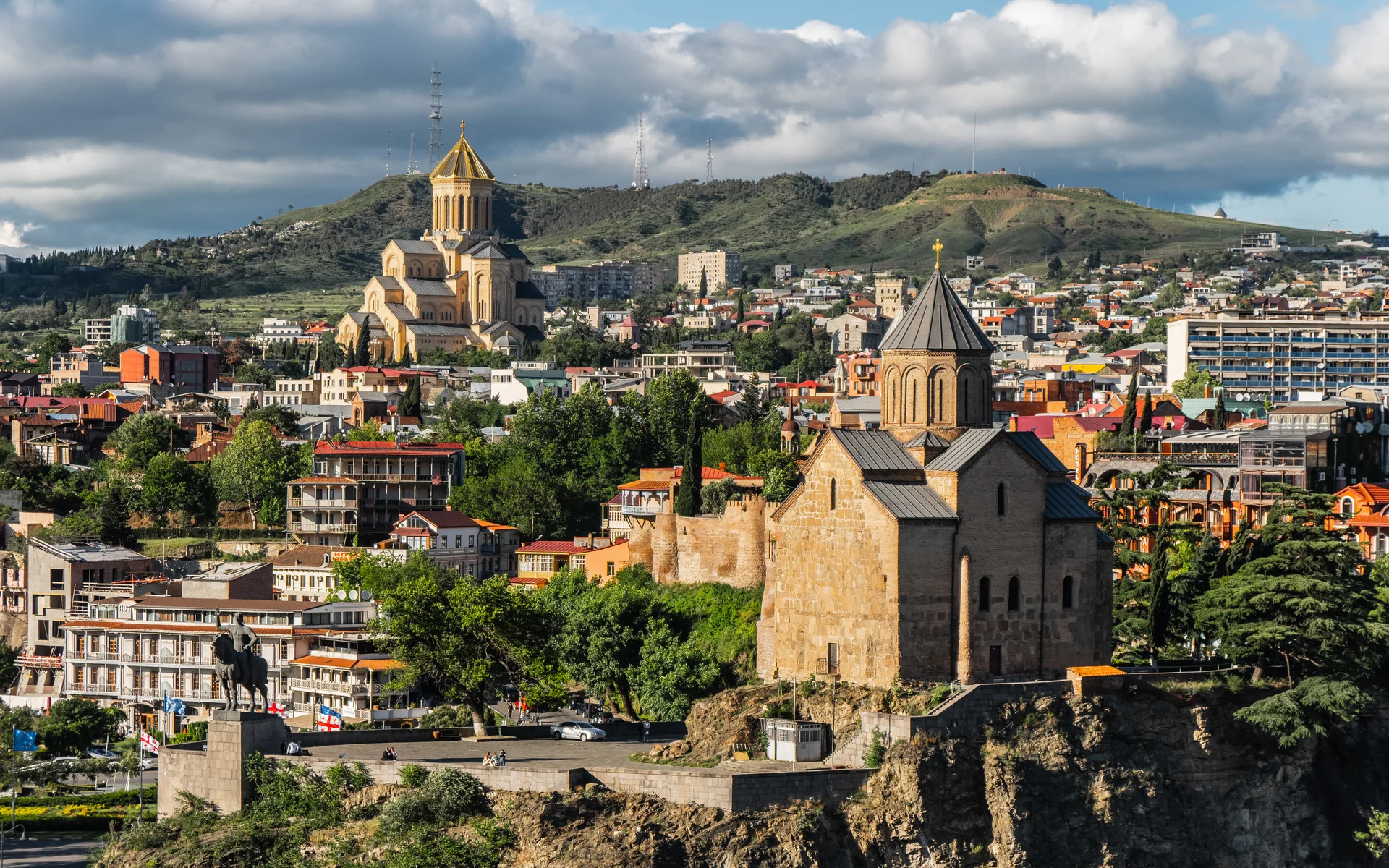
Tskaltubo emerged in the first half of the 20th century as a spa town and reached its peak development during the Soviet period. Its foundation was based on radon mineral springs, around which an extensive system of sanatoriums, parks, and public spaces was constructed. At various times, dozens of medical institutions operated simultaneously, designed to accommodate large-scale organized recreation and rehabilitation.
The sanatoriums of Tskaltubo were not intended to generate commercial profit but to meet public health needs, which is why they were fully state-funded. After the collapse of the Soviet Union, profitability became a priority, and from the early 1990s onward, many sanatoriums began to close.
The town was not completely abandoned, but numerous large sanatorium complexes fell into disuse. Spacious entrance halls, grand staircases, mosaics, and elements of late Soviet interior design have been preserved inside these buildings. The lack of funding for maintenance led to their gradual deterioration.
At present, out of more than 20 major sanatoriums that were operating during the late Soviet period, only a few are fully functional. Most of the buildings remain either conserved or in a state of abandonment.
After 2010, the government launched a privatization program for the sanatorium sector. Under this initiative, some complexes were sold to private investors, but full-scale restoration work has begun at only a limited number of sites.
Oradour-sur-Glane, France
Oradour-sur-Glane is a small village in central France. Before the war, it was a typical rural settlement with residential houses, shops, a school, workshops, and a church. On June 10, 1944, units of the SS entered the village and destroyed everything in their path, including the local population.
After the war, the French authorities deliberately rejected the idea of restoring Oradour-sur-Glane on its original site. Instead, a new settlement was built nearby, while the destroyed village was preserved exactly as it remained after the tragedy.
Today, Oradour-sur-Glane is a state memorial complex and one of the most significant sites of remembrance in France connected with the crimes of the Nazi occupation.
Burned buildings, charred vehicles, tram tracks, the remains of houses, and the church are kept in their original condition to preserve the moment of destruction. Adjacent to the ruins is a memorial center containing archival documents, survivor testimonies, and materials from judicial investigations.
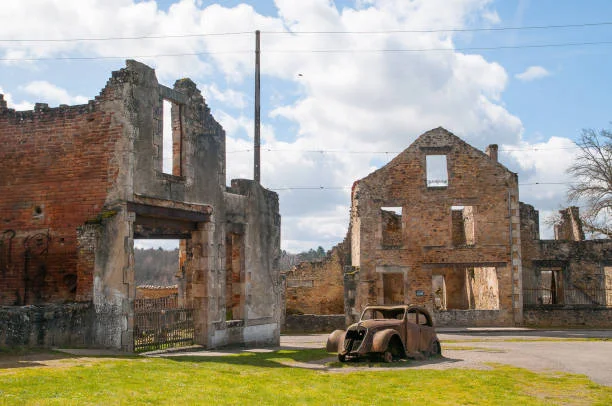
Photo source: perito.media
Pyramiden, Svalbard
Pyramiden was a Soviet mining settlement on the Svalbard archipelago, founded in the first half of the 20th century. It was designed as a model workers’ town beyond the Arctic Circle, complete with residential buildings, a cultural center, a school, a sports complex, and even a greenhouse. At its peak, the population exceeded one thousand residents.
Pyramiden’s economy was entirely dependent on coal mining. As on other islands in the Arctic Ocean, coal here did not require deep excavation and was found close to the surface. This made extraction relatively inexpensive, despite the high cost of transportation.
After the collapse of the Soviet Union, maintaining such a complex logistical system lost its appeal. While mining itself remained technically profitable, it required continuous financial investment in the settlement. As a result, the operation was officially deemed unprofitable, and maintaining the town was considered economically unjustified.
In 1998, a decision was made to completely close the mine and evacuate the population. The departure took place under tight deadlines, and many buildings were sealed, which minimized damage from looting. The low temperatures of the Arctic climate significantly slowed deterioration, allowing a large portion of the interiors to survive in relatively good condition.
Today, Pyramiden is managed by the Russian company Arktikugol and is not entirely abandoned. A small permanent staff, usually between 5 and 15 people, remains on site to provide security, technical maintenance, and tourist services.
Since the early 2010s, Pyramiden has functioned as an open-air museum and a seasonal tourist destination. The development is preserved in a conserved state. Buildings are not adapted for modern residential use but are maintained in stable condition.
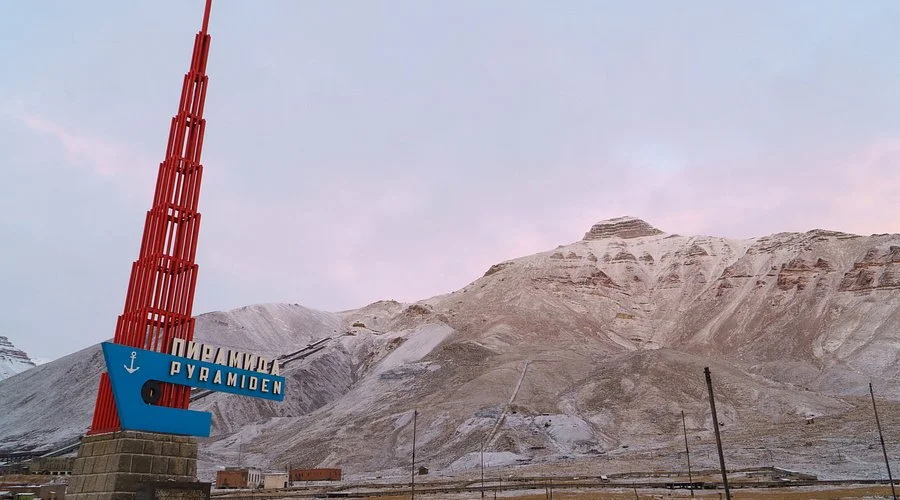
Photo source: tripadvisor.ru
Marineland Antibes, France
Marineland Antibes may not qualify as a classic legendary abandoned site, but the public reaction to its closure was significant. It was not a town or settlement, but a large marine park on the French Riviera, opened in 1970. The complex included an aquarium, a dolphinarium, and orca pools, and for decades it remained one of the most visited marine parks in Europe.
The park’s economic model was built around performance shows featuring cetaceans. In the early 2020s, France approved a ban on the use of dolphins and orcas for entertainment purposes. As a result, Marineland lost its primary source of revenue and ceased operations.
The official closure took place in January 2025, after which the process of relocating the animals began. Most inhabitants, including fish, reptiles, and marine mammals, were transferred to other facilities. However, by mid-2025, volunteers reported that two orcas and a group of dolphins remained on the park’s territory.
The pools had not been cleaned since the closure, and within six months, algae had spread extensively. According to zoologists, this has a negative impact on the animals’ health, compounded by the lack of physical and social stimulation.
Basic care continues to be provided. The animals are regularly fed and examined, but no additional measures are taken. Social media at the time was flooded with appeals to the French authorities to intervene. Nevertheless, by the end of 2025, no final decision regarding the fate of the remaining animals had been made.

Photo source: tripadvisor.ru
Abandoned Sites That No Longer Exist
Not all legendary abandoned places have survived to the present day. The United States holds an informal record for the number of lost symbols of past eras. This is largely due to an approach driven by economic efficiency, where demolishing even architecturally or historically significant buildings is often considered more financially advantageous than preserving them.
Kowloon Walled City, Hong Kong
The only example in this section located outside the United States, the Kowloon Walled City was originally built in the 18th century as a military fort. By the 20th century, the area had evolved into a unique self-governing urban entity.
After the Second World War and a massive influx of refugees, the population grew to approximately 30,000–35,000 people, all living within an area of about 0.026 km² (2.6 hectares). This is comparable in size to a large city square with adjacent green spaces.
Development expanded rapidly upward, turning the area into a dense human anthill. Some residents went weeks without seeing daylight. Formally outside effective government control, the Walled City gradually became associated with unsanitary conditions, illegal construction, and organized crime.
Following an agreement between China and the United Kingdom, control over the territory was restored. Residents were resettled, receiving financial compensation and apartments in new housing developments, and within a year, the entire Kowloon Walled City was demolished. Today, a public park occupies the site, with memorial markers referencing the former city-fortress.
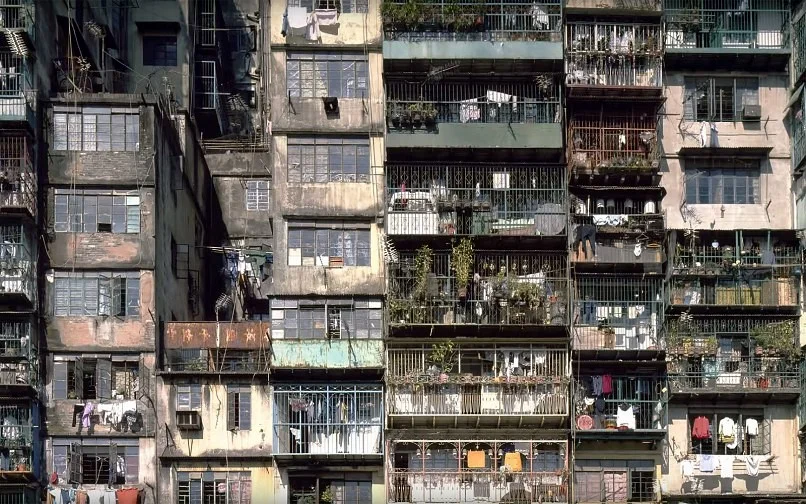
Photo source: poznamka.ru
Pruitt-Igoe, St. Louis
Pruitt-Igoe was constructed in the early 1950s as one of the most ambitious public housing projects in the United States. The complex consisted of 33 identical 11-story buildings and was designed to house approximately 10,000–12,000 residents.
In practice, the project suffered from chronic underfunding. Elevators, heating systems, and utilities frequently failed. Social segregation and the departure of the middle class led to a concentration of low-income residents with limited access to nearby employment. By the mid-1960s, occupancy rates had dropped sharply, while crime and vandalism became persistent problems.
The response was radical. In 1972, demolition of the first buildings began, and by 1976, the entire complex had been destroyed using controlled explosions. Today, the site consists of vacant land, green spaces, and scattered development. Pruitt-Igoe is widely studied in architectural and sociological research as a textbook example of the consequences of cost-cutting in large-scale housing construction.

Michigan Central Station, Detroit
Michigan Central Station opened in 1913 and, at the time of its construction, was one of the most technologically advanced railway terminals in the United States.
The building was designed to handle peak passenger volumes in industrial Detroit, serving both intercity and suburban rail routes. Architecturally, the station combined monumental neoclassical design with advanced engineering solutions of the early 20th century.
Decline began in the second half of the 20th century. Mass automobile ownership, the reduction of passenger rail services, and the crisis of the automotive industry led to a sharp drop in rail traffic.
By the 1980s, the station had become economically unsustainable, and it was closed in 1988. For nearly three decades, it stood abandoned, gradually deteriorating and becoming one of the most recognizable visual symbols of urban decline in the United States.
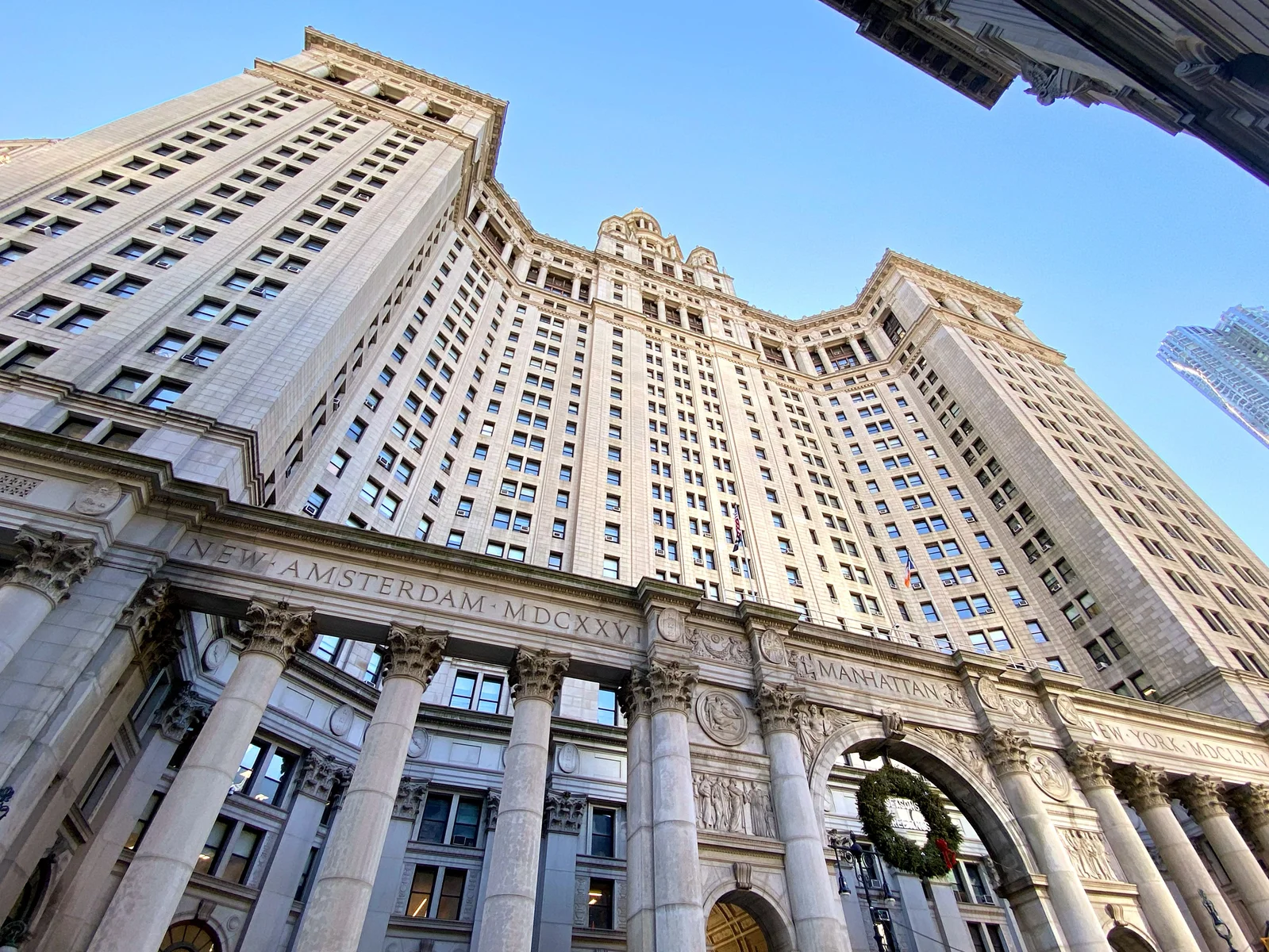
In 2018, the property was acquired by Ford Motor Company, which launched a large-scale restoration project. The renovation combined preservation of the historic exterior with a complete replacement of engineering systems.
By the early 2020s, the former station had been transformed into a multifunctional complex with office spaces, public areas, and venues for urban events. However, after restoration, only the external shell of the historic building remained intact, while the original interior architectural features were entirely removed.
Pennsylvania Station, New York, USA
Pennsylvania Station opened in 1910 and was considered one of the most outstanding railway terminals in the world. Designed in the Beaux-Arts style, the project featured a monumental above-ground complex with granite facades, colonnades, and a vast main concourse inspired by ancient Roman baths.
After the Second World War, the situation changed. Mass automobile ownership and the rapid growth of air travel led to a sharp decline in passenger numbers, while operating such a massive building became economically inefficient.
By the 1950s–1960s, a significant portion of the interior space stood unused, and the station’s owner increasingly viewed the site primarily as high-value real estate in the center of Manhattan. In 1963, the historic building was completely demolished. In its place, an underground transportation hub was constructed, above which the Madison Square Garden sports and entertainment arena was built.
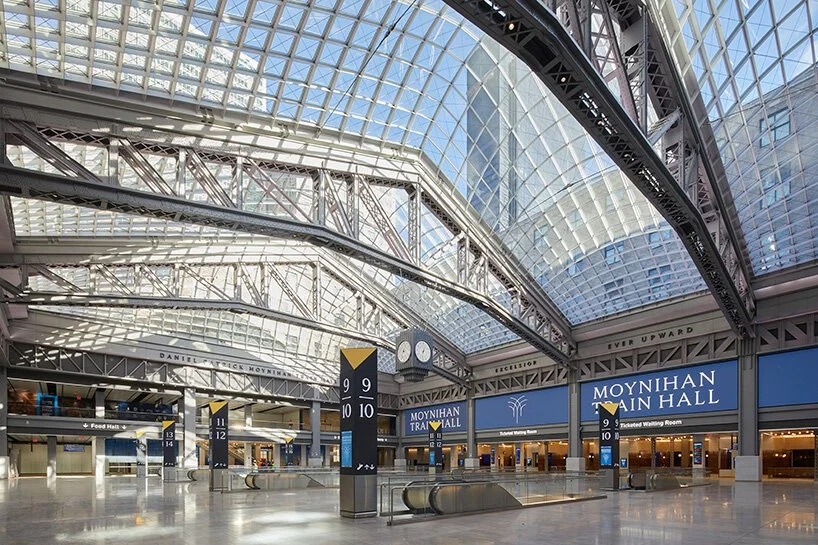
Photo source: redeveloper.ru
Summary
Abandoned places are a direct result of decisions, not coincidence. They are not left behind by accident. They are closed, depopulated, defunded, or demolished because they cease to be economically viable.
Some of these sites survive only because they are left untouched. Climate, isolation, heritage protection status, or simply a lack of interest in the territory allows them to persist into the present. Others disappear entirely. They are dismantled, redeveloped, or transformed beyond recognition.
Even so, they are worth visiting, preferably through legal means, if only to see the other side of everyday life and to understand how easily the familiar reality around us can turn into yet another ghost town.
Author

I write informative articles about real estate, investments, job opportunities, taxes, etc.