









Real Estate in Cambodia: All About the Market, Prices, Profitability


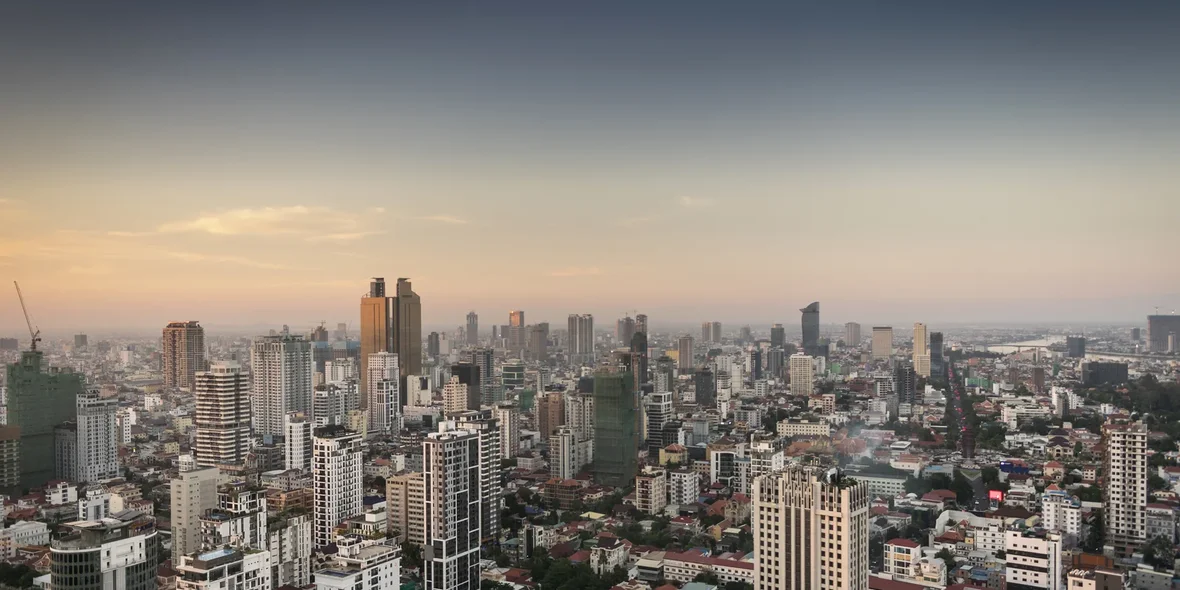
Cambodia is moving away from its status as the “Wild West” of Southeast Asia. Speculative races have given way to fundamental indicators. The new mega-airport has started operations, and the government has presented investors with an unexpected gift — it has postponed the introduction of an important tax. What is happening with prices, yields, and risks in the Cambodian real estate market in 2026?
The country’s real estate market is undergoing a significant transformation. Previously, investors bought property “off-plan,” hoping for quick growth. Now, the quality of management, location, and real rental income are what matter.
Cambodia’s economy has slowed to a “new normal.” According to the Asian Development Bank (ADB), GDP growth in 2025–2026 will be 4.9–5.0%. This is a high figure amid global stagnation, but it tells investors: easy money is over. Stability, however, is here to stay.
The Main News for Investors
The most discussed event of the beginning of the year is the government’s decision to postpone the Capital Gains Tax.
Initially, it was planned that starting from 2026, sellers of real estate would pay 20% of their profit into the treasury. However, to support the market, the authorities officially postponed the introduction of this levy for immovable property until January 1, 2027.
What does this mean? Investors have been given a one-year “window of opportunity.” Throughout the entire 2026, it is possible to realize profits and resell assets under the old rules, without losing one-fifth of the income.
The “Airport Effect” and the Return of Tourists
In September 2025, the long-awaited event happened: the commercial launch of Techo International Airport.
The Class 4F airport (capable of handling Airbus A380) has shifted the development vector of the capital southward. Land and real estate along Hun Sen Boulevard and in Kandal Province have received a powerful driver of value growth.
Tourism has also recovered. In 2024, the country welcomed 6.7 million visitors, surpassing the pre-COVID record of 2019. This directly affects apartment occupancy: the share of short-term rentals via Airbnb and Booking is growing, displacing long-term contracts in tourist areas.
Prices: Now It’s a Buyer’s Market
A unique situation has developed in the housing market. The volume of supply has increased (in Phnom Penh, there are already more than 72,000 condominiums), while demand has become selective. This has led to price stagnation, which plays into the hands of buyers with cash.
In Phnom Penh, three clear price zones have emerged:
- Premium (BKK1, Tonle Bassac): $2,300 – $3,200 per sq.m. This is the “golden mile” of Phnom Penh. Diplomats and expats live here. Prices are high, but the assets are the most liquid.
- Middle class (Toul Kork, Sen Sok): $1,400 – $1,900 per sq.m. Areas popular among affluent local families.
- Promising center (Russian Market / TTP): $1,200 – $1,600 per sq.m A trendy district among youth and “digital nomads.” Optimal balance of entry price and rental demand.
Advice: “Now is the time for tough negotiations. In the High-end segment, developers are ready to offer discounts of up to 10–15% just to close the deal. Don’t be afraid to bargain.”
Yields: Removing the Rose-Colored Glasses
Advertising brochures often promise 8–10% per year. The reality of 2026 looks different, but still more attractive than in neighboring countries.
After deducting management company fees, rental taxes, and depreciation, the net yield (Net Yield) in Phnom Penh is:
- 4.5–6.0% in premium projects.
- 5.5–7.0% in the affordable housing segment.
For comparison: in Bangkok or Ho Chi Minh City, net yields rarely exceed 3–4%. An additional advantage of Cambodia is its dollarized economy. You receive rental income in US dollars, avoiding exchange rate risks typical of the Vietnamese dong or Thai baht.
Risks: What to Watch Out For
Despite the positives, the market has hidden pitfalls that are not mentioned in brochures.
- Sihanoukville. The coastal city still suffers from an oversupply. Despite the government program to “revive” unfinished projects, entering this market as a newcomer is extremely risky.
- Non-performing loans (NPL). The banking sector has tightened mortgage issuance. This means it has become more difficult to resell an apartment to a local buyer on credit.
- Construction quality. Amid high competition, some developers save on materials. Due diligence of the developer and the quality of finishes is mandatory.
Summary
Cambodia in 2026 is a market for a mature investor ready to play the long game. The speculative “hype” has gone, giving way to fundamental yields.
Strategy of the year:
- What to buy: ready apartments (or final stage) in BKK1 or TTP areas.
- Currency: US dollars (main means of payment).
- Goal: rental income + capital preservation.
- Bonus: the opportunity to resell without capital gains tax until the end of 2026.
Investing in emerging markets requires thorough analysis. We always recommend consulting independent lawyers before signing contracts.
Author

I am responsible for editorial work. I write expert interviews and guides.