








What to See in Istanbul: 15+ Main Attractions and a 2-day Itinerary


Istanbul itself is a unique city, built on two continents, three empires, and countless layers of culture. It is relatively young, but its predecessor, Constantinople, existed for more than a thousand years.
As a result, Istanbul today offers a rare view in European capitals, where architecture from the 6th and 21st centuries coexist. Walking down a single street, one can encounter a Byzantine temple, an Ottoman palace, an ancient market, and a modern business center.
In this article, we have gathered the main places you should visit in Istanbul first and have outlined a two-day itinerary.
Main Attractions of Istanbul
Istanbul reveals itself through its symbols. Each of its key landmarks has its own story, capable of explaining how religion, power, culture, and urban development evolved over the course of 1,500 years.
Hagia Sophia
The Hagia Sophia was built in the 6th century during the reign of Emperor Justinian. It was the main cathedral of Byzantium and the largest Christian church. However, after the Ottomans conquered Constantinople, the temple was plundered, its clergy were killed, minarets were added, religious motifs were destroyed or covered with rough plaster, and it was renamed the Hagia Sophia Mosque.
Inside, the grand design of the Byzantine architects is still apparent: the giant dome seems to float in the air, supported by a complex system of pendentive arches. And after the Byzantine mosaics were restored in the 20th century, the interior’s decor shines with new colors.
Topkapi Palace
Topkapi is essentially not just a palace but a whole complex comparable in size to a city. In its time, decisions were made here that determined the fate of lands stretching from Hungary to Arabia.
In the four courtyards, connected by gates and passages, the Ottoman court culture can still be felt: kitchens capable of feeding thousands of people, a treasury holding emeralds and ceremonial blades, pavilions built for the secluded rest of the Sultan.
Blue Mosque
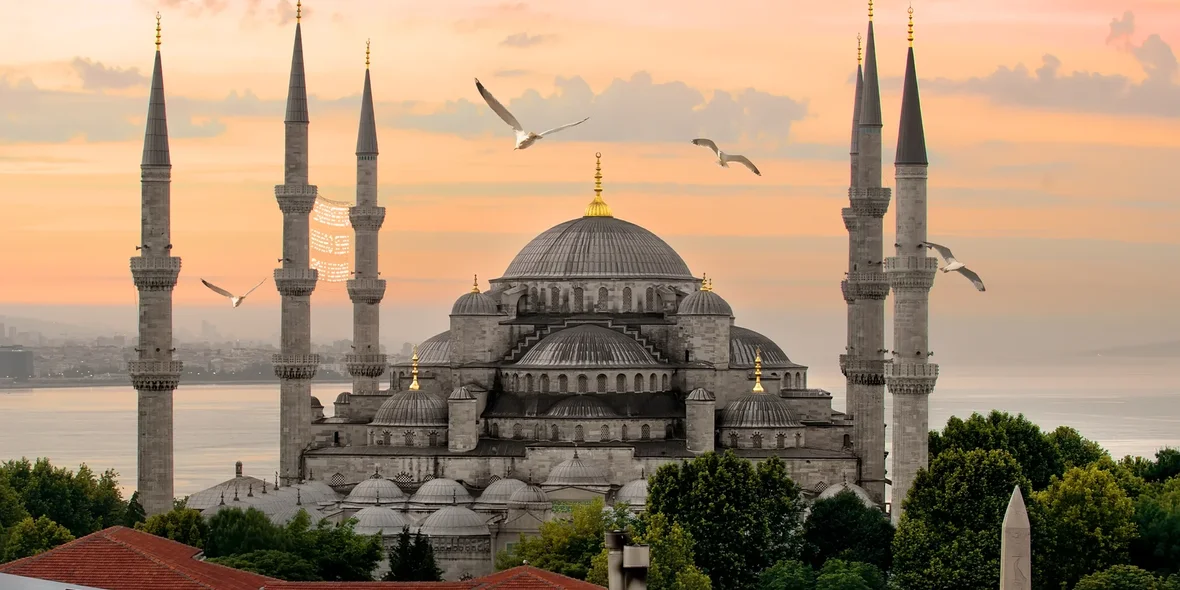
The Sultan Ahmed Mosque (more commonly known as the Blue Mosque) impresses not so much with its size as with its thoughtful beauty. What sets it apart from typical Ottoman architecture is the rare decision to build six minarets instead of the usual four. This later became the defining silhouette of the entire district. Inside, the space is organized in such a way that light pours through hundreds of windows and reflects off the İznik tiles, creating a soft bluish glow.
Though the mosque remains a functioning religious site, it is open to visitors, and here one can see how 17th-century architects attempted to combine monumentality with a sense of lightness.
Although the Blue Mosque and Hagia Sophia are open to tourists, there are certain rules for behavior within:
- Entry is closed during prayer times, especially midday, and tourists must leave during these periods.
- Shoes must be removed.
- Women must cover their heads with a scarf.
- Photography is not always allowed: certain areas are closed during services.
Grand Bazaar
The Grand Bazaar has existed since the mid-15th century and has developed over the centuries, expanding from one quarter to another. It is no longer just a market, but a complex structure that combines craft and trade shops with entire enterprises.
A walk through the inner streets helps to understand that Istanbul has always been a city of merchants. Here, different eras do not replace each other but coexist simultaneously: in one gallery, Anatolian carpets are sold, in the next, contemporary crafts are on display, and just a few turns away, there are spice traders and sellers of traditional sweets.
Transport in Istanbul
When visiting any city, it's important to understand how the local transport system works. In Istanbul, the transport network is well-developed, with metro, trams, buses, funiculars, ferries, and metrobuses (a rapid bus system) connecting areas on different hills and even across continents.
To travel freely around the city, it’s best for tourists to get an Istanbulkart, a universal plastic card for almost all types of transport. It costs 130 TRY (about $3), but it comes empty and needs to be topped up after purchase.
Funds are deducted each time you board the metro, tram, bus, or ferry. The cost of a trip on the main modes of transport ranges around 35 TRY (approximately $0.8–0.9, but due to inflation, it’s better to budget for around $1), though ferry rides are usually more expensive.
You can buy and top up the card at kiosks located at metro and tram stations, ferry docks, and some shops near bus stops. The city strives to ensure that these terminals are accessible in all areas, so refilling the card is usually not a problem.
Which transport to choose:
- Metro and trams are the best choice for quick travel between districts. The lines are constantly being modernized and expanded, with intervals during the day usually not exceeding 5–10 minutes. The T1 tram is a key route for tourists: it connects the Sultanahmet, Gülhane, Eminönü, Karaköy, and Kabataş districts, effectively passing through the main tourist belt. It provides access to both historical landmarks and ferry terminals.
- Ferries link the European side with the Asian side, primarily connecting to the major hub of Kadıköy. The crossing usually takes 15–20 minutes, with views of the Bosphorus and the city offering a special bonus to the trip. Ferries are often the only way to reach the Turkish islands, as not all have designated landing strips.
- Buses and metrobuses are useful for those planning to explore areas outside the tourist center. They cover long distances but are affected by traffic and tend to be overcrowded during rush hours.
- Funiculars connect the lower and upper parts of the hills. For instance, the Tünel funicular links Karaköy with the start of the pedestrian street Istiklal, which is particularly convenient in the afternoon when the area becomes crowded.
First Day in Istanbul
It’s best to start your day in Istanbul by visiting the Hagia Sophia. In the morning, around 9 AM, tourist groups are still gathering, and there are no long queues at the main entrance (which appear after 10 AM).
Inside, you can fully appreciate the scale of Byzantine architecture: the huge dome, suspended on forty ribs, spans over 30 meters in diameter. The preserved mosaics are once again visible for visitors to admire.
Before or after the visit, it’s a good idea to have breakfast nearby. In the Sultanahmet area, small family-owned eateries begin to open around this time. Tarihi Sultanahmet Köftecisi offers simple but hearty dishes such as meatballs and soups.
The average check is usually affordable: between $8 and $12 per person. The service is quick: you can eat, and within ten minutes, you’ll be ready to continue your journey to the Blue Mosque or the Topkapi Palace.
For those who want to take a break and enjoy a panoramic view, Seven Hills Restaurant is a great choice. From its terrace, you can see two of the district’s key landmarks, the Hagia Sophia and the Blue Mosque. The check here is generally higher: around $15–20 for a light meal.
Blue Mosque
The walk from the Hagia Sophia to the Blue Mosque takes no more than three minutes. As you approach the mosque, its proportions gradually become clear: the six minarets form its recognizable silhouette. After the restoration, the interior became brighter, allowing the intricate details of the frescoes and the shades of the blue Iznik tiles to be more visible, which is what gave the mosque its famous name.
It’s always crowded inside, but the morning hours allow you to explore the space without large crowds. Visitors are asked to maintain silence, as the mosque is an active place of worship, which helps create a focused atmosphere. Half an hour is usually enough to explore the mosque.
Hippodrome Square
The square is located right between two of the most important buildings in the area, making it easy to see as just a regular urban promenade. However, this is the very place where the events of ancient Constantinople’s history unfolded.
Today, several key elements of the old Hippodrome remain. The Obelisk of Theodosius (an ancient Egyptian monolith that is over 3000 years old) stands on a marble pedestal, adorned with reliefs depicting the Byzantine court.
Nearby is the Serpentine Column, originally from Delphi, which served as a symbol of Greek victory over the Persians. The crown of the modern part of the square is the German Fountain, a gift to the city from German Emperor Wilhelm II.
Topkapi Palace
From the Hippodrome, it’s a 10–12 minute walk to the entrance of the palace, passing through Gülhane Park. For over four centuries, Topkapi was the political center of the Ottoman Empire, and its grounds resemble a small city within a city.
The first courtyard greets you with a spacious square and massive gates. The second courtyard is more varied: ancient kitchens, enormous copper cauldrons, and a ceramics museum give insight into the scale of palace life. The main treasury holds the famous jewels, including the emerald-handled dagger of Sultan Mahmud I and diamonds.
Without visiting the Harem, a tour of the palace takes about two hours, including a short lunch break. Nearby, there are eateries serving traditional cuisine, and a popular option is the historic Konyalı café.
Grand Bazaar
After the palace, it’s convenient to take the T1 tram from the Gülhane stop to Beyazıt; in about five minutes, you’ll arrive at the Grand Bazaar. This is a place where trade has been conducted under one roof for centuries. Once inside, you immediately feel the difference between the tourist street and the labyrinth of market stalls.
The market spans about 30,000 square meters, so it’s best to choose your direction in advance and move leisurely, without trying to navigate the entire space. The most interesting part is observing the vendors and how they negotiate with foreigners.
For a quick break, you can stop by one of the cafés inside the market. Fes Café serves strong Turkish coffee in traditional copper vessels.
Eminönü and Bosphorus Cruise
The easiest way to get from the Grand Bazaar to Eminönü is by taking the T1 tram, which takes about ten minutes. As soon as you exit the tram, you’ll hear the characteristic sounds of the pier with flight announcements, seagulls, and the scent of fried fish.
Bosphorus cruises are not just leisurely rides but an opportunity to see the city’s geographical layout. From the water, you can better understand the changes in terrain, the location of ancient fortresses, palaces, and districts that are hard to cover on foot.
The routes typically run along the shore to the Rumeli Hisarı district and back. The most striking views occur during the hours when the sun sinks below the horizon: the water darkens, and the city begins to light up.
The cruise usually lasts about an hour and a half. After returning to the pier, there’s enough time to leisurely stroll over to the nearby Karaköy district, which is perfect for dinner.
End of the Day
Karaköy contrasts with the historic center: it’s home to many modern establishments, young chefs, and a vibrant atmosphere that attracts both locals and travelers.
At Karaköy Lokantası, they serve dishes based on traditional recipes, but with more precision and finesse than in typical tourist spots. The menu changes with the seasons. For those seeking a panoramic view, Mürver Restaurant, located above street level, offers a great view of the Bosphorus and the lights of the Asian side.
If you prefer to return closer to your accommodation or want to stroll through Sultanahmet again, you can have dinner there as well. In the evening, the historic center becomes quieter, and a walk through the square between the two iconic buildings looks completely different from the morning.
Second Day in Istanbul
It’s convenient to start the second day in the Galata district, as it gets quite crowded here during the day. The main attraction is the Galata Tower, built in the medieval era by Genoese merchants. The tower reflects the architecture of that time with its massive walls and relatively small arrow-slit windows.
You can reach Galata on foot if you’re staying near Karaköy. If not, take the T1 tram to the Karaköy stop, and from there, walk up the hill.
After visiting the tower, it’s a good idea to have breakfast at one of the cafes below. The district is known for its small bakeries and coffee shops that serve simple, hearty food, perfect for a leisurely morning.
Travel to the Asian Side of Istanbul, Kadıköy
The descent to the waterfront takes no more than ten minutes. Regular ferries depart from the Karaköy pier, with intervals of about 15 to 20 minutes. The journey takes no more than a quarter of an hour.
Once you arrive in Kadıköy, you immediately feel a different pace of life. There are fewer tourist groups, more locals, cafes with long lines, and street markets offering fish, vegetables, and spices.
Kadıköy District
Kadıköy is the modern center of the Asian side of Istanbul. It combines street art spaces, bookstores, flea markets, and traditional food stalls. A walk through the district usually takes about one and a half to two hours, especially if you don’t peek into the side streets or stop at the small bakeries.
A pleasant way to feel the atmosphere of the district is to walk to the old market. Vendors greet their regular customers, display fresh fish, and bring out trays of lemons, spices, and cheese. This gives you a glimpse of the everyday side of the city, rarely seen in the historic center.
Moda Promenade
The walk from the Kadıköy market to the Moda waterfront is about a 20-minute walk. The route passes small tea houses, sweet shops, and park areas.
The Moda promenade is considered one of the calmest spots in the city. People walk, cycle, and sit on the rocks by the water. From here, you can get a good view of the European side of Istanbul, and this promenade offers a clear view of the length of the Bosphorus that divides the city.
It’s a perfect spot for a leisurely break. You can enjoy tea while watching the ferries or stop by one of the small cafes by the water. Set aside about an hour for the stroll, as the area is quiet, and time here flows at a different pace.
Return to the European Side and Istiklal Street
The return to the Kadıköy pier takes no more than ten minutes. Ferries to Karaköy run regularly, and the trip back is just as fast as in the morning. Once you arrive on the European shore, take a walk to the Tünel funicular, the oldest one in Istanbul, which leads to Istiklal Street.
Istiklal is a completely pedestrian street where you can simultaneously see 19th-century European architecture, modernist galleries, bookstores, street musicians, and ancient trees that have survived since the time when the area was a diplomatic quarter of Istanbul.
An evening stroll along Istiklal Street takes about an hour. Along the way, you can visit Taksim Square, which is usually crowded, as it is often used as a meeting point. The open, noisy, and contrasting space makes for a great final note to a busy day.
Dinner in Beyoğlu
It’s best to end the day in the Beyoğlu district, which is home to many restaurants and small cafes. The menu here is diverse, offering everything from traditional mezze and seafood dishes to modern interpretations of Anatolian cuisine.
The choice depends on how hearty and filling you want your dinner to be. In any case, it’s easy to find a quiet spot in the side streets, just off the main thoroughfare. These areas tend to be less crowded, and conversations at the tables are much quieter.
After dinner, you can take a stroll toward the Galata Bridge, where you can enjoy the evening view of the Golden Horn and the illuminated mosques. Your return transport depends on where you’re staying: in the center, the T1 tram is the most convenient, while in other districts, you can take the M2 metro or a ferry if you’re staying by the water.
Where to Snack in Istanbul
It’s hard to imagine Istanbul without its rich gastronomic culture. Food here is almost a separate part of the journey. To navigate through the variety of dining options and avoid random spots, it’s worth focusing on places that truly reflect the character of the city.
Galata and Karaköy
Beyoğlu and its districts, Galata and Karaköy, are considered the most gastronomically vibrant areas of Istanbul. One of the most respected spots in the district is Karaköy Lokantası. During the day, they serve classic Turkish dishes in a “home-cooked” style, while in the evening, mezze and seafood are the highlights. The average check is around $15 per person.
Another notable restaurant, Mürver Restaurant, focuses on cooking over an open flame. Here, the average check can reach $40–60. Coffee lovers should also check out the small cafes in Karaköy, where they serve espresso, which is rare in a city dominated by Turkish coffee.
Eminönü
Eminönü is the heart of street food in Istanbul. Fish delicacy stalls along the waterfront have long become a symbol of the area. A prime example is Balıkçı Emin Usta, where they serve the iconic “balık ekmek” sandwich with fresh mackerel grilled and served with vegetables in bread.
The average cost of such a snack is usually no more than $3–4, yet in terms of satisfaction and taste, it often surpasses a full meal. It’s the perfect stop between a Bosphorus cruise and a visit to the Grand Bazaar.
Kadıköy
The Asian side of Istanbul offers its own more laid-back and local flavors. In Kadıköy, you’ll find Çiya Sofrası, a gastronomic hotspot for those seeking new tastes.
This restaurant gathers recipes from across Anatolia, offering a menu that includes spicy dishes from the southeast and rare vegetable stews. The average check is $12–18, but the value here lies not in the price but in the opportunity to try local dishes that aren’t found in the tourist areas.
In addition to restaurants, Kadıköy is famous for its bakeries and snack bars. Hot simit, börek (pastry filled with cheese or spinach), and pastries with cheese or spinach typically range from $1 to $2, making it perfect for a light snack or lunch.
Ortaköy
Ortaköy offers its gastronomic symbol in the form of “kumpir”, a baked potato with a variety of fillings. There are dozens of spots along the waterfront specializing in this dish. Prices vary, but usually fall in the range of $5–7.
Other Places to Visit in Istanbul
Apart from the main landmarks, it’s worth exploring locations where history blends with everyday life and the rhythm of the city is particularly vivid:
- Basilica Cistern. Underground, there is a vast hall supported by more than three hundred columns. Two of these columns, adorned with reliefs of Medusa, stand out with details that speak to the cultural layers preserved in the city since late antiquity.
- Emirgan Park. In the spring, the park becomes the center of the annual Tulip Festival, where hundreds of thousands of flowers create intricate compositions on the slopes of the hills. In the summer, the park attracts visitors with the shade of its plane trees and views of the Bosphorus.
- Istanbul Modern. The new building of the Museum of Modern Art offers a panoramic view of the Bosphorus. Its collections include painting, sculpture, installations, and video art, showcasing contemporary artistic expressions.
- Ortaköy Waterfront Area. On the waterfront stands an elegant mosque, built in the 19th century, with the Bosphorus Bridge looming behind it. During the day, the area is filled with cafes and small shops, while in the evening, people come here for scenic views and a leisurely walk along the shore.
Author

I write informative articles about real estate, investments, job opportunities, taxes, etc.