








10 Dubai Myths Explained: Cost of Living, Taxes, Laws and Reality


Dubai consistently ranks among the most visited cities in the world. According to the Department of Economy and Tourism, the emirate welcomed around 18.7 million international visitors in 2025, which is 9% more than the previous year.
Despite its open economy and international status, a large number of persistent myths have formed around Dubai. Some of them are based on stereotypes associated with Islamic norms, while others stem from the image of the city as a place for the wealthy.
We set out to understand what Dubai is really like and prepared a material that brings together the most common misconceptions about the emirate.
Top 10 Myths About Dubai That People Still Believe
Most myths about Dubai are based on images from tourist areas and luxury developments, as well as on general assumptions about the region that are applied to a specific city.
Dubai is a city only for the wealthy
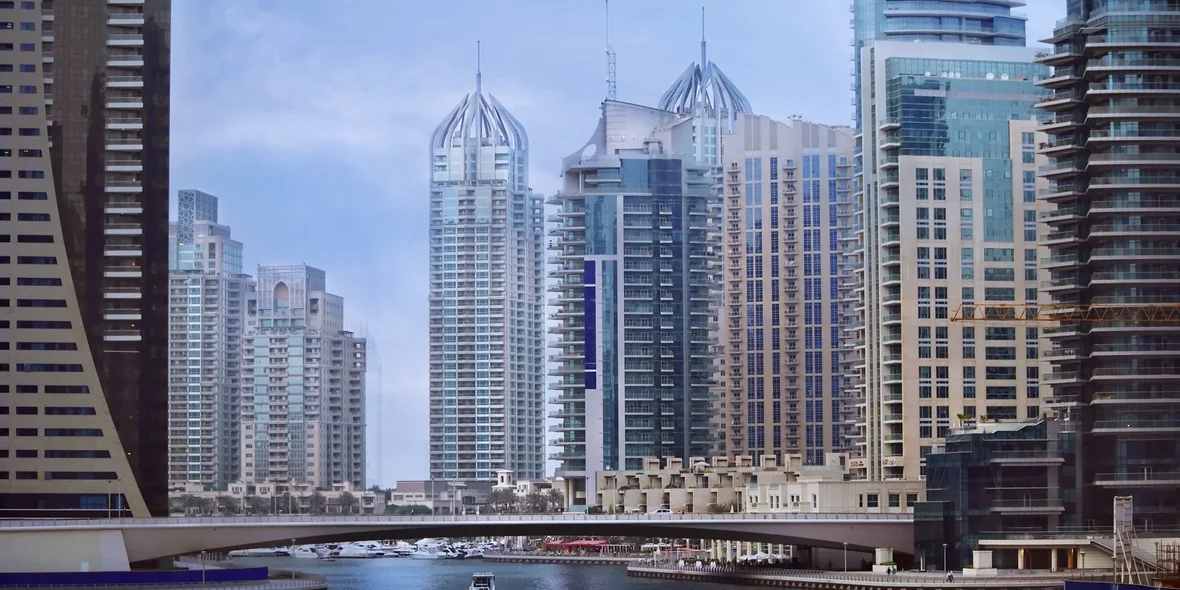
This myth arises because Dubai is usually portrayed in the media through expensive locations such as Downtown, Palm Jumeirah, Dubai Marina, high-end hotels, restaurants, and premium cars. In reality, the daily life of most residents looks different, as a significant share of the population consists of employees, professionals, and entrepreneurs with middle and upper-middle incomes.
Based on typical budget estimates, basic monthly expenses for one person excluding rent are often around $1100. When rent is included, total monthly expenses for one person frequently fall within the range of $2600 to $2800. For a family of four, a comparable figure is about $4000 excluding rent.
Cost of living in Dubai:
|
Expense category |
One person (per month) |
Family of 4 (per month) |
|
Groceries and daily expenses |
$300–450 |
$900–1200 |
|
Transportation |
$80–150 |
$200–350 |
|
Mobile and internet |
$80–120 |
$150–250 |
|
Leisure and restaurants |
$200–400 |
$600–1200 |
|
Housing rent |
$1500–3000 |
$2000–4500 |
The key point is that Dubai is highly segmented. The difference between the budget of a resident living in central areas and someone living in a more affordable location can be multiple times over. As a result, Dubai can be very expensive, but it is not a city only for the wealthy.
Housing rent in Dubai is extremely expensive
Another common stereotype concerns the real estate market. It is often assumed that rent in Dubai is excessively high and that apartment prices remain at premium levels. In practice, the rental market in Dubai is diverse. Housing costs depend directly on the district, property type, proximity to business hubs, and infrastructure.
Rental prices in Dubai by segment:
|
Property type and area |
Average monthly cost |
|
Studio in affordable areas |
$800–1500 |
|
1-bedroom in the mid-range segment |
$1200–2500 |
|
2-bedroom in the mid-range segment |
$2000–3500 |
|
1–2 bedrooms in central areas (Marina, Downtown) |
$2500–4500 |
|
Premium housing (Palm, waterfront) |
from $4000+ |
At the same time, there are more affordable options in areas such as Jumeirah Village Circle, Dubai Silicon Oasis, Al Furjan, or International City. In addition, rent often seems higher because it is typically paid in several advance installments, for example quarterly or annually.
There are no taxes in Dubai
This myth emerged due to the absence of personal income tax. Salaries are not taxed, which creates the impression that there are no taxes at all. In reality, the country applies value added tax.
The standard VAT rate is 5% and applies to most goods and services. This is one of the lowest VAT levels among developed economies, where comparable rates often range from 19% to 25%.
Since 2023, a corporate tax has been introduced at a rate of 9%, but it applies only to company profits above a defined threshold. Small businesses and some free zones can operate under preferential conditions, which further reduces the overall tax burden.
Therefore, the claim that Dubai has no taxes is an oversimplification. It is more accurate to say that the tax system is significantly more favorable than in Europe or the United States, especially for individuals.
You need Arabic to live in Dubai
A common misconception is that without Arabic it is impossible to handle everyday matters, find a job, and live comfortably in Dubai. This belief is usually based on regional stereotypes and does not reflect the actual structure of the city's population and economy.
Dubai developed as an international trade and service hub, so English became the primary language of everyday communication. Banks, developers, real estate agencies, clinics, schools, delivery services, and most of the service sector operate in English. In most cases, a resident only needs basic English to rent housing, sign contracts, open a bank account, and use government services.
The key factor here is demographics. The share of UAE nationals in Dubai's population is significantly lower than that of foreigners, and in some estimates it is around 15%. At the same time, Arabic can be useful and provides advantages when dealing with government institutions, legal matters, and certain sectors where local companies are more prevalent.
It is difficult to move to Dubai
There is a widespread belief that relocating to Dubai is extremely difficult and only accessible to large investors or top managers of international companies. In practice, obtaining a UAE residence visa is relatively straightforward if there is a valid basis.
Common ways to obtain residency in Dubai:
|
Basis |
Suitable for |
Validity period |
|
Employment contract |
Employees |
2–3 years |
|
Business registration |
Entrepreneurs |
2–3 years |
|
Real estate investment |
Investors |
from 2 years |
|
Freelance or remote work |
Professionals and self-employed |
1–2 years |
|
Long-term visas |
Investors and highly skilled specialists |
up to 10 years |
Each of these options has its own requirements related to income, investment, or proof of employment, but overall the system is designed to attract foreign professionals and capital. This is one of the reasons why expatriates make up more than 80% of Dubai's population.
The myth persists because obtaining UAE citizenship remains highly restricted and is granted only in exceptional cases. However, for living, working, and doing business, a residence visa fully covers the main needs.
You can only work for a local employer in Dubai
This approach was indeed the standard for a long time, but in recent years the UAE economy has been actively adapting to the global remote work market. The country has introduced mechanisms that allow people to live in Dubai while working for foreign companies or running their own business without a traditional employment contract with a local employer.
Legal ways to work in Dubai without being tied to a single company:
|
Format |
Model description |
Suitable for |
|
Remote employment |
Contract with a foreign company |
IT specialists, marketing, finance |
|
Freelance visa |
Self-employment through a licensed activity |
Designers, developers, consultants |
|
Company registration |
Own business in the UAE |
Entrepreneurs |
|
Freelance platform contracts |
Project-based work with multiple clients |
Self-employed professionals |
These formats require obtaining the appropriate visa or license, as working in the country without official status is not allowed. At the same time, the model is no longer limited to traditional employment through a single employer.
It is also important to consider income requirements and proof of employment. For example, remote workers usually need to demonstrate a stable income and a valid contract with a foreign company. This makes the system more transparent, but not restrictive.
You cannot live in Dubai with pets
The myth that it is impossible to live in Dubai with pets is linked to the climate and stereotypes about strict animal regulations in the region. This perception had some basis in the past, but in recent years the real estate market has become more accommodating to pet owners and has relaxed many of the rules.
At the same time, there are certain limitations:
- Not all residential complexes allow pets.
- There are restrictions on walking pets during extreme heat.
- Vaccination is mandatory for importing animals, followed by registration.
- Some public spaces do not allow pets.
Many residential communities do permit pets, and developers often include infrastructure for walking animals. In popular residential areas such as Jumeirah Village Circle, Dubai Hills, and Arabian Ranches, it is possible to find parks, walking areas, and designated dog spaces.
Tourists in Dubai are subject to strict prohibitions
Dubai is often perceived as a city with rigid restrictions, where any deviation from the rules can lead to serious consequences. In practice, the legal system in Dubai is indeed strict, but this is mainly expressed in the need to follow public norms and rules of conduct.
In everyday life, the restrictions look as follows:
- Drinking alcohol in public places is prohibited.
- Clothing can be casual in the city, but should be modest in religious locations.
- Aggressive behavior and public disturbances are not allowed.
- Photographing people without their consent is restricted.
At the same time, alcohol is available in hotels, bars, and restaurants that have the appropriate license. Tourists can freely visit beaches, shopping malls, and public spaces without a strict dress code.
Particular attention is paid to safety and public order. Dubai has a zero tolerance policy for drugs, as well as strict regulations related to conflicts, aggression, and offensive behavior in public spaces, including online communication.
Dubai is only about tourism, not a city for living
A common perception of Dubai is that it is purely a tourist destination with beaches, shopping malls, and skyscrapers. This view is usually formed by people who experience the city through short visits or media content.
In reality, Dubai is the largest business hub in the region, concentrating international companies, financial services, logistics, and the IT sector. It serves as a link between Europe, Asia, and Africa, which makes it attractive for businesses and professionals from different countries.
Dubai is also suitable for long-term living due to the large number of international schools offering British, American, and IB programs, a wide range of private and public healthcare facilities, and a well-developed service infrastructure.
An additional indicator of the city's scale is the tourist flow. In 2024, Dubai was visited by around 18.7 million international tourists. At the same time, the economy is not based solely on tourism, but also on real estate, finance, trade, and services.
Women in Dubai have limited rights
The myth of strict limitations for women is usually based on generalizations about the region. In Dubai, there are rules of public conduct that apply to everyone regardless of gender. In everyday life, women are free to study, work, drive, start businesses, and live independently.
Frequently asked questions about Dubai
Is it expensive to live in Dubai in 2025–2026?
The cost of living in Dubai depends on the area and lifestyle. Basic monthly expenses for one person excluding rent are around $1100. Including rent, a typical budget falls within the range of $2600 to $2800. With a more cost-conscious approach, expenses can be lower, while choosing central areas and an active lifestyle can significantly increase costs.
How much does it cost to rent an apartment in Dubai?
Rent depends on the location and type of property. Studios in more affordable areas can cost from $800 to $1500 per month. One or two-bedroom apartments in the mid-range segment typically range from $1200 to $3500. In central districts and premium locations, prices often exceed $4000 per month.
Is there personal income tax in Dubai?
There is no personal income tax for individuals in the UAE. However, a 5% VAT is applied, and a 9% corporate tax applies to companies under certain conditions. This results in a lower overall tax burden compared to most European countries.
Can tourists drink alcohol in Dubai?
Alcohol is permitted in licensed venues such as hotels, bars, and restaurants. Tourists can consume alcohol in these places, but drinking in public spaces and violating public order regulations is prohibited and may result in fines.
Do you need to know Arabic to live in Dubai?
English is sufficient for living in Dubai. It is used in daily communication, business, and most services. Arabic can be useful in certain situations, but it is not required.
Can you move to Dubai and obtain residency?
Residency can be obtained through employment, starting a business, investment, or freelance activity. Compared to many countries, the process is relatively fast if there is a valid basis and proof of income.
Is it possible to work remotely while living in Dubai?
Dubai offers options for remote employees and freelancers, including specific programs for professionals working for foreign companies.
Author

I write informative articles about real estate, investments, job opportunities, taxes, etc.