










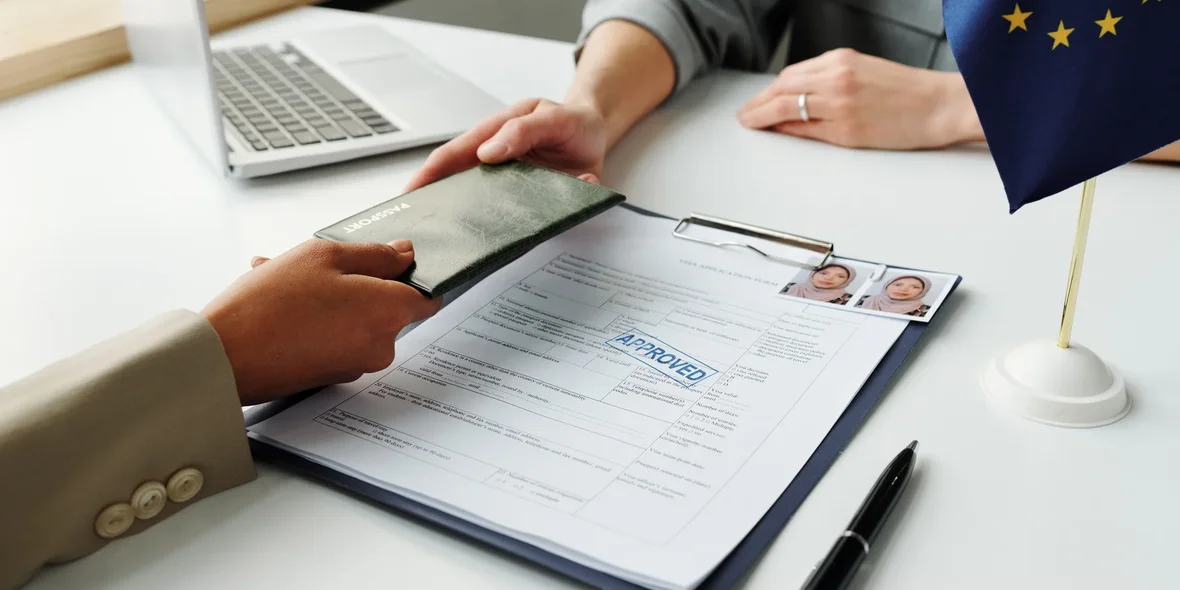
British Visa for Business Founders (Innovator Founder Visa) in 2026


In April 2023, the United Kingdom launched a new immigration route for entrepreneurs, the Innovator Founder Visa. It merged and replaced the former Start-up and Innovator categories, which in practice proved overly burdened with formal requirements and did not always reflect the real needs of business founders.
The new route has been in place for more than two years, meaning the programme has now stabilised in terms of requirements and application processing. In this article, we explain how the route operates today, what advantages and limitations it has, and how to apply for it.
What is the UK Business Founder Visa
The business founder visa, or Innovator Founder Visa, is an immigration route for entrepreneurs who plan to establish and develop an innovative business in the UK and take a personal role in managing the company.
A key feature of the programme is that the project is assessed not only by the visa authorities. At the first stage, the business idea must be approved by an authorised endorsing body. Without this approval, submitting a visa application is not possible.
The route is built around three core criteria that apply to all projects without exception:
- Innovation. The business must demonstrate a clear element of novelty compared to existing market solutions. This usually relates to a product, technology, or business model that provides a measurable competitive advantage.
- Viability. The assessment focuses on the commercial sustainability of the project and whether the founder’s ambitions are realistic in the context of the target market.
- Scalability. The endorsing body evaluates the potential to grow revenue and expand the team without proportional growth in costs.
In most cases, the founder is expected to make key management decisions, be responsible for product development and commercial strategy, and not act as a nominal or passive owner.
Who the UK Innovator Founder Visa is suitable for:
- Technology companies. This includes software services, online platforms, B2B solutions, fintech, healthtech, and climate-focused projects.
- Start-ups with proven market demand. The presence of early customers, pilot launches, paid trials, letters of intent, or partnerships significantly strengthens an application.
Who this route is not suitable for:
- Traditional local businesses without an innovative element, such as standard food outlets, retail stores, or household services.
- Franchises and direct replication of existing models where there is no proprietary technological or market advantage.
- Consulting services and freelancing, where growth is directly limited by the founder’s personal time and does not involve scalable products or teams.
- Projects without a clear financial model, where revenue streams, cost structure, and unit economics are not properly defined.
The main requirement for any project is approval by an authorised endorsing body. The organisation assesses the three criteria listed above and, if they are met, issues an endorsement letter.
Additional requirements for the UK business founder visa:
- English language proficiency. The applicant must demonstrate English at a minimum level of B2.
- Maintenance funds. The applicant must hold at least £1,270 in a personal bank account. These funds must be held for at least 28 consecutive days before the application is submitted. Investment funds cannot be used as proof of personal maintenance.
- Active role in the business. Immigration rules require that the applicant’s main occupation is the development of the endorsed business.
Permission is usually granted for three years. During this period, the endorsing body conducts progress checks after 12 and 24 months, and potentially at later stages. If there is no sufficient progress against the business plan, the endorsement may be withdrawn, which can lead to a shortened visa period or visa cancellation.
Pros and Cons of the UK Business Founder Visa
Like any visa route, this option provides opportunities but also imposes certain limitations. In practical terms, it has clear advantages and disadvantages.
Advantages of the UK business visa:
- Running a business in the UK. The founder can register a company, act as its director, and develop the project within the UK and under UK jurisdiction.
- Additional employment. Visa holders are allowed to combine work in their own business with other employment, provided it meets the required skill level and does not interfere with the main entrepreneurial activity.
- Family relocation. The founder can apply together with a partner and children. Family members are allowed to live in the UK, and the partner is usually permitted to work without additional restrictions.
Disadvantages of the business founder visa:
- No access to public funds. Innovator Founder Visa holders are not entitled to state benefits or other forms of public support.
- Tied to a specific project. The visa is granted for a particular business. Significant deviation from the approved plan without the consent of the endorsing body may result in endorsement withdrawal and, subsequently, visa cancellation.
- Requirement for active management. The applicant must genuinely run the business. Formal involvement or delegation of key functions to third parties can be grounds for visa withdrawal.
- Restrictions on changing activity. The visa cannot be used for full-time salaried employment as the main activity.
Step-by-step Process for Applying for the UK Innovator Founder Visa
The Innovator Founder Visa application process starts with preparing a set of materials for submission to an authorised endorsing body. While formal requirements may vary slightly between organisations, in practice they all assess the same core issue: how well the project meets the criteria of innovation, viability, and scalability.
Documents and materials to prepare:
- a concise description of the business idea and product;
- a detailed business plan;
- a financial model with projections for at least 12 months;
- market and competitor analysis;
- a description of the target audience and sales channels;
- information about the team and the founder’s role;
- evidence of market demand, where available, such as customers, pilots, contracts, or letters of intent.
The completed package is submitted to the endorsing body, which then decides whether to approve or reject the project. If the decision is positive, the applicant receives an endorsement letter and the immigration stage of the process begins. At this stage, compliance with formal visa requirements is assessed:
- a valid passport;
- the endorsement letter;
- proof of English language proficiency;
- bank statements confirming sufficient maintenance funds;
- documents for family members, if they are applying together with the main applicant.
The application is submitted online. The applicant is then invited to provide biometric data and upload supporting documents. Processing times depend on the country of application and the type of service chosen, either standard or priority. Once approved, the visa is granted for up to three years.
After entry to the UK, the next steps typically include:
- registering a new company or confirming an existing corporate structure;
- opening a business bank account;
- registering for tax purposes;
- launching the product or scaling existing operations.
To extend the visa or move towards permanent residence, the founder must again confirm that the business continues to meet the programme requirements. This involves submitting a new application to the endorsing body with evidence of actual business performance. Such evidence may include a launched product, paying customers, revenue, team growth, partnerships, or other metrics relevant to the specific business model.
After three years under the Innovator Founder Visa, the founder may apply for UK permanent residence, known as Indefinite Leave to Remain (ILR). A key criterion at this stage is physical residence in the UK, and long periods of absence can create difficulties when applying for settlement.
Cost of the UK Innovator Founder Visa
Although there is no fixed investment threshold, the visa involves a number of mandatory costs. These typically include government fees and taxes, as well as funds required to launch the business and cover living expenses in the UK.
Main cost components:
- Visa application fee. The visa fee is £1036 for the main applicant. The fee is paid separately for each family member and is non-refundable if the application is refused.
- Immigration Health Surcharge (IHS). The healthcare surcharge is £1035 per year of the visa. As the Innovator Founder Visa is usually granted for three years, the total IHS amount is £3105.
- Maintenance funds. The main applicant must show at least £1270 held in a personal bank account for a continuous 28-day period before submitting the application. An additional £285 is required for a partner or spouse, £315 for the first child, and £200 for each additional child. These funds must be the applicant’s personal money.
Even with a modest lifestyle and an early-stage business, total annual expenses often reach tens of thousands of pounds, particularly in London and the South East of England. It is important to distinguish between personal funds and business capital, as personal living expenses cannot be covered by investment funds allocated to the business.
Frequently Asked Questions About the UK Business Founder Visa
Is it possible to obtain a UK Innovator Founder Visa without significant capital?
It is possible to apply without substantial capital, as the route is not tied to a fixed investment amount. However, there is a mandatory minimum maintenance requirement of £1270 that must be held on the applicant’s personal bank account to support living in the UK.
Can you work for another company under the UK Innovator Founder Visa?
Officially, the visa conditions allow work either in your own business or elsewhere, provided the role matches the applicant’s qualifications at no lower than RQF level 3, which is broadly equivalent to A-levels in the UK system.
This means part-time or additional work is permitted as a way to maintain financial stability at an early stage. At the same time, the applicant must retain a key and active role in the day-to-day management and development of the endorsed business.
How can you obtain an endorsement letter for a UK business visa?
An endorsement letter can only be issued by an authorised endorsing body. The applicant selects an organisation from the official government list and prepares business materials for assessment, including:
- a description of the product and the market problem it addresses;
- a business plan and go-to-market strategy;
- a financial model based on realistic assumptions;
- evidence of demand, if available;
- details of the founder’s role and the team’s competencies;
- confirmation of funding and source of funds for a new business.
Based on this information, the project is assessed and either approved or refused. The endorsement letter must be issued no earlier than three months before the visa application is submitted. During this period, the endorsement application cannot be withdrawn.
Can family members move to the UK under the Innovator Founder Visa?
A partner and children can be included in the application as dependents. In this case, the base maintenance amount of £1270 for the main applicant is increased by £285 for a partner, £315 for the first child, and £200 for each additional child.
In addition, the Immigration Health Surcharge must be paid for each person included in the application. The rate is £1035 per year for adults and £776 per year for applicants under 18 at the date of application.
Author

I write informative articles about real estate, investments, job opportunities, taxes, etc.