








Life in Cyprus: Pros, Cons and Non-Obvious Nuances


Life in Cyprus is not just about the sea, sun, and vacations. For those who live here permanently, things are arranged a bit differently than they seem at first glance. For instance, homes often feel damp and chilly in winter, and most buildings do not have standard addresses. Instead, locals give directions based on landmarks, such as "the third house after the church with blue shutters."
Moreover, Cypriots are more likely to live in private houses than apartments, a characteristic that significantly influences the local real estate market. In this article, we have attempted to gather such non-obvious details to paint a picture of Cyprus as seen by its residents.
Daily Life, Climate, and Mentality in Cyprus
The island's climate is indeed mild and sunny, but from November to March, a rainy and quite cool winter sets in. There are no frosts, but temperatures can drop to +5°C. What feels worse is that due to high humidity, this temperature can feel as cold as -5°C.
Under these conditions, the first nuance of Cyprus comes to light: the absence of central heating. To keep warm, people have to rely on air conditioners, heaters, and sometimes fireplaces. This, however, leads to another of the island's issues: high electricity prices.
Electricity in Cyprus is expensive, costing around 0.32–0.33 euros per kWh, which places the island among the top 10 European countries with the most expensive electricity. For comparison, in neighboring Greece, the price per kilowatt-hour is 31% lower, at 0.22 euros per kWh. Consequently, many locals prefer to layer up with warm clothing rather than heat their homes extensively.
To escape the cold on winter evenings, Cypriots often visit cafes, frequently going with their whole families. Church and village festivals, known as "panegyria," play an important social role, drawing in almost the entire local population.
Getting to these places is not always easy, as public transport is underdeveloped on the island, making life outside major cities nearly impossible without a personal car.
Features of Cypriot Real Estate
The rules of the housing market in Cyprus are noticeably different from what many foreigners are used to. One of the first surprises awaits buyers when browsing listings.
Here, as in the United Kingdom, the number of rooms is counted by the number of bedrooms. The same applies to floor numbering; the first residential level is separate and is called the "Ground Floor." This means that an apartment on the "first floor" is technically on the second level.
During the period when Cyprus was a British colony, real estate began to be numbered according to the Western system, where the first digit of the apartment number indicates the floor. For example, apartment 113 is on the first floor, and apartment 011 is on the Ground Floor.
However, apartments are not as common on the island overall. Properties in low-rise developments are in highest demand. High-rise buildings are mainly found in business centers like Limassol.
The local housing market is dominated by private houses, townhouses, and so-called "club houses." These are low-rise buildings, often 3–4 stories high with 10–20 apartments. Such complexes typically include a swimming pool, a relaxation area, and sometimes a fitness center.
At the same time, the suburbs are well developed. In fact, these are more like remote villages, but due to Cyprus's small size, they are only 15–20 minutes' drive from major cities. They have all the necessary infrastructure: shops, cafes, schools, and new construction is actively underway.
The price situation is also more favorable than in the main urban centers. If the average price per square meter is €4000, in popular suburbs (for example, Tala near Paphos, Germasogeia near Limassol) the cost per meter is 20–30% lower, and in remote villages, it is 50–70% lower.
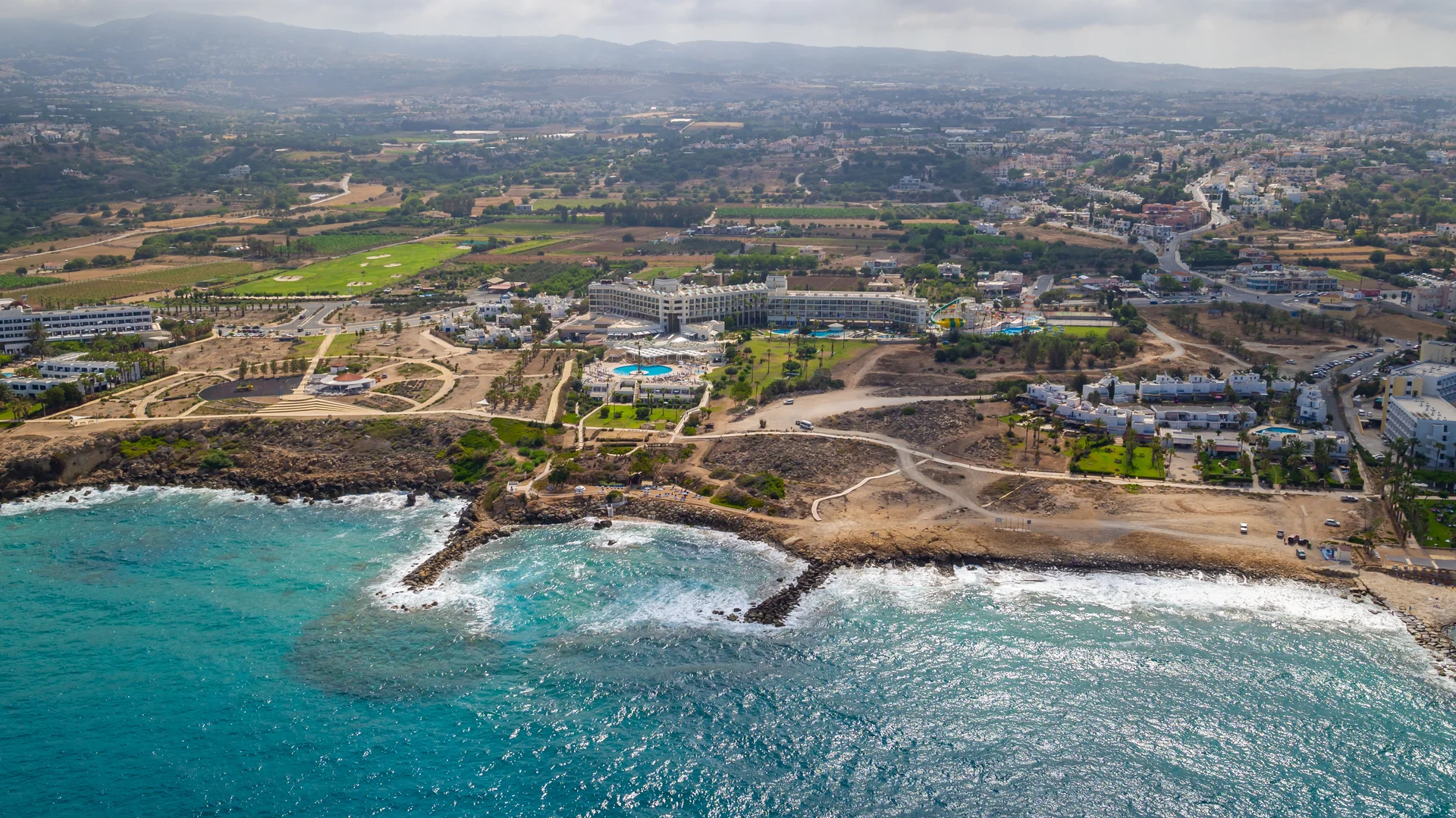
What Surprises Most in Cyprus
Life in Cyprus is full of peculiarities, the main one being the search for a specific house. A system of precise addresses with house numbers is virtually non-existent across most of the island, especially outside the central areas of cities.
Instead, detailed directions based on landmarks are commonly used. Directions might be given as, "the white two-story house with blue shutters, after the turn to the supermarket, opposite the old olive grove." On building facades, you are more likely to see personal names like "Villa Elena" or "Melanie House" rather than numbers.
This feature turns the first trip to visit someone or have food delivered into a small quest. Of course, using a navigator makes things much easier, but one must still be cautious, as street names can be duplicated in Cyprus.
Another cultural and everyday shock for many foreigners is related to the toilet. The rule encountered in most homes, hotels, and even public places is surprising: toilet paper should not be flushed down the toilet.
Instead, it is placed in a special bin next to it. The reason for this practice lies in the old and narrow sewer systems, which cannot handle such a load. This rule applies even to biodegradable paper.
A charming feature that quickly catches the eye is the enormous number of cats on the island. They are everywhere: basking in the sun, strolling along the promenades, and appearing in the most unexpected places. You can even find them near remote sea caves.
According to legend, they were brought to the island in the 4th century to combat venomous snakes. The cats performed their task so well that today Cypriots hold them in high regard. There is even a "Cat Monastery" (Monastery of Saint Nicholas).
To Sum up
Cyprus is undoubtedly part of Europe, but its local specifics introduce significant adjustments. The high cost of living is evidenced by the fact that electricity for households on the island remains among the ten most expensive in the EU.
In conditions where most houses lack central heating and interiors are cool and damp in winter, heating becomes a substantial expense item.
At the same time, the dynamic real estate market in 2026 makes Cyprus an attractive destination for investment or finding a home. The 2026 tax reform, which abolished stamp duty on property purchases, provided an additional stimulus to the market. However, the key demand driver remains the "golden visa" program, as similar initiatives have been largely discontinued in the rest of Europe.
Author

I write informative articles about real estate, investments, job opportunities, taxes, etc.