









How to Choose a Country for Immigration: a Complete Guide to Legalization Routes


Choosing a country for immigration directly affects the right to live and work, tax status, access to social infrastructure, and the timeframes for obtaining permanent residency or citizenship.
The key mistake many migrants make is choosing a country before choosing a legalization pathway. In practice, it is the immigration route that determines whether relocation is possible at all, as well as how much time and financial resources it will require.
In this article, we explain how to properly choose a country for immigration and the route that best fits that choice.
Where to Start When Choosing a Country for Relocation
It is advisable to begin by defining the primary goal of immigration. Several basic scenarios can be identified:
- employment;
- running a business;
- living on remote or passive income;
- investment with the acquisition of resident status;
- relocation with family;
- obtaining citizenship in the shortest possible time.
This is important because residence permits in almost all countries come with specific restrictions. For example, residence permits for financially independent persons often do not allow employment with a local employer.
Financial planning requires separate and careful attention. It is essential to consider not only the formal income or investment requirements, but also the actual budget needed for the first 6 to 12 months of living. According to data from European migration authorities, insufficient financial resources are among the most common reasons for refusal when renewing a residence permit.
The calculation should include housing rental costs, health insurance, taxes, children’s education, and administrative expenses related to obtaining and renewing immigration status.
These considerations apply to the applicant in general. Below, we examine the main immigration routes and the countries most suitable for each of them.
Employment-Based Immigration
A work residence permit is suitable for those who are ready to relocate under a contract with a local employer and build a long-term strategy through employment. In most countries, this is the most predictable pathway because the legal basis for the status is clear, and the transition to permanent residence is often tied to length of employment and social security contributions.
General requirements for foreign employees include:
- Employment contract. A signed contract or an official job offer with fixed conditions is required.
- Qualification matching the position. For skilled tracks, authorities assess the applicant’s education and the relevance of professional experience.
- Salary threshold. In many countries, employment-based immigration is subject to minimum salary requirements.
- Employer sponsorship. In some jurisdictions, the employer must hold official sponsor status.
Examples of specific countries:
- Germany. The most straightforward route for qualified specialists is the EU Blue Card. In 2026, the required annual gross salary is €50,700, or €45,934 for shortage occupations.
- The Netherlands. The standard pathway is the Highly Skilled Migrant program. In addition to qualifications, it requires a contractual monthly salary of at least €4,357.
- Ireland. For qualified professionals, a strong option is the Critical Skills Employment Permit. The base salary threshold is at least €38,000, with an increase to €40,904 under discussion from 1 March 2026.
- Canada. An applicant must obtain a work permit tied to a local employer. The employer must prove to immigration authorities that hiring a foreign worker is justified. Even if approved, the foreign employee may work only for that specific employer.
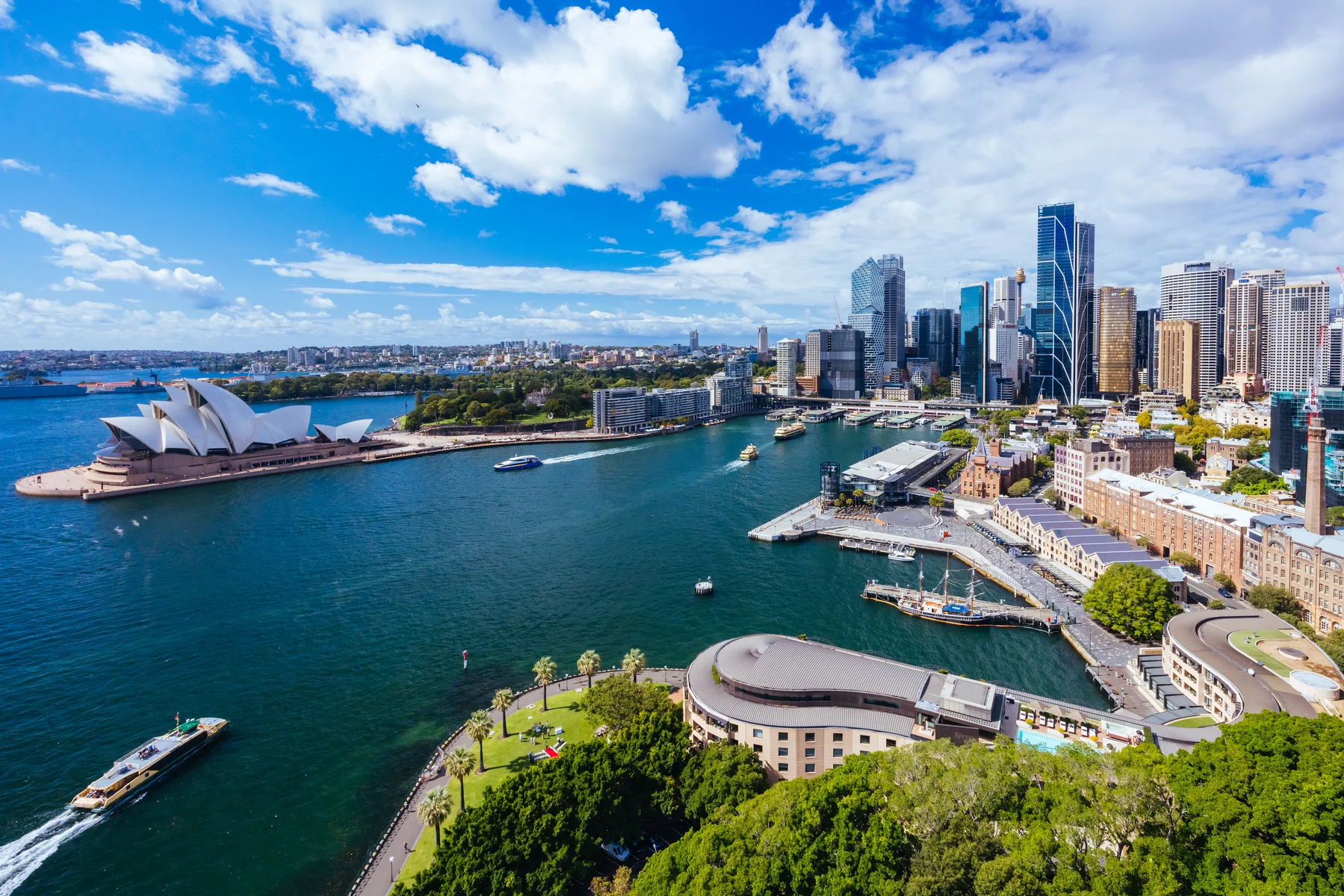
- Australia. The state selects candidates first and only then allows them to apply. This pathway is most commonly used by qualified specialists through the Skilled Independent visa (subclass 189), which grants permanent resident status immediately, without a temporary residence permit. The visa allows living and working in Australia without being tied to an employer, but it is issued only following an invitation from the government.
Salary thresholds should always be taken into account. Even if a candidate receives a job offer, a residence permit will not be granted if the proposed salary does not meet the required minimum.
Education with Subsequent Transition to Another Status
A student residence permit is rarely viewed as an independent immigration solution. It is typically used as a starting stage that allows a person to reside legally in the country and later transition to an employment-based status.
General conditions for study-based routes include:
-
Enrollment in an accredited educational institution. The study program must be officially recognized by the state.
-
Proof of financial means. In most cases, applicants must demonstrate the ability to cover tuition fees and living expenses.
-
Limited right to work. During studies, part-time employment is usually permitted, but with strict hourly limits.
-
Post-graduation transition period. A critical element of this route is the opportunity to remain in the country after graduation to search for employment.
Examples of countries where the study route can realistically lead to immigration:
-
Germany. After graduating from a university, alumni are granted up to 18 months to find qualified employment. During this period, working is permitted. Once an employment contract is secured, it is possible to switch to a work residence permit or an EU Blue Card. This pathway is particularly effective for technical and applied disciplines.
-
The Netherlands. The country offers the so-called Orientation Year, which is a one-year residence permit for graduates. During this time, graduates may live in the country and search for employment. If an employer is found, the status can be converted into a work-based permit.
-
France. Graduates of French universities may apply for a temporary residence permit to search for employment or to start a business. This status functions as a transitional stage and allows a later switch to a work or entrepreneurial residence permit, provided salary and professional profile requirements are met.
-
Canada. After completing their studies, many graduates obtain a Post-Graduation Work Permit, which allows employment without being tied to a specific employer. This work experience is often used for further immigration through federal and provincial programs.
-
Austria. Graduates of local universities are granted 12 months to find employment in their field. After signing an employment contract, they can transition to a work residence permit without an additional labor market test, making this route relatively straightforward.
If a country does not offer a post-study transition period or places significant restrictions on changing status, a student residence permit should not be considered an immigration strategy and should be viewed only as a form of temporary stay.
Entrepreneurial Activity
A residence permit through entrepreneurship is suitable for those who are prepared to run a business in the chosen country. Immigration authorities typically assess two key aspects: the legal basis for the application and the substance of the business activity. Formal company registration without turnover or tax reporting often leads to difficulties when renewing the status.
General requirements for entrepreneurs include:
-
Business registration in the country. This is usually either sole proprietorship or a company, depending on national regulations.
-
Proof of genuine business activity. Contracts, invoices, payments, accounting records, and financial statements are required.
-
Financial sustainability. The applicant must demonstrate that the business or the applicant personally can cover living expenses.
-
Tax compliance. Renewal of the status is often directly dependent on timely tax payments and proper reporting.
-
Business rationale. In many countries, the focus is not on the size of the investment, but on a clear explanation of why the business is needed and how it will operate.
Examples of countries offering business-based immigration routes:
- Portugal. One of the popular options for small businesses and self-employed individuals. It is essential that the activity is real and supported by contracts, invoices, and bank account transactions.
- Serbia. Often considered a bureaucratically simple option for obtaining residence through registering a sole proprietorship or company. However, the status remains stable only if the entrepreneurial activity is not fictitious.
- Czech Republic. Entrepreneurial residence is possible, but a key nuance is that many types of activities are subject to licensing. This means that registration alone is not sufficient; the applicant must also have the legal right to operate in the chosen field.
- Estonia. Suitable for those planning to run a transparent business with a clear structure. Applicants must demonstrate the economic rationale of their activity and a genuine link between the business and the country’s economic interests.
- United Arab Emirates. The main distinction is that this is not classical immigration with a path to citizenship. It is a renewable resident status that must be extended while maintaining the underlying basis in the form of a business license.
If there is no business turnover or proper reporting, renewal becomes problematic. Even if the residence permit is initially issued with relative ease, permanent status is usually tied to long-term residence and sustained integration.
Financial Independence
Residence permits for financially independent individuals and remote professionals are designed for those who do not plan to work for a local employer and can demonstrate a stable source of income from abroad.
General requirements for this route include:
- Verified foreign-source income. This may include salary, dividends, business income, rental income, or other regular receipts.
- Minimum income threshold. This is often linked to the statutory minimum wage or the officially defined subsistence level.
- Health insurance. Comprehensive medical coverage for the entire duration of the residence permit is frequently required.
- Financial transparency. The source of income must be clear, lawful, and supported by documentary evidence.
Examples of countries where this route is commonly used in practice:
- Portugal. A popular option is a residence permit for individuals with regular income from abroad. The income must be stable and sufficient to cover the living expenses of the applicant and accompanying family members.
- Spain. The Spanish non-lucrative residence permit is suitable for individuals with passive income or income generated outside Spain.
- Italy. The residence permit for financially independent persons targets applicants with high and stable income. The procedure is formalized, but financial requirements are higher than in many other European countries.
- Greece. Suitable for both remote professionals and individuals with passive income. The procedure is relatively straightforward, but compliance with residence requirements and financial reporting becomes important at the renewal stage and when transitioning to a more secure status.
- Malta. Often used by remote workers and international specialists. A key consideration involves income recognition rules, which should be analyzed carefully before submitting an application.
In many countries, this type of residence permit does not allow employment with local companies. If actual physical presence exceeds 183 days per year, an obligation to declare worldwide income may arise.
Investment Programs
An investment-based residence permit is intended for individuals with available capital who prefer to obtain status through investments rather than employment or education.
General requirements for investment residence permits include:
- Minimum investment threshold. This depends on the country and the type of assets involved, such as real estate, funds, businesses, or government contributions.
- Source-of-funds verification. Authorities almost always require disclosure of where the funds originate, how payments are made, and whether there is supporting tax documentation.
- Asset holding period. Residence status is often extended only as long as the investment is maintained or as long as lease or contribution conditions are met.
- Costs beyond the investment itself. These may include government fees, administrative charges, insurance, transaction support, notary services, and certified translations.
Countries offering residence permits through investment include:
- Greece. A residence permit is available through investment in real estate or contributions to the national economy. The minimum threshold starts at approximately €250,000. The permit is issued for five years and can be renewed as long as the qualifying investment is retained.
- Portugal. Portugal continues its investment-in-the-economy program, including cultural projects, investment funds, and job creation, with thresholds starting at approximately €250,000 for approved funds and projects. Physical presence requirements are minimal, typically around seven days per year.
- Cyprus. Cyprus offers residence permits through investments in real estate and business, with a minimum threshold of €300,000.
- Malta. Malta provides several innovative options, with requirements varying by scheme. The residence permit grants access to living within the EU and does not require mandatory physical residence.
- United Arab Emirates. UAE residence permits can be obtained through investments in real estate or business projects starting from 2 million AED (approximately $272,294). The visa allows long-term residence but does not lead to citizenship.
Common Mistakes When Choosing a Country and Applying for a Residence Permit
Even with a well-defined relocation plan, applicants often encounter issues that could have been avoided at the stage of selecting a country and an immigration route:
- Choosing a country without analyzing the immigration pathway. This is one of the most common mistakes. As a result, applicants may discover that a suitable type of residence permit either does not exist or requires conditions they do not meet.
- Underestimating tax consequences. In most jurisdictions, residing in a country for more than 183 days per year results in tax residency, with an obligation to declare worldwide income.
- Incorrect financial planning. Even if an applicant meets the minimum income requirement for obtaining a residence permit, that amount may be insufficient to cover actual living expenses, including rent and everyday costs.
- Expecting an automatic path to permanent residence and citizenship. Holding a temporary residence permit does not guarantee a transition to permanent status. In most cases, applicants must genuinely reside in the country with limited absences and pass integration and local language tests.
- Attempting legalization through tourist status. Efforts to remain in a country after entering on a tourist visa often lead to refusals and complicate future applications. Most residence permit programs require advance application or submission from the country of citizenship or legal residence.
Frequently Asked Questions
Where is it easiest to obtain a residence permit in Europe?
In general, it is easier in countries where applicant requirements are moderate, procedures are standardized, and the legal basis does not rely on rare conditions such as quota-restricted professions. In practice, Portugal, Greece, Spain, and Serbia are often considered.
Which countries offer residence permits for financially independent individuals?
Such programs exist in several European countries and typically require confirmed, stable income from abroad and health insurance. Spain, Portugal, Italy, and Greece are frequently considered. It is important to note that in some cases, this status restricts or prohibits employment within the country.
Which countries are the easiest for employment-based immigration?
The most straightforward employment-based routes are usually found in countries with structured programs for qualified professionals. These include industrialized nations such as Germany, the Netherlands, Ireland, Canada, and Australia.
Is physical residence required to renew a residence permit?
Work- and study-based residence permits generally require continuous residence in the country, as they are tied to the duration of an employment contract or academic program. Investment-based statuses tend to allow more flexibility, but they still impose renewal conditions and requirements to demonstrate an ongoing connection to the country.
Author

I write informative articles about real estate, investments, job opportunities, taxes, etc.