









Best Digital Nomad Countries in 2026


In 2026, digital nomads choose a country not only for its climate, safety, and cost of living, but also for the availability of a digital nomad visa, income requirements, taxes, length of stay, and the possibility of living in the country legally over the long term.
This shift is only natural: according to MBO Partners, the number of digital nomads in the United States reached 18.5 million in 2025, while the location-independent work model, meaning work that is not tied to a specific place, has firmly established itself as a stable market.
At the same time, the number of countries trying to attract remote professionals is also growing. Even now, their number exceeds 40, and in some international reviews it is already above 50.
In this article, we will take a detailed look at which countries for digital nomads in 2026 can truly be considered the best, and what exactly makes them stand out.
Top 5 Best Countries for Digital Nomads in 2026
The comparison is based on six key factors. The first and most important criterion is whether a country has an official mechanism that allows a remote professional to live there legally.
The second important criterion is the financial entry threshold. In many countries, obtaining a visa requires proof of stable monthly income, and this indicator often becomes the main filter when choosing a destination.
We also separately assessed the cost of living, taxes, and overall comfort for long-term residence.

Spain
Spain is among the most sought-after European destinations for remote professionals. According to data published on the basis of Spanish immigration statistics, by the end of 2024 the country had issued 27,875 Digital Nomad Visas, of which 14,255 were granted to main applicants and 13,620 to their family members. By comparison, at the end of 2023 this figure stood at 9,568, which points to very rapid growth in demand for Spain’s international remote work regime.
Strong interest in Spain is also reflected in international rankings. In the Savills Executive Nomad Index 2025, three Spanish cities made the global top 10 at once: Málaga ranked 3rd, Palma 6th, and Barcelona 7th. The study takes into account such parameters as urban environment quality, digital infrastructure, international connectivity, climate, and everyday expenses.
Demand within the country is distributed unevenly and is concentrated in the largest urban centers. According to Spotahome data cited by The Local, more than 90% of digital nomad bookings are concentrated in Madrid, Barcelona, and Valencia.
Spain is most in demand among the following categories:
- remote employees of foreign companies;
- consultants and independent professionals with overseas clients;
- entrepreneurs and founders of small international projects.
According to Spanish statistics, around 60% of visa holders are citizens of European countries outside the EU and EFTA, 17% are applicants from Central and South America, and another 12% come from North America. This shows that Spain is especially attractive to citizens of the United Kingdom, the United States, Canada, and Latin American countries.
Spain primarily attracts qualified professionals in technology, consulting, design, marketing, digital services, and related fields. The standard profile is a person aged 25 to 34, working in a technical or IT field, with an average gross income of €5,863 per month.
Spain’s main advantage is the existence of a full legal framework for international remote work. In addition, Barcelona, Madrid, Valencia, and Málaga offer high-quality internet, a developed rental market, international airports, medical infrastructure, coworking spaces, a strong service economy, and an everyday environment that is relatively easy for foreigners to navigate.
At the same time, despite all its advantages, Spain is not among the low-cost jurisdictions for digital nomads. This applies first and foremost to the cost of living in the largest cities. According to Idealista, in January 2026 the average rent was around €24.0/m² in Barcelona, €23.1/m² in Madrid, and €13.9/m² in Valencia. For an 80 m² apartment, this corresponds to approximately €1920, €1848, and €1112 per month respectively.
It is also important to take into account:
- Pressure in the rental market. According to Idealista, 15% of rental properties in Spain in Q4 2025 were taken off the market in less than 24 hours. For a foreigner, this means that finding housing in popular cities requires time and quick decision-making.
- Requirements regarding the nature of income. Spanish law allows work with Spanish companies only up to 20% of total professional income, and only outside an employment relationship with a Spanish employer. In other words, the main income must come from abroad.
- High administrative burden. The applicant must prepare a fairly extensive set of documents: proof of qualifications or experience, contract documentation, proof of income, insurance, employer-related documents, criminal record certificates, and social security documentation.
The main digital nomad visa in Spain is the Digital Nomad Visa / International Telework Visa. It is issued for up to 1 year when applying from outside Spain, and for up to 3 years for those applying from within Spain or changing status there, with a further extension of 2 years available afterward.
After 5 years of legal residence in the country, it becomes possible to apply for long-term residence, provided the general requirements are met.
Main requirements for the applicant:
- Proof of employment and remote work format. It is necessary to confirm that the work is carried out remotely and is connected to a foreign company or foreign clients.
- History of relationship with the employer or client. Contractors and independent professionals must prove the existence of professional or commercial relations for at least 3 months before the application.
- Length of the company’s existence. The foreign company connected with the applicant must have existed for at least 1 year.
- Qualifications or experience. The applicant must prove either relevant higher or vocational education, or at least 3 years of relevant professional experience.
- No criminal record. Criminal record certificates are required from the countries of residence for the last 2 years, as well as a declaration confirming the absence of criminal convictions over the last 5 years.
- Health insurance. The applicant must have public or private health insurance recognized in Spain. A tourist insurance policy is not considered a sufficient equivalent.
- Social security coverage. The applicant must prove that appropriate social security coverage is in place. Depending on the situation, this may involve employer registration in the Spanish system or the application of an international social security agreement.
The official benchmark for the visa’s financial thresholds is set as a percentage of the SMI, Spain’s minimum wage. According to UGE:
- the main applicant must show 200% of the SMI;
- for the second family member, an additional 75% of the SMI;
- for each additional family member, a further 25%.
For 2026, the basic benchmark for a single applicant is approximately €2849 per month. The standard processing time is 10 working days from the date of submission of the full set of documents, although in practice the actual duration depends on the consulate and the quality of the application file.
Portugal
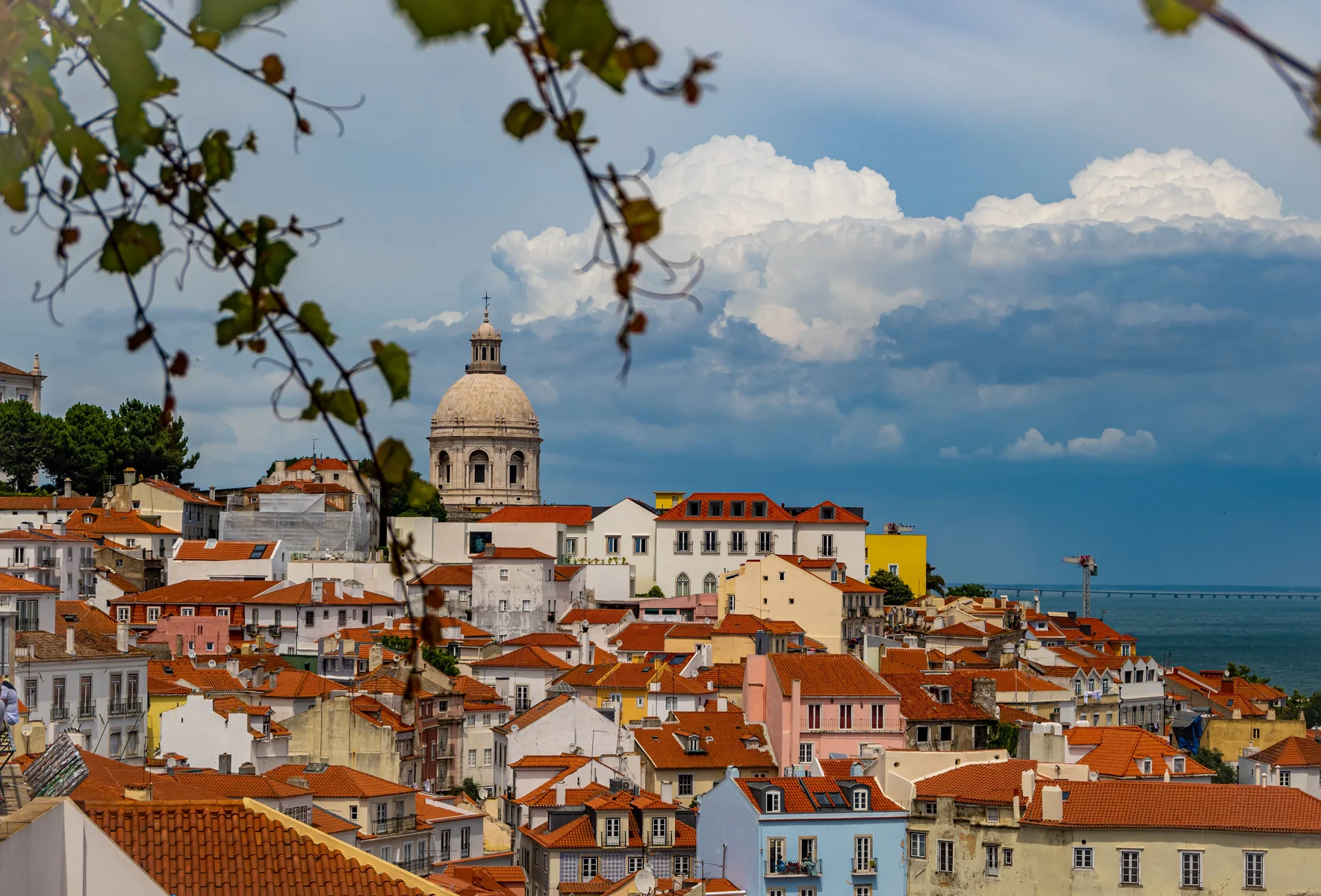
Portugal is among the most prominent destinations for remote professionals in Europe. In the Savills Executive Nomad Index 2025, two Portuguese locations made the global top 10: Lisbon ranked 5th, and the Algarve ranked 10th.
Porto, the Algarve, and Madeira continue to see steady demand. Madeira deserves special mention, as it is home to Digital Nomads Madeira Islands, a dedicated settlement for digital nomads in Ponta do Sol.
Advantages of Portugal for digital nomads:
-
Visa regime for remote work. Portugal officially designates Remote Work / Digital Nomad as a separate category of national visa. This is an important advantage compared with countries where remote professionals still have to rely on indirect or unsuitable grounds for residence.
-
A route to long-term residence. The D8 offers a residency format that allows applicants to move from entry on a visa to a temporary residence permit. AIMA explicitly states that the first residence permit under this category is issued for 2 years and then renewed for subsequent 3-year periods.
-
Favorable geography for long-term living. The country is convenient both for those who want a large urban environment and for those who prefer an island-based or coastal lifestyle.
Weak sides of Portugal:
-
High income threshold for entry. For the D8, Portugal requires applicants to prove an average monthly income over the previous 3 months of no less than four minimum monthly wages.
-
High rental costs. By the end of 2025, the national median rent level had reached €17/m². In Lisbon, the average asking rent for active listings stood at €25.25/m².
-
Bureaucracy. Applicants need documents related to income, tax residency, employment, accommodation, insurance, and, depending on the case, additional proof regarding their contractual work model.
The main visas for digital nomads are the D8 Temporary Stay Visa and the D8 Residency Visa. The first is a temporary permit for short-term stays in the country, while the second, by contrast, is the main route for long-term residence.
The D8 regime is intended for citizens of countries outside the EU/EEA/Switzerland who work remotely and receive income from outside Portugal. The following may apply:
- employees of a foreign company;
- independent professionals;
- individuals providing services to foreign clients.
The official requirements distinguish between two models:
- for an employee: an employment contract or a declaration from the employer confirming the employment relationship;
- for an independent professional: the company’s founding agreement, a service agreement, or a document confirming the provision of services to one or more clients.
For the D8, it is necessary to prove an average monthly income over the previous 3 months of at least four minimum wages. In 2026, with the official minimum wage at €920, this corresponds to €3680 per month for the main applicant.
Portugal requires a document confirming the applicant’s tax residency. This is an important point: the D8 visa is fundamentally built around an external source of income and remote work outside the Portuguese market.
Basic document package:
- completed visa application form;
- passport;
- photographs;
- criminal record certificate;
- proof of financial means;
- health insurance;
- proof of accommodation;
- documents confirming remote work and income;
- for the residency stage, a valid visa and proof of residential address in Portugal.
After entering the country on this visa, the applicant applies to AIMA for a temporary residence permit. The first permit is valid for 2 years, after which it can be renewed for 3 years.
Thailand
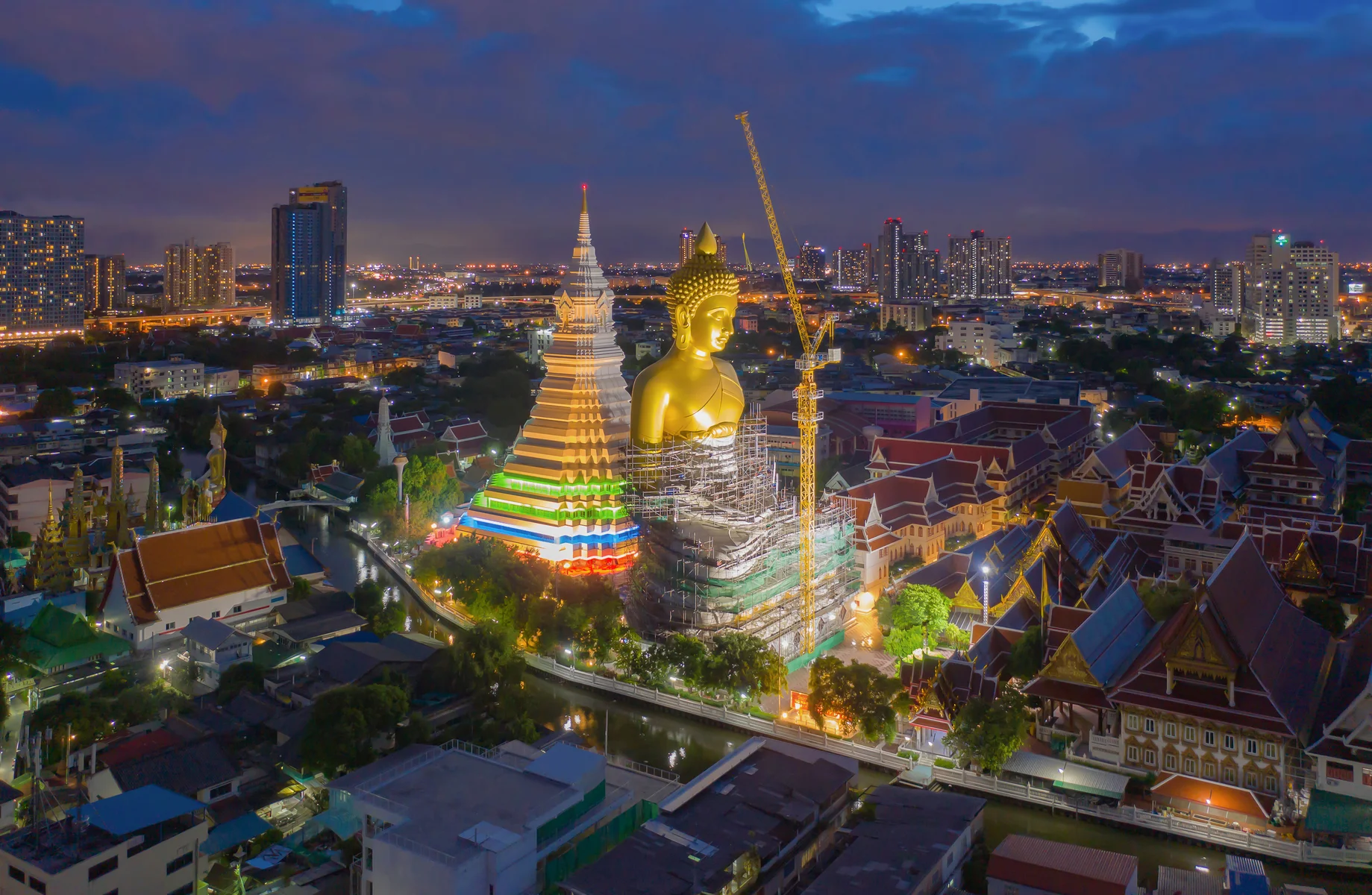
According to the Nomads.com State of Digital Nomads 2026, Thailand’s capital, Bangkok, ranks 1st in the world by share of visits among digital nomads at 2.22%, Chiang Mai ranks 10th with 1.08%, and Phuket is also in the top 30 with 0.53%. For a single country, this is a very high concentration of demand across several cities at once.
Thailand attracts not just one narrow category, but several segments of remote professionals at the same time. First of all, these include:
- remote employees of foreign companies;
- freelancers and independent professionals;
- entrepreneurs with an external market and a mobile working model;
- nomads focused on long-term living.
Advantages of Thailand:
- Variety of locations. Bangkok meets demand for a megacity, Chiang Mai for a more compact and affordable urban environment, and Phuket for a resort-style model.
- Official visa regime. The official DTV is valid for 5 years and grants 180 days of stay per entry, with the option of one extension for another 180 days.
- High level of infrastructure. Studies consistently highlight Thailand for its combination of convenience, service accessibility, and a strong working environment.
Limitations and weak sides:
- Wide variation in prices. Chiang Mai still remains a budget-friendly location, but Bangkok and especially Phuket have long operated under a very different economic reality.
- Climate and seasonality. For northern locations, especially Chiang Mai, the air pollution season remains a significant downside.
- The DTV is not a full residency route. The visa grants the right to enter and stay for an extended period, but it is not equivalent to a classic residence permit.
The Destination Thailand Visa (DTV) is the main visa for digital nomads. It is valid for 5 years and is suitable for:
- digital nomads;
- remote employees;
- freelancers;
- participants in certain long-term activities in Thailand;
- spouses and dependent children of a DTV holder.
Main requirements for the applicant:
- passport;
- photograph;
- a document confirming the applicant’s current location;
- proof of funds of at least THB 500,000 ($15,622);
- documents confirming the purpose of the trip, such as an employment contract, a work invitation from an employer outside Thailand, or a professional portfolio confirming digital nomad status.
The key official financial minimum under the DTV is THB 500,000 ($15,622). This requirement applies not to a monthly salary, but specifically to savings held in an account.
There is also another type of visa: the LTR Visa. This is a narrowly targeted visa for remote workers employed by large international companies (remote workers working for well-established overseas companies). The visa is issued for 5 years, with a possible extension for another 5 years, provided the qualification criteria continue to be met.
Main requirements:
- an average personal income of at least $80,000 per year over the past 2 years;
- if income is below $80,000 but above $40,000, additional proof of qualifications is required, such as a master’s degree or higher;
- an employment contract with a public company listed on a stock exchange, or with a private company or its subsidiary that has at least 3 years of operating history and total revenue of $50 million over the past 3 years;
- health insurance with coverage of at least $50,000, or social insurance, or a bank balance of at least $100,000 maintained for at least 12 months.
For an ordinary freelancer, independent consultant, or specialist with an average international income, the LTR is usually too demanding.
Estonia
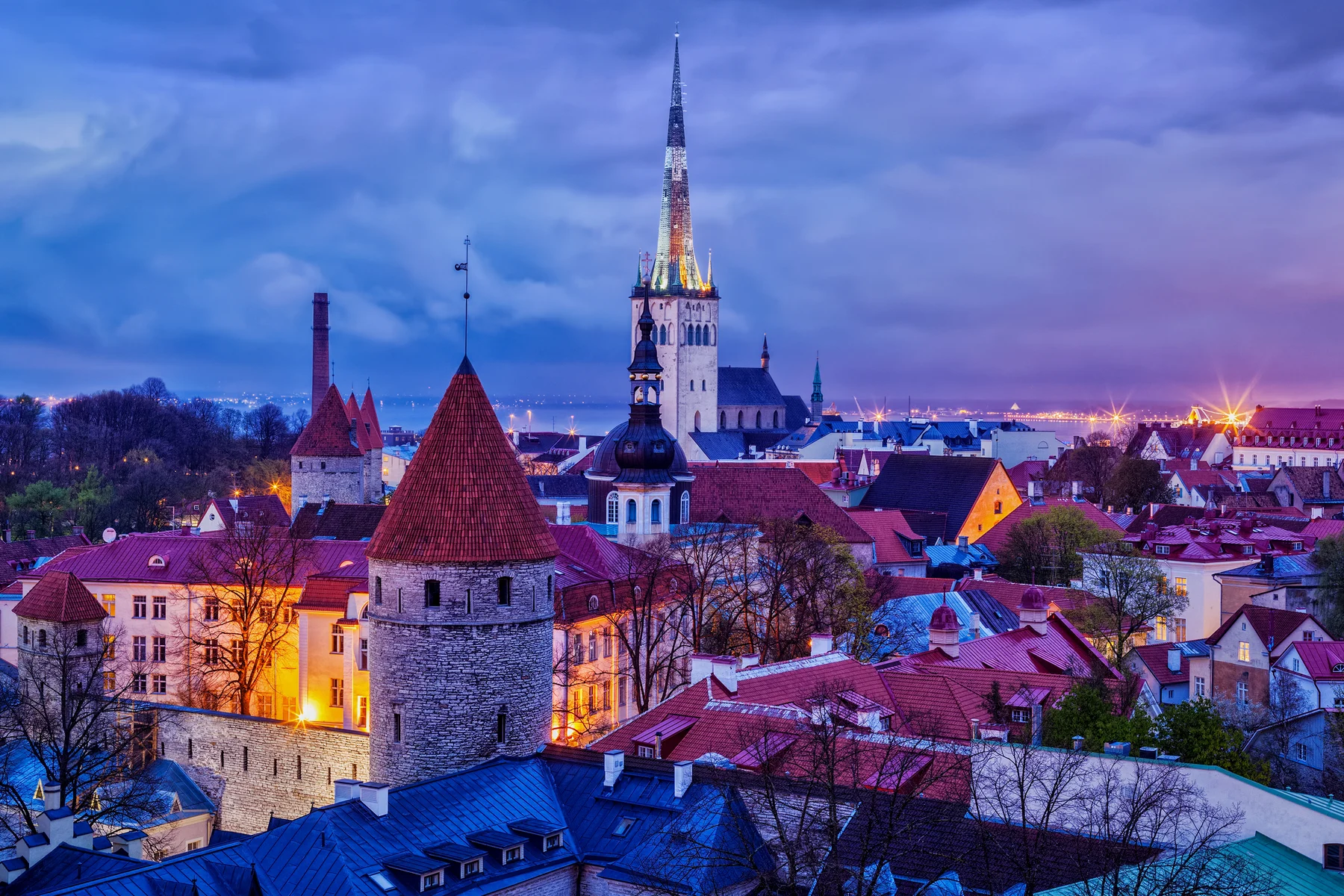
Estonia is not among the most high-volume destinations for digital nomads, but it continues to hold a very strong position in the segment overall. This is clearly reflected in international rankings: in the Savills Rising Global Tech Contenders study, Tallinn ranks 12th in the Digital Nomad Essentials Index, which confirms its steady appeal as a technology-oriented destination.
Estonia is in demand among a narrower applicant profile:
- IT specialists;
- company founders;
- independent consultants;
- digital services professionals.
Advantages of Estonia:
- Digitalization of public systems. By the end of 2024, the country had moved 100% of public services online.
- A formally designated Digital Nomad Visa. Estonia remains one of the few countries in Europe where remote professionals have access to a separate, officially recognized regime.
- A strong environment for IT. The country remains one of the most natural choices for people who need a technologically advanced administrative environment. This is also confirmed by Tallinn’s positions in technology rankings.
Weak sides of Estonia:
- High income threshold. The visa requires an income of €132 per day, that is €3960 per month.
- High costs by Eastern European standards. Rent for a furnished 85 m² apartment in a standard area of Tallinn is approximately €976 per month, while in a more expensive area it is around €1726. For a 45 m² studio, this is about €547 in a standard location and €812 in a more expensive one.
- Climate and seasonality. Even with the general warming of the climate, the country remains a northern jurisdiction with pronounced seasonality, short daylight hours in winter, and an overall cool climate profile.
The Digital Nomad Visa is Estonia’s main dedicated regime for digital nomads. The visa allows remote professionals to work legally in Estonia for up to 1 year. Depending on the planned length of stay, either a short-term C visa or a long-term D visa is used.
Main requirements for the applicant:
- Proof of independent remote work. The applicant must prove that the work is carried out remotely and is not tied to the country of residence. Applications are accepted from employees of a foreign company, owners of their own company registered abroad, and freelancers working with foreign clients.
- Proof of sufficient income. For the long-term D visa, the official financial benchmark is €132 per day, but in practice the sufficient-funds threshold is often assessed under a model of approximately €150 per day / €4500 per month, and the applicant must show that they have received this amount for at least the last 6 months.
- Standard visa package. For the D visa, the applicant must provide a passport, application form, photographs, as well as supporting documents confirming the purpose of the trip and financial means.
An application may be submitted at an Estonian embassy or consulate that accepts visa applications. In Estonia itself, if the applicant is already staying in the country legally, the application is submitted through police offices. In some countries, the procedure is handled through authorized VFS centers.
Croatia
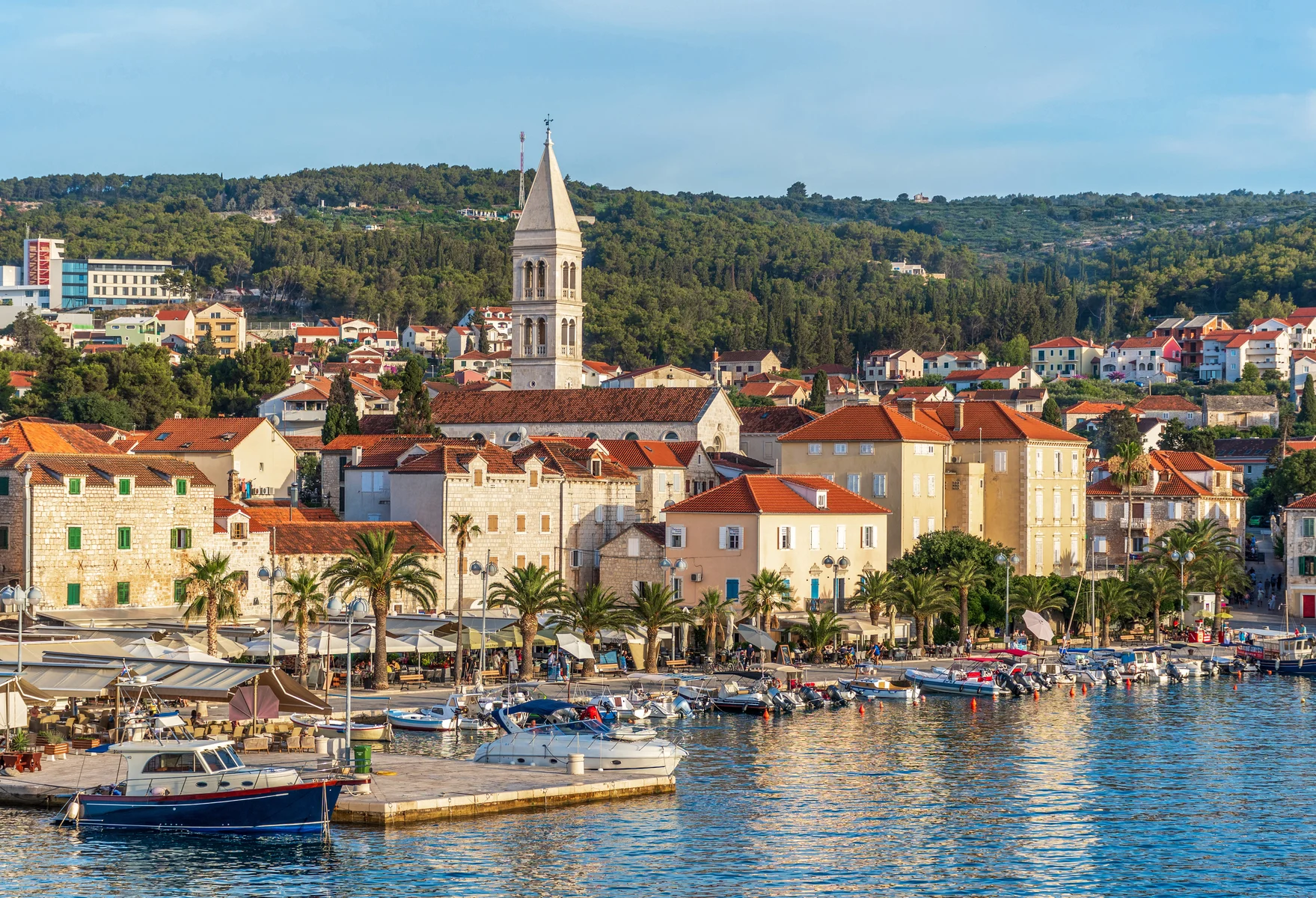
Croatia has established itself as a stable Adriatic location for remote work. According to the Croatian Ministry of Tourism, citing estimates based on Nomad List data, cities such as Zadar, Split, and Zagreb receive around 5000 digital nomads per month. With an average stay of about two months, this corresponds to roughly 10,000 people living in the country each month.
Structurally, demand for Croatia is shaped by several different living scenarios. Zagreb attracts those who need an urban pace and more year-round infrastructure. Split, Zadar, and Dubrovnik make it possible to combine work with life by the sea.
Croatia is in demand among the following categories of applicants:
- remote employees of foreign companies;
- independent professionals and contractors working for external markets;
- entrepreneurs running their business through a foreign company;
- specialists for whom Europe matters, but proximity to the EU’s largest business centers is not essential;
- people looking for a temporary but legal format of residence for 6 to 18 months.
Advantages of Croatia:
- A separate regime for digital nomads. Croatia officially designates a residence permit for digital nomads as a separate ground of stay for third-country nationals.
- A long period of temporary stay. In 2026, the Croatian regime allows temporary stay status for up to 18 months.
- Tax advantages. Digital nomads in Croatia are exempt from paying income tax when providing services to employers not registered in Croatia.
Weak sides of Croatia:
- Restrictions on repeat long-term stays. After the expiration of digital nomad status, the visa holder must leave the country for at least 6 months before being able to apply again.
- High income threshold. As of 2026, the Croatian Ministry of the Interior requires proof of at least €3622 per month, or €43,470 in savings for a 12-month period, or €65,205 for an 18-month period.
- The long-term rental market is highly seasonal. The main concentration of supply is in Zagreb, Dubrovnik, and Split. The Adriatic coast is heavily influenced by the short-term tourist rental market.
The main digital nomad visa in Croatia is Temporary Stay of Digital Nomads (TSD). It is a temporary stay status on a special basis for third-country nationals. If the applicant requires a visa to enter Croatia, after the TSD is approved they are issued a category D visa for entry into the country.
Main requirements for the applicant:
- Proof of remote work. This may include an employment contract, a service agreement, an official letter from the employer, or documents relating to the applicant’s own company outside Croatia.
- Proof of sufficient financial means. For 2026, this means at least €3622 per month, or €43,470 in a bank account for stays of up to 12 months (€65,205 for stays of up to 18 months). The amount increases by 10% of the average monthly net salary for each additional family member.
- Health insurance. The applicant must prove the existence of health insurance covering the entire intended period of stay in Croatia.
- Criminal record certificate. For a first application, a legalized criminal record certificate must be provided from the country of citizenship or from the country where the applicant lived for more than one year immediately before arriving in Croatia.
- Proof of address in Croatia. The applicant must provide the address of their intended stay in the country. At the initial stage, a temporary address is allowed, for example a confirmed accommodation booking. After entry, the residential address must be registered with the police.
The status is granted for up to 18 months. After it expires, the person must leave the country for at least 6 months before being able to submit a new application on the same basis.
Frequently Asked Questions About the Best Countries for Digital Nomads in 2026
Which countries are the best for digital nomads in 2026?
In 2026, the best countries for digital nomads include Spain, Portugal, Thailand, Estonia, and Croatia. Each country is strong in its own category: Spain as a long-term base in Europe, Portugal as a comfortable international jurisdiction, Thailand as one of the strongest locations in Asia, Estonia as a technologically advanced and transparent country, and Croatia as a convenient European option for temporary residence.
Which country is the best fit for a digital nomad in Europe?
The most balanced option in 2026 appears to be Spain. It offers a high level of infrastructure, well-developed cities, and the possibility of staying for several years.
Where is it easiest for a digital nomad to get a visa?
Spain is better suited to those who want to live in a country legally for several years and are ready to meet formal requirements. Portugal is convenient for those seeking a European base with a clear visa framework and a strong international environment. If a European residency scenario is not the goal, then Thailand is also a very strong option.
Which country offers the best value for a digital nomad in terms of visa, cost of living, and comfort?
If we look specifically at the overall balance, Thailand remains the most cost-effective option. It offers one of the strongest digital nomad regimes in Asia and, in a number of scenarios, is significantly more affordable than European countries.
Author

I write informative articles about real estate, investments, job opportunities, taxes, etc.