









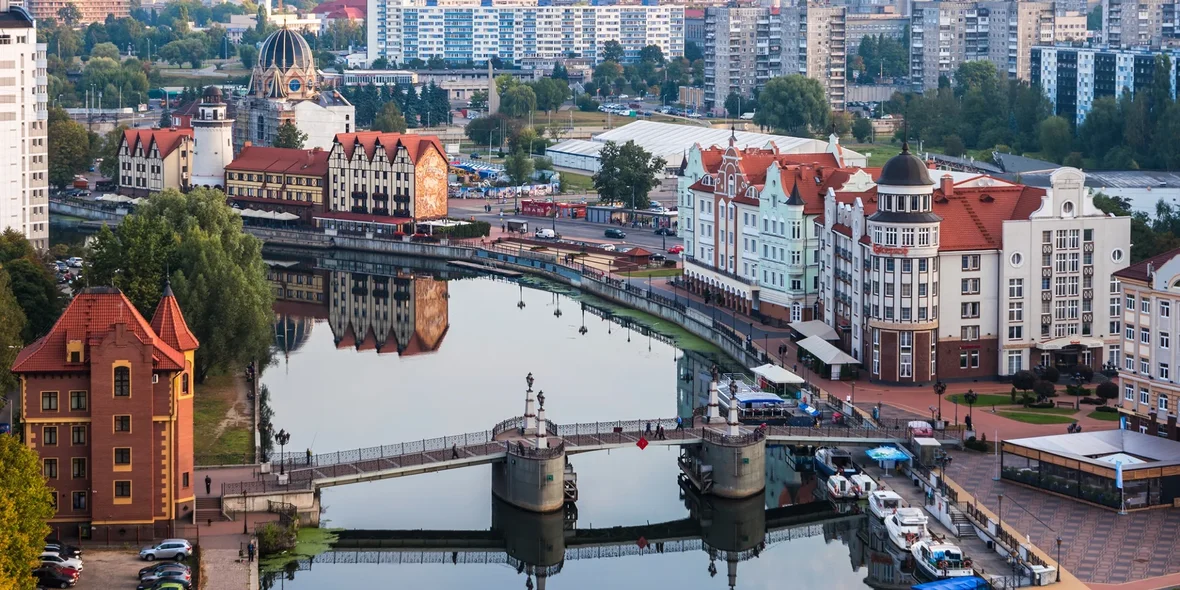
Foreign Demand for Real Estate in the Kaliningrad Region: From Growing Interest to a More Cautious Market


The topic of foreign demand for real estate in the Kaliningrad Region moved beyond the professional property market after regional authorities reported growing interest from German citizens.
In spring 2025, the head of the Agency for International and Interregional Relations of the Kaliningrad Region said that German citizens had begun buying property in the region more often and relocating small and medium-sized businesses there.
By the end of 2025, public assessments by market participants had become much more restrained. In the first half of the year, the topic was presented as a growing trend, but later real estate agents were already reporting a decline in the number of such buyers.
In this article, we explain how it all began and what the situation with foreign demand in the Kaliningrad Region looks like now.
What happened to foreign demand for housing in the Kaliningrad Region
In 2024 and in the first half of 2025, foreign demand for housing in the Kaliningrad Region became part of the public agenda after statements by regional authorities and comments from market participants. They spoke about an increase in the number of buyers connected with Germany.
Demand was most often associated with several categories of buyers. These included German citizens, Russian Germans, people originally from Russia and the former Soviet republics who had long been living in Germany, as well as families considering the Kaliningrad Region as a place for a possible relocation or a future home purchase.
In autumn 2025, market participants openly said that residents of Germany, especially Russian Germans, stood out most clearly among external buyers.
In January 2026, publications citing market participants noted that demand from Russian Germans had fallen severalfold by the end of 2025 compared with the beginning of 2024. One of the reasons mentioned was the exchange rate factor: buying property in the region had become less advantageous for this group.
In public market comments, German citizens, Russian Germans and resettlers were most often named among external buyers of housing in Kaliningrad and the wider region. In July 2025, market experts noted that on the secondary market, apart from local residents, the main buyers of apartments were German citizens and resettlers from the Far East.
According to market participants, in 90% of cases foreign buyers in the Kaliningrad Region purchased apartments, while demand was distributed between the primary and secondary markets.
The main demand locations were:
- Kaliningrad;
- Guryevsk;
- Zelenogradsk;
- Svetlogorsk;
- Yantarny.
At the same time, on the coast, the main interest was linked primarily not to foreigners, but to buyers from Moscow and St. Petersburg, who considered such properties for personal use or rental. Land plots were also purchased, but much less often; apartments remained the basic transaction format.
Why foreign buyers purchased housing in the Kaliningrad Region
Buyers from Germany and other European countries considered apartments in the region as housing for a future relocation, retirement living, occasional visits, rental income or as a backup option in case circumstances changed.
The main reasons behind the rise in foreign demand were:
- Preparation for a future relocation. Buyers from abroad planned to move to the Kaliningrad Region after retirement and were arranging housing in advance.
- Purchase of a ready-to-use apartment for rental or occasional stays. People from Europe more often chose renovated apartments: such properties could be rented out immediately, used during holidays or kept as reserve housing.
- Economic motive. The Kaliningrad Region was perceived as a market where housing prices had been rising in recent years, so some buyers saw an apartment as a way to preserve capital.
- Exchange rate factor. Demand among Russian Germans was higher when the euro approached 100 rubles: after converting savings, buying an apartment in rubles looked more attractive. When the exchange rate became less favorable, some buyers adopted a wait-and-see approach.
- High cost of living in Europe. According to Eurostat, from 2010 to the fourth quarter of 2024, housing prices in the EU rose by 55.4%, while rents increased by 26.7%. In the first half of 2025, Germany had the highest household electricity prices in the EU, at 38 euros per 100 kWh including taxes and charges. For some Russian-speaking residents of Europe, an apartment in a Russian region looked like a reserve or retirement option.
How foreign demand compared with other market drivers
Foreign demand for housing in the Kaliningrad Region in 2025 was discussed against the backdrop of a much larger flow of external buyers from other Russian regions.
In 2025, the Kaliningrad Region became the national leader by the share of non-resident mortgage borrowers in new-build transactions: their share amounted to 37% of all deals. If all mortgage transactions are taken into account, including the secondary market, the region ranked second in Russia with a figure of 28%.
The same picture appeared in comments from real estate agents and developers. In August 2025, around 40% of apartments in the region were being purchased by non-residents, primarily people from Moscow, St. Petersburg, Siberia, the Far East and northern regions.
On the coast, the structure of demand was even more illustrative: in one first-line project in Svetlogorsk, more than 60% of buyers were residents of the Kaliningrad Region, another 30% were buyers from Moscow and St. Petersburg, while foreigners and buyers from other regions accounted for the remaining 10%.
Mortgage programs also affected the market at the same time. In February 2026, 150 subsidized mortgages worth 0.78 billion rubles were issued in the Kaliningrad Region, compared with 439 loans worth 2.33 billion rubles in January; the decline amounted to 66% by number of transactions and 67% by volume.
On the other hand, the supply of new housing in the region was growing. In January 2026, there were 1.53 sq. m of housing under construction per resident of Kaliningrad, compared with 1.43 sq. m a year earlier; by this indicator, the city rose from 32nd to 30th place in the ranking of Russian cities.
At the same time, according to Sberbank analysts, in 2025 the share of apartments in new-build projects in the Kaliningrad Region that remained unsold by the time the building was commissioned stood at 38%. Against this backdrop, pressure on the market was being created not only by buyer flows, but also by the scale of supply itself.
Conclusion
Foreign demand for housing in the Kaliningrad Region did indeed become a noticeable part of the market agenda. In the second half of 2025, however, the nature of these assessments changed.
While market participants had previously spoken about growing interest, by the beginning of 2026 that interest had declined because of currency fluctuations. The regional market began to be shaped primarily by domestic Russian demand.
At the same time, the external backdrop may once again strengthen interest in the region. If energy, housing and everyday living costs in Europe continue to rise, some Russian-speaking residents of Germany, Lithuania and Latvia may become more active in considering the Kaliningrad Region as an alternative place to live.
Author

I write informative articles about real estate, investments, job opportunities, taxes, etc.