








Greece Real Estate in 2026: Where to Buy and Whether It Is Still Worth Investing


Over the past two years, the Greek real estate market has increasingly become a market of selective opportunities. On one hand, rising prices continue to support demand, while on the other, entry rules for foreign investors are periodically tightened.
This is why in 2026 investors are seriously reconsidering whether it is worth buying property in Greece at all. Nevertheless, against the backdrop of record tourism flows in 2025, local real estate remains highly relevant.
In this article, we will examine how the situation in the Greek real estate market has changed and which regions are the most attractive for capital investment in 2026.
What Has Changed in the Greek Real Estate Market in 2025–2026
Over the past year, the Greek real estate market has stopped growing uniformly. In 2025, prices for new apartments increased by an average of 7.4%, while the secondary housing market grew by 8.1%. For comparison, in 2024 new apartments rose by 10.2%, meaning the growth rate has clearly slowed.
The most significant change concerns entry rules for foreign investors. Since March 31, 2024, in Greater Athens, Greater Thessaloniki, Mykonos, Santorini, and islands with a population above 3,100, the minimum threshold for obtaining a Golden Visa through real estate investment has been raised to €800,000.
In other parts of the country, the threshold is €400,000. For certain properties, an entry level starting from €250,000 remains available, specifically for industrial buildings converted into residential use and historical properties requiring restoration.
At the same time, a mandatory minimum property size of 120 square meters was introduced, and properties purchased under the Golden Visa program cannot be used for short-term rentals. As a result, some investors have shifted away from overheated tourist areas toward more affordable regions of the country.
In 2025, Greece also tightened regulation of short-term rentals. According to the Greek Ministry of Finance, new registrations for short-term rentals in central Athens were suspended in 2025, and the draft budget plan for 2026 explicitly extends this restriction into 2026.
This means that a strategy focused solely on short-term rental income has become more sensitive to location and regulatory risks, especially in areas with already saturated tourist accommodation.
Why Investing in Greece Still Makes Sense
In 2026, the Greek real estate market remains attractive for investment due to a combination of three factors: moderate price growth, stable rental demand, and support from the broader economy.
Prices continue to rise, though at a more measured pace. In 2025, housing prices increased by around 7–8% on average. At the same time, the market has become less centralized. Previously, most growth was concentrated in Athens, but now regional centers, including Thessaloniki, are showing faster growth.
Tourism generates nearly 38 million arrivals per year and over €23 billion in revenue. Beyond short-term rentals, long-term demand is also increasing in cities, driven by workers in services, logistics, and education.
Additional stability comes from the domestic economy. Investment in construction grew by more than 25% in 2025, and real estate has been identified as one of the key sectors for capital allocation within the country.
Property Prices in Greece in 2026
As of early 2026, prices for new greek apartments have increased by an average of 7.4%, while secondary housing has risen by 8.1%. Expensive coastal and metropolitan areas continue to appreciate, but the fastest growth rates are no longer limited to Athens.
Average residential property prices by city and key markets:
|
City / Market |
Average asking price, €/m² |
Change |
|
Athens, South |
4,091 |
+7.15% |
|
Athens, North |
3,323 |
+6.81% |
|
Thessaloniki, municipality |
2,625 |
+9.38% |
|
Piraeus |
2,522 |
-1.33% |
|
Athens, Center |
2,439 |
+12.03% |
|
Athens, East |
2,316 |
+6.53% |
|
Athens, West |
2,154 |
+12.48% |
|
Crete |
2,105 |
+40.4% since 2019 |
|
Peloponnese |
1,410 |
+9.1% (2023–2024) |
|
Thessaly |
1,273 |
+9.7% |
|
Thessaloniki suburbs |
1,941 |
+13.58% |
The gap between primary and secondary markets in Greece is driven by a chronic shortage of new supply. The secondary market has grown even faster than the primary one, leading many buyers to shift toward ready properties.
At the same time, new developments offer advantages in energy efficiency, lower renovation costs, and stronger liquidity in the premium segment. The secondary market remains more attractive in terms of entry price, property availability, and flexibility across locations.
Demand structure in Greece has shifted toward more pragmatic formats. Apartments accounted for 38% of purchases in 2025, followed by detached houses.
Apartments remain the most liquid property type in Athens, Thessaloniki, and university cities due to lower entry costs and a broader tenant base. Detached houses are more in demand in suburban areas, on Crete, and in resort locations.
Property prices by type:
|
Property type |
Price benchmark |
|
Apartment |
around €210,000 per unit |
|
Modern new-format apartment |
around €280,000 |
|
Detached house |
around €350,000–390,000 |
|
Villa |
around €1.4 million |
|
Small island apartment (non-prime) |
around €320,000 |
Rental yields in Greece in 2026 have declined compared to peak levels of recent years. The reason is straightforward: purchase prices have been rising faster than rental rates. According to Global Property Guide, the average gross yield is currently around 4.4%.
In practical terms, this means:
- 4–5.5% annual gross yield for long-term rentals;
- 18–23 years to recover the investment, excluding taxes and expenses.
Long-term rentals remain the baseline strategy. In Athens, rents exceed €11 per m², while in Thessaloniki they are around €10.4 per m². This segment is less volatile and better suited for predictable returns, especially for properties located near transport hubs or business districts.
Short-term rentals can generate higher cash flow but require precise location selection. In central Athens, new registrations are restricted, and properties acquired under the Golden Visa program cannot be used for daily rentals.
Where to Buy Property in Greece in 2026
After the increase in Golden Visa thresholds, the market has split into three segments: expensive but highly liquid locations, regions with the best balance between price and demand, and areas with low entry costs but weaker resale and rental potential.
- Athens and the Athenian Riviera. In 2025, prices in Greater Athens increased by 6.2%. This is still solid growth, but already lower than in Thessaloniki and several regional markets. For high-end properties on the Athenian Riviera, this is primarily a capital preservation and premium liquidity market. It is not the optimal choice for investors targeting high rental yields with a mid-range budget.
- Thessaloniki. According to the Bank of Greece, apartment prices rose by 9.6% year on year in Q3 2025, significantly outpacing Athens. At the same time, the market remains more affordable than the capital. Demand is supported not only by tourism, but also by universities, the urban economy, logistics, and long-term rentals.
- Crete. Demand here is supported by a longer tourist season compared to many other islands. The average asking price on Crete increased between 2019 and 2025, reaching €2,105 per m². For investors, this is a noticeably more accessible level than in premium island destinations.
- Peloponnese. In the premium segment, the region has already seen substantial price growth, but by international standards it remains cheaper than many comparable Southern European destinations. This is a market with a resale horizon of 5 to 7 years and lower liquidity compared to Athens.
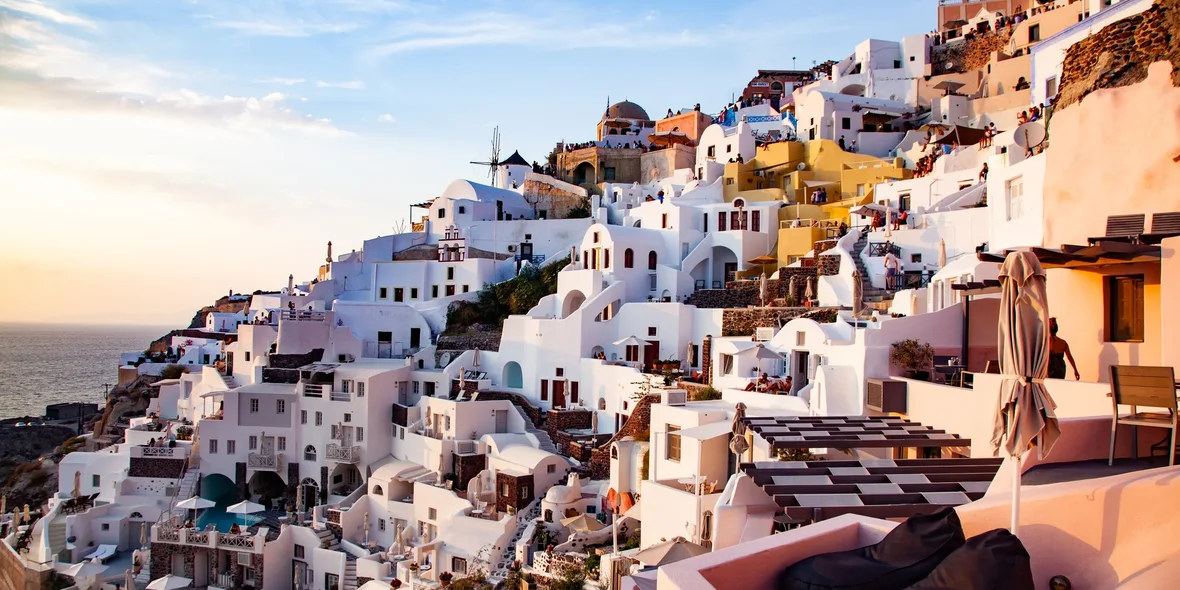
- Cyclades, primarily Mykonos and Santorini. These locations continue to see strong international demand, but they are also subject to the highest Golden Visa threshold, starting from €800,000. Assets here remain prestigious and liquid within the premium segment, but for investment-oriented buyers, the average ticket size has become significantly higher.
Residential Property Options in Greece





Where in Greece You Can Still Buy Property in 2026 with a Budget of up to €250,000–400,000
After the tightening of the rules, the €250,000–400,000 range has not disappeared, but for a standard Golden Visa property purchase in most parts of the country, the effective lower threshold is now €400,000. The €250,000 level remains available only for the conversion of commercial properties into residential use and for the purchase of historic buildings intended for restoration.
The most relevant destinations are Thessaloniki and some of its suburbs. The average asking price in the municipality of Thessaloniki at the beginning of 2026 stood at around €2,625 per square meter. This means that an apartment of 70–90 square meters in a number of districts still falls within the €250,000–400,000 range. At the same time, the market itself was growing faster than Athens, which makes it one of the strongest candidates for a purchase based on numbers rather than emotion.
The second destination that still makes sense is Crete outside the most overheated resort hotspots. Here, a budget of up to €400,000 allows buyers to consider not only compact apartments, but also some houses or apartments in secondary locations where prices have not yet been pushed to the level of Mykonos and Santorini.
The third viable zone, especially closer to €400,000, is the Peloponnese and parts of the mainland coastal areas outside the most overheated showcase locations. Here, competition at entry is lower, there is less pressure from international premium demand, and there is a better chance of buying a property without overpaying for the regional brand. For the same reasons, a budget of around €300,000–400,000 often works more efficiently here than the same amount in overheated parts of Attica.
Frequently Asked Questions About Real Estate Investment in Greece
Can a foreigner buy property in Greece?
Citizens of most countries can freely purchase real estate. Restrictions remain only in certain border areas, where additional permits are required. In the rest of the country, the process is standard: obtaining a tax number (AFM), opening a bank account, and completing the transaction through a notary.
What is the minimum amount required to buy property in 2026?
Formally, there is no lower threshold, and properties can be purchased for less than €100,000. However, for the Golden Visa program, the conditions have changed:
- €800,000 in key regions, including Athens and Thessaloniki;
- €400,000 in most other regions;
- €250,000 only for specific cases such as renovation or conversion projects.
What kind of returns does real estate in Greece offer?
The average gross yield in 2026 is around 4–5.5% annually. In cities, yields tend to be higher due to stable rental demand, while in premium locations they are lower because of higher entry prices. Short-term rentals can generate higher returns, but they are not permitted everywhere.
Is short-term rental allowed?
In central Athens, new registrations are currently banned. In addition, properties acquired under the Golden Visa program cannot be used for short-term rentals. In other regions, regulations are more flexible, but oversight is gradually tightening.
What additional costs are involved in a purchase?
On top of the property price, buyers should typically expect an additional 8–12%, including:
- property transfer tax;
- notary and legal fees;
- registration costs;
- agency commission.
In addition, there is an annual ENFIA property tax and income tax on rental earnings.
Which regions are currently the most promising for investment?
In 2026, the most attractive markets are those offering a balance between price and demand:
- Thessaloniki;
- Crete;
- Peloponnese.
Athens remains highly liquid but has become more expensive. Mykonos and Santorini are primarily premium markets rather than yield-focused investment destinations.
Author

I write informative articles about real estate, investments, job opportunities, taxes, etc.