








Real Estate Investment in Greece in 2026


Greek real estate remains one of the most prominent areas for foreign investors in Southern Europe. According to the Bank of Greece, foreign direct investment in real estate reached €2.75 billion in 2024, increasing by 28.9% compared with 2023.
One of the key incentives for buyers from outside the EU is the Greek Golden Visa. Against the backdrop of the closure or reduction of similar programs across Europe, Greece remains one of the few EU countries where real estate can still serve as the basis for an investment residence permit.
In this article, we will examine how the Greek real estate market is structured in 2026, which regions are the most attractive for investment, and what the market entry threshold is.
Greece Golden Visa in 2026
The Golden Visa remains one of the key drivers of foreign demand for Greek real estate. According to ELIAMEP, citing Greece’s Ministry of Migration and Asylum, the number of first issuances of residence permits for investment increased from 33,646 in 2023 to 36,852 in 2024 and to 56,545 in January to October 2025. Growth in 2025 compared with 2024 amounted to 53.5%. These figures include both investors and their family members.
China remains the main country of origin for investors. In October 2025, Chinese citizens held 9,198 valid primary Golden Visa permits, accounting for approximately 48% of all valid primary permits. Turkey followed with 2,913 permits, and Lebanon with 947 permits.
Minimum real estate investment threshold in Greece:
|
Property category |
Minimum investment |
Where it applies |
Main conditions |
|
Residential real estate in high-demand zones |
€800,000 |
Attica, Greater Athens, Greater Thessaloniki, Mykonos, Santorini, islands with a population of more than 3,100 people |
One property, minimum area of 120 m² |
|
Residential real estate in other regions |
€400,000 |
All other regions of Greece |
One property, minimum area of 120 m² |
|
Conversion of a non-residential property into residential use |
€250,000 |
Across Greece |
The change of use must be completed before the application is submitted |
|
Historic or listed buildings for restoration |
€250,000 |
Across Greece |
The property must fall into the category of buildings subject to restoration or reconstruction |
The €800,000 threshold applies to the most liquid and overheated markets: the Attica region, including Athens and the Athens Riviera, Greater Thessaloniki, Mykonos, Santorini, and islands with a population of more than 3,100 people. The legal purpose of this rule is to limit the purchase of small apartments in the most pressured markets and redirect part of the demand to less overheated regions.
For the standard €400,000 and €800,000 categories, the investment must be made in a single property. The required amount cannot be assembled from several small apartments. If the property has already been built or has a building permit, its main area must be at least 120 m². Properties purchased under the Golden Visa program according to the new rules cannot be used for short-term rentals.
Property prices in Greece in 2026
According to the latest official data from the Bank of Greece, the housing market continues to grow, although the pace of growth is slowing. In 2025, apartment prices increased by 7.8%, compared with 9.1% in 2024. In Q4 2025, annual growth stood at 7.6%. Regional dynamics varied: Athens grew by 5.9% year on year, while Thessaloniki grew by 8.0%.
Average housing prices in major Greek cities:
|
Location |
Average price, €/m² |
|
Athens, southern suburbs |
4167 |
|
Athens, northern suburbs |
3500 |
|
Athens, center |
2439 |
|
Athens, western districts |
2154 |
|
Athens, eastern districts |
2316 |
|
Piraeus |
2522 |
|
Piraeus suburbs |
2131 |
|
Thessaloniki, municipality |
2625 |
|
Thessaloniki, Kalamaria |
3142 |
|
Thessaloniki, center |
3000 |
|
Thessaloniki, Pylaia |
2989 |
|
Thessaloniki, Kallithea |
926 |
|
Kastoria |
538 |
|
Kozani |
667 |
|
Florina |
673 |
The island market forms a separate segment. According to Spitogatos Insights for Q2 2025, the average asking price on the Aegean islands was €2,778 per m², on the Ionian islands €2,389 per m², and on Crete €2,105 per m². Since 2019, prices have increased by 49.3% on the Ionian islands, by 40.4% on Crete, and by 38.9% on the Aegean islands.
|
Island segment |
Average price, €/m² |
|
Cyclades |
4000 |
|
Aegean islands, total |
2778 |
|
Ionian islands |
2389 |
|
Crete |
2105 |
|
Skiathos |
3273 |
|
Alonissos |
2672 |
|
Hydra |
6500 |
|
Symi |
3043 |
|
Samos |
950 |
In expensive districts of Athens, demand is concentrated around new apartments near the sea. The highest prices in Q1 2026 were recorded in Vouliagmeni, at €7333 per m², Voula, at €6250 per m², and Elliniko, at €5568 per m².
On the islands, demand is shifting toward houses, villas, and properties for seasonal living. Spitogatos separately identifies Mykonos, Antiparos, and Paros as expensive markets in the Cyclades, Hydra as the most expensive market in the Saronic Islands, Skiathos as the most expensive market in the Sporades, and Chania as the most expensive market in Crete.
The average gross yield from long-term rentals in Greece in Q2 2026 is 4.38% per year. In Q4 2025, the figure was almost the same, at 4.40%. Net yield is usually 1.5 to 2 percentage points lower than gross yield.
Average gross yields by Greek city in 2026 are as follows:
- Athens: 5.52%;
- Patras: 4.68%;
- Heraklion: 4.25%;
- Volos: 4.20%;
- Thessaloniki: 4.19%;
- Kavala: 3.44%.
Rental rates continue to rise. According to Kathimerini, citing the Spitogatos SPI, in Q1 2026 asking rents in Attica increased by 4.8% year on year, in Thessaloniki by 12.5%, and in the rest of Greece by 11.4%. In central Athens and the northern suburbs, the average asking rent was €11.54 per m², while in the municipality of Thessaloniki it was €10 per m². From Q1 2019 to Q1 2026, the average asking rent in Attica increased by 30%.
Since 2025, short-term rental regulation has become stricter. Greece introduced a ban on new short-term rental licenses in three central districts of Athens from January 1, 2025. The daily tax burden on short-term rentals was also increased: to €8 during the April to October period and to €2 in winter.
Taxes and costs when buying real estate in Greece
When buying resale property, the buyer pays real estate transfer tax. The rate is 3% of the taxable value of the property. A municipal surcharge of 3% of the main tax amount is added on top. As a result, the effective rate is approximately 3.09%. The tax is paid by the buyer. The declaration is submitted before the transaction, and the tax must be paid before the notarial deed is signed.
The standard VAT rate in Greece is 24%, but VAT on real estate may be suspended until December 31, 2026, upon application by the developer. In this case, real estate transfer tax applies instead of VAT.
In addition to real estate transfer tax, the buyer usually pays for:
- notary services;
- registration of ownership rights;
- legal services;
- technical due diligence of the property;
- translations, apostilles, powers of attorney;
- agency commission, if provided for in the contract.
Based on market benchmarks for 2026, the buyer’s total additional costs often amount to around 7 to 10% of the property price. This includes transfer tax, notary fees, registration costs, legal fees, and agency commission. Legal sources covering transactions with foreign buyers also indicate an approximate range of 8 to 10% in additional costs above the purchase price.
Notary fees are usually estimated at approximately 0.8 to 1.5% of the property value, depending on the complexity of the transaction. Land registry costs often amount to around 0.5 to 0.8%.
After the purchase, the owner pays the annual ENFIA tax, which is calculated based on the real estate owned by the person as of January 1 of the relevant year. ENFIA depends on the zone, cadastral value, area, floor, age of the building, ownership rights to the property, and other parameters.
From January 1, 2026, Greece applies an updated tax scale for real estate income earned by individuals. Rental income is taxed as follows:
|
Annual rental income |
Tax rate |
|
Up to €12,000 per year |
15% |
|
From €12,000.01 to €24,000 |
25% |
|
From €24,000.01 to €36,000 |
35% |
|
Over €36,000 |
45% |
For short-term rentals, the tax burden is higher than it may seem when calculated only based on the nightly rate. Since 2025, Greece has increased the daily climate resilience tax for tourist accommodation used for short-term rentals: €8 per day during the April to October period and €2 per day in winter.
How a foreigner can buy real estate in Greece
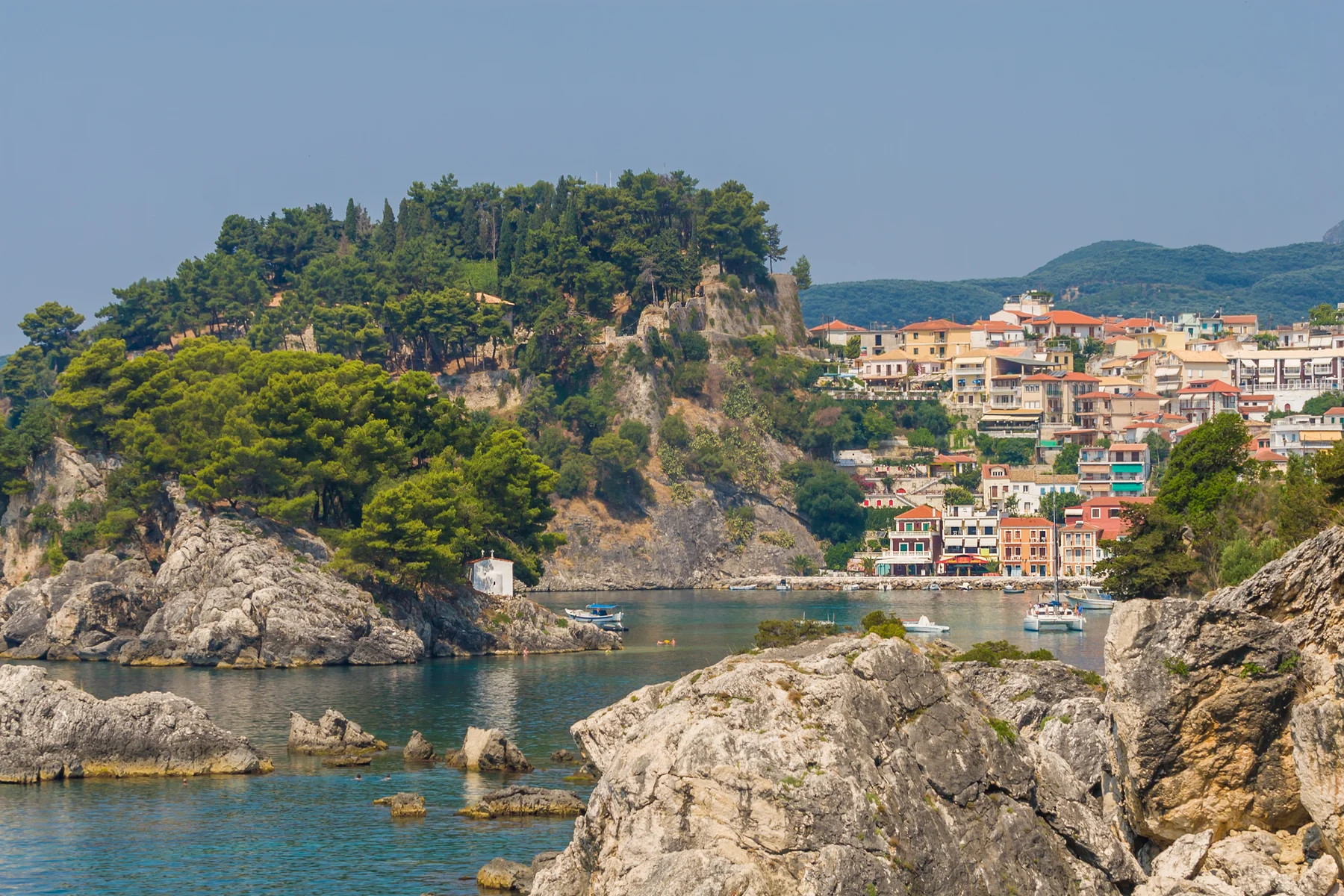
The first step is to obtain an AFM. This is the Greek tax identification number required for buying real estate, paying taxes, registering with myAADE, and subsequently owning the property. AADE states that to register for electronic services, a user must have a TIN and obtain an authentication key to access online services.
The AFM must be obtained before the transaction. This can be done either by the buyer personally or by their representative under a power of attorney. A non-resident usually needs a passport, residential address details, contact information, and the appointment of a tax representative, if required in the specific situation.
A Greek bank account is also often required for the convenient payment of taxes, transaction costs, utility bills, and further property management. In Golden Visa transactions, banking and documentary transparency are especially important, as the investment must be verifiable.
Legal due diligence should be completed before any substantial payment is made to the seller. In Greece, a property is checked not only in terms of title, but also in terms of its technical and urban-planning status.
After the basic documents have been reviewed, the parties may sign a preliminary agreement. This agreement records the price, the property, deadlines, payment procedure, deposit amount, deposit refund conditions, and the list of documents that the seller must provide before the final contract.
When buying resale property, the buyer pays real estate transfer tax. AADE states that the tax is paid by the buyer, the rate is 3% of the taxable value, and a municipal surcharge of 3% of the main tax amount is added on top. In practice, this amounts to approximately 3.09%. The transfer tax declaration is submitted before the final contract is signed.
The transfer of ownership is formalized through a Greek notary. The notarial deed is the main transaction document. The ownership right must be registered with the Land Registry or the Hellenic Cadastre.
For the buyer, the final point of the transaction is receiving confirmation of the registration of ownership. Without this, the property cannot be considered fully formalized in practical terms.
Best regions in Greece for real estate investment in 2026
Athens remains the most liquid real estate market in Greece. It has the highest concentration of jobs, universities, medical infrastructure, transport, tourist demand, and foreign buyers.
Athens is suitable for three strategies:
- long-term rental;
- buying an older apartment for renovation;
- capital preservation in a liquid urban location.
The most expensive zones are located in southern Attica. In Q1 2026, the average asking price in the southern suburbs of Athens was €4167 per m². At the district level, the highest prices were recorded in Vouliagmeni, at €7333 per m², Voula, at €6250 per m², and Elliniko, at €5568 per m².
Areas close to metro stations, universities, offices, and tourist routes provide more stable demand. Older housing stock may be attractive for renovation, but it requires checks of the building, area, layouts, debts, and the condition of common areas.
Attica falls within the zone with a minimum investment threshold of €800,000. This limits the purchase of small apartments for residence permit purposes and redirects part of the demand either to regions with a €400,000 threshold or to special projects starting from €250,000.
Athens Riviera
The Athens Riviera belongs to the premium segment. Demand here is mainly driven by buyers who value the sea, a prestigious location, building quality, and liquidity. This is not a market for maximum percentage yield. Properties here are more often bought for capital preservation, personal use, long-term ownership, and resale.
Strong areas include:
- Vouliagmeni;
- Voula;
- Glyfada;
- Elliniko;
- Alimos;
- Paleo Faliro.
The key factor for Elliniko and neighboring areas is The Ellinikon, a major development project on the site of the former Athens airport. The Financial Times reported that the project includes residential development, a 400-berth marina, parks, retail facilities, a Mandarin Oriental hotel, and a Hard Rock casino. According to the developer’s plans, the first residents are expected by the end of 2026.
The risk in this segment is the high entry price. The more expensive the property, the lower the gross yield in percentage terms. The buyer pays not only for square meters, but also for the scarcity of the location, the view, parking, the quality of the complex, and proximity to the sea.
Thessaloniki
In 2025 to 2026, Thessaloniki is growing faster than Athens. According to the Bank of Greece, apartment prices in Thessaloniki rose by 9.6% in 2025, while in Q4 2025 growth was 8.0% year on year. According to Spitogatos data for Q1 2026, asking prices in Thessaloniki increased by 9.7%, while rents rose by 6.6%. This is higher than in Attica.
Thessaloniki is suitable for:
- long-term rental;
- student rental;
- buying properties for renovation;
- investors who need a lower entry ticket than in Athens.
The most expensive zones in Q1 2026 were:
- Kalamaria, €3142 per m²;
- Thessaloniki center, €3,000 per m²;
- Pylaia, €2989 per m².
More affordable zones include:
- Kallithea, €926 per m²;
- Mygdonia, €935 per m²;
- Vasilika, €1125 per m².
Thessaloniki benefits from the combination of a large city, university-driven demand, a lower price base, and improving infrastructure. The downside is that international liquidity is lower than in Athens and on popular islands. Buyers need to pay especially close attention to the district, transport links, building condition, and actual rental demand.
Cyclades
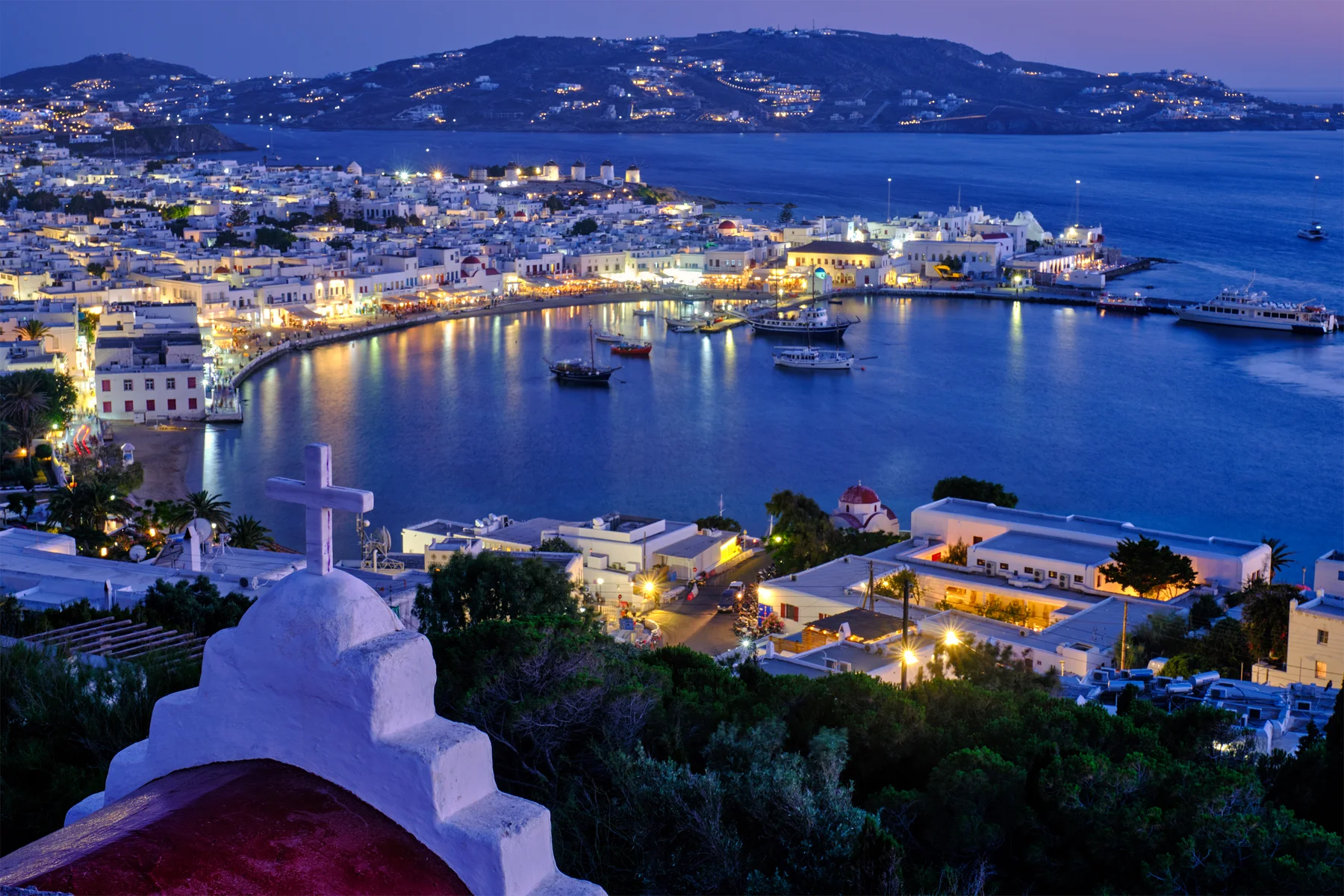
The Cyclades are one of the most expensive island markets. In Q1 2026, Spitogatos reported an average asking price of €4,000 per m². In terms of rents, the Cyclades are also in the upper segment of the market: the average asking rent was €12.8 per m².
This segment includes Mykonos, Paros, Antiparos, Naxos, Tinos, Syros, and other islands. However, markets within the group differ significantly. Mykonos and Antiparos operate as a premium international segment. Naxos, Tinos, and Syros often offer a more rational balance between price, infrastructure, and seasonal demand.
The Cyclades are suitable for:
- premium villas;
- seasonal rental;
- personal use;
- long-term ownership of a scarce asset.
Crete
Crete differs from smaller islands in terms of size, infrastructure, and season length. It has international airports, universities, hospitals, major cities, and broader domestic demand. As a result, Crete can be considered not only a resort market, but also a market for long-term living.
The strongest areas in Crete are:
- Chania;
- Heraklion;
- Rethymno;
- Elounda;
- Agios Nikolaos.
Chania is usually more expensive due to the combination of tourist demand, the old town, coastal locations, and international interest. Heraklion is a more urban and functional market. It is better suited for long-term rental and steady demand. Rethymno occupies an intermediate position between tourist and urban demand.
Ionian Islands
The Ionian Islands include Corfu, Lefkada, Kefalonia, and Zakynthos. This market is oriented toward European demand, seasonal rental, villas, seaside houses, and properties for personal use.
According to Spitogatos Insights for Q2 2025, the average asking price on the Ionian Islands was €2,389 per m². Since 2019, prices have increased by 49.3%. This is one of the strongest indicators among island segments.
Corfu is usually more liquid due to its recognizability, airport, international demand, and historic housing stock. Lefkada is attractive to buyers of villas and seaside houses. Kefalonia and Zakynthos depend on the season and the quality of the specific location.
Risks include limited supply of quality properties, high renovation costs, dependence on a management company, access issues, utility infrastructure, and the legality of buildings.
Frequently asked questions about real estate investment in Greece in 2026
Can a foreigner buy real estate in Greece?
Citizens of non-EU countries may be subject to additional checks in certain border and strategic zones. In practice, the buyer needs a passport, a Greek AFM tax number, proof of the origin of funds, and legal support for the transaction.
How much do you need to invest for the Greece Golden Visa?
In 2026, the standard real estate thresholds are as follows:
- €800,000 for Attica, Greater Athens, Greater Thessaloniki, Mykonos, Santorini, and islands with a population of more than 3,100 people;
- €400,000 for other regions;
- €250,000 for certain special categories, such as converting a non-residential property into housing or restoring a historic building.
For the standard €400,000 and €800,000 categories, the investment must be made in one property, and the residential property must have an area of at least 120 m².
The €250,000 threshold is retained only for special property categories. This usually refers to converting a commercial or industrial property into residential use or restoring a historic building. These are more complex transactions where technical and legal due diligence is especially important.
Can you buy several apartments for the Golden Visa?
For the standard €400,000 and €800,000 thresholds, the rule has changed: the investment must be made in a single property. The required amount cannot be accumulated through several small apartments. This has significantly changed the market, as small apartments in Athens and Thessaloniki were previously often bought specifically for the residence permit program.
What is the yield on real estate in Greece?
For long-term rentals, a realistic benchmark for urban housing is around 4 to 5.5% gross yield per year. In certain districts of Athens, the figure may be higher, especially for small apartments. In premium districts and expensive island markets, percentage yields are usually lower because purchase prices rise faster than rental rates.
However, properties purchased under the Golden Visa program cannot be used for short-term rentals. This applies to models involving Airbnb and similar platforms.
Author

I write informative articles about real estate, investments, job opportunities, taxes, etc.