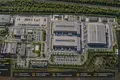
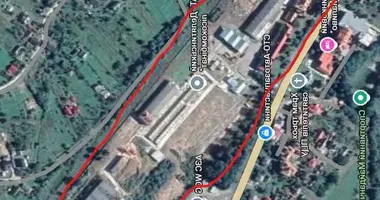
Industrial Park R-33
1. Strategic Overview
Industrial Park R-33 is a controlled industrial territory with official industrial park status, designed for strategic investors who view the asset not as a real estate development, but as a tool for scaling core business operations, logistics, and supply chains.
Key idea: control over the environment = control over costs, growth, and risks.
2. Value Proposition for a Holding
The strategic investor is offered:
acquisition of the asset complex;
full utilization of all industrial park status benefits;
extended management rights (development + operations);
formation of a proprietary industrial or logistics cluster;
project scaling up to 40 hectares, aligned with group objectives.
This offer is designed for companies that build platforms, not standalone assets.
3. Industrial Park Status — Applied Value
For a holding, industrial park status provides:
tax and customs incentives for group residents;
partial compensation of infrastructure costs;
access to national industrial support programs;
eligibility for international grants and donor funding;
accelerated and simplified administrative procedures;
improved project creditworthiness in the eyes of banks.
Effect: reduction of CAPEX and OPEX at the group level, not just a single facility.
4. Asset as an Operational Efficiency Tool
R-33 enables a holding to:
consolidate production and logistics in one location;
reduce transportation and transit costs;
manage supply chains within a controlled territory;
eliminate external regulatory and neighboring risks;
scale operations without changing location.
This is particularly critical for energy-intensive and logistics-heavy industries.
5. Scaling for a Business Group
The project allows for:
phased development without operational downtime;
zoning for different business units within the group;
placement of affiliated and service companies;
reserved land for future expansion.
R-33 was designed as a long-term growth base, not a terminal solution.
6. Governance and Control
Available to the strategic investor:
transfer of management company functions;
control over resident selection policy;
exclusion of competing businesses;
priority rights for future development phases;
centralized management of infrastructure and incentive access.
The holding controls not only the asset, but the rules of the territory itself.
7. Use Case Scenarios
anchor production hub;
distribution and logistics center;
internal industrial cluster;
relocation and capacity expansion base;
platform for joint ventures within the park.
8. Strategic Value
R-33 provides the holding with:
reduced dependency on third-party industrial sites;
EBITDA growth through cost optimization;
land and infrastructure capitalization;
optional future spin-off or partial sale;
protection from regulatory and market volatility.
9. Why Such Assets Are Rarely Publicly Offered
Controlled industrial territories:
rarely enter the open market;
are typically retained within corporate groups;
are transferred through closed transactions.
R-33 is a rare opportunity to enter an asset of this class.
10. Next Steps
disclosure of the financial and operational model;
deal structure alignment;
governance model definition;
due diligence;
transition to closed negotiations.
Industrial Park R-33
Territory that works for the holding’s strategy — not the other way around


 Write in Telegram