












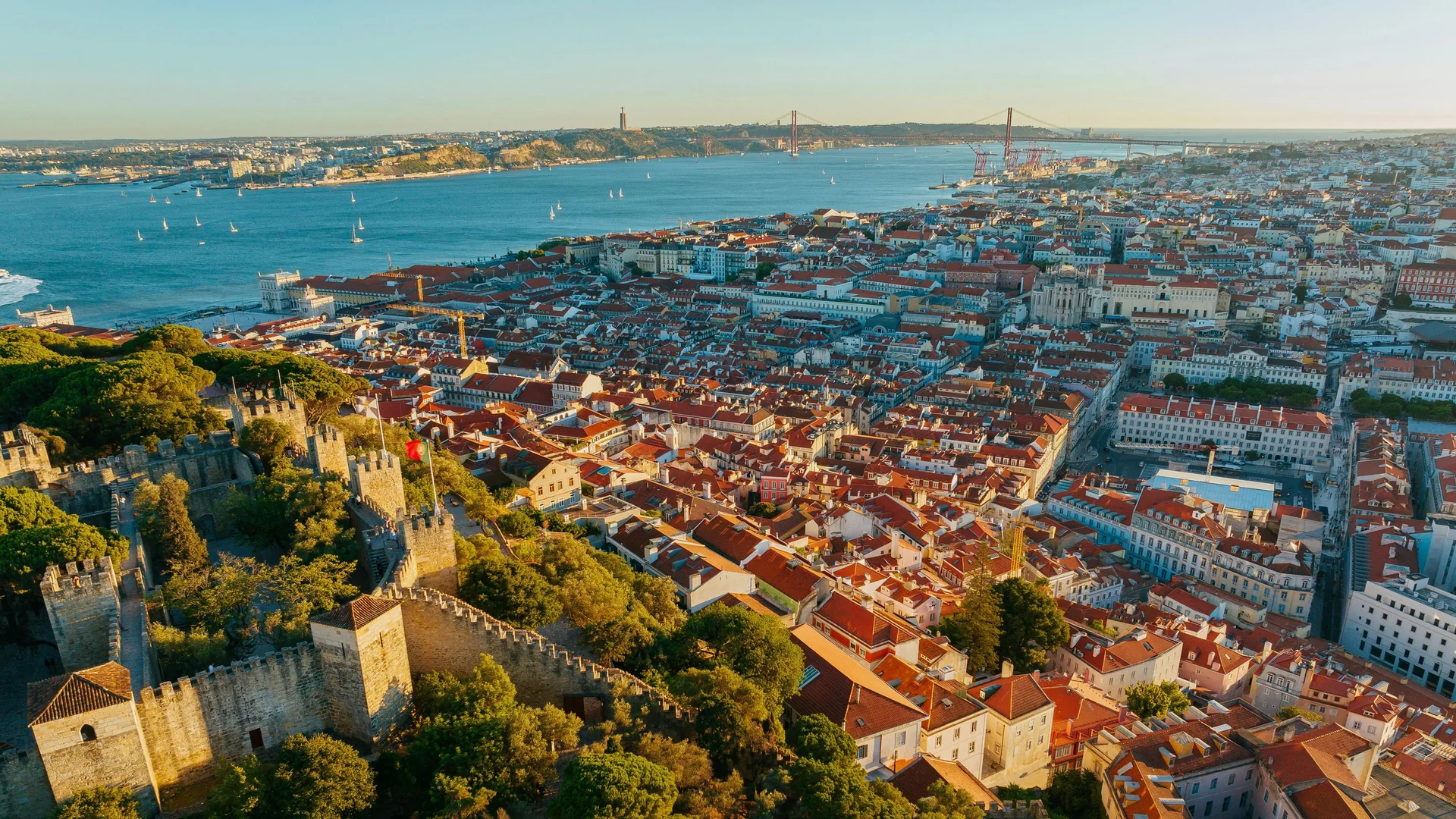

Portugal: Median Home Prices Rose by 17.5% Year-on-Year


💡 The price increase is especially notable when compared with broader European data. In Q4 2025, Portugal’s house price index rose by 18.9% year-on-year, one of the highest rates in the EU. For comparison, average house price growth stood at around 5.1% in the euro area and approximately 5.5% across the European Union.
📊 The key market indicators are as follows:
— the median price of homes sold in Q4 2025 reached €2,198 per sq. m.;
— annual growth in the median price reached 17.5%;
— the house price index increased by 18.9% year-on-year;
— 169,812 residential properties were sold in Portugal in 2025;
— the total value of transactions reached €41.2 billion.
🏦 At the same time, the structure of demand is gradually changing. In previous years, Portugal’s housing market was often associated with foreign buyers, the Golden Visa program, and tax incentives. Today, however, the continued rise in prices is becoming harder to explain by foreign capital alone. After real estate was removed from the Golden Visa program and the NHR tax regime was revised, non-resident activity declined, yet prices continued to rise.
🏠 According to data cited by Global Property Guide, around 95% of transactions in 2025 were made by buyers with tax residency in Portugal. This is an important signal: the market is becoming increasingly driven by domestic demand, mortgage-backed purchases, and government support measures for selected buyer groups.
📉 Non-resident demand, by contrast, declined. Buyers from EU countries purchased 4,416 properties, down 9.6% from the previous year. Buyers from non-EU countries acquired 4,055 properties, showing a 17.1% decrease. Despite this, the overall market did not slow down and continued to grow both in terms of prices and transaction volume.
🏗️ The main reason behind this dynamic remains unchanged: Portugal has a housing shortage. In major cities and popular coastal regions, demand is supported by local buyers, relocation, tourism, and investors, while new construction is not sufficient to close the accumulated supply gap. Prices are also under pressure from construction costs, limited land availability in sought-after areas, and strong competition for high-quality properties.
📍 The most strained situation remains in Lisbon, Porto, the Algarve, Madeira, and coastal areas with well-developed tourist infrastructure. These are the locations where buyers most often face limited supply, high entry prices, and intense competition for liquid properties.
🔎 The rental market is another important factor to consider. According to Global Property Guide, the average gross rental yield for apartments in Portugal stood at 4.29% in May 2026, down from 4.57% a year earlier. In Lisbon, the figure was below the national average at around 3.76%, while in Setúbal it was estimated at approximately 4.89%.
📣 If you are considering buying property in Portugal, it is especially important to assess not only the country as a whole, but also the specific city, district, property type, and real rental yield. On Realting, you can compare properties across different regions of Portugal and find options for living, rental income, or long-term investment.
Posted at:
23/06/2026, 08:49


