










Where to Rent Housing in Spain: Comparison of Prices, Incomes, and Cost of Living in Different Cities


Spain’s rental market is going through difficult times. In 2025 the average cost per square meter reached €14.5 per month, and prices continue to grow almost 10 % annually. At the same time the difference between cities is simply huge: in Barcelona you’ll have to pay €23.4 per square meter, while in small Zamora — just €5.5. That is, the difference is almost four times.
The main problem is an acute shortage of housing. According to the Bank of Spain, the country lacks 700 thousand homes, with half the deficit falling on just five provinces. The result is predictable: competition for rental housing has reached unprecedented scales — on average 22 people apply for one room, and in some cities this figure reaches 65. In this article we will figure out where in Spain it is expensive to live, where affordable, and how to reasonably approach choosing a city for rent.
The Most Expensive Cities in Spain for Rent
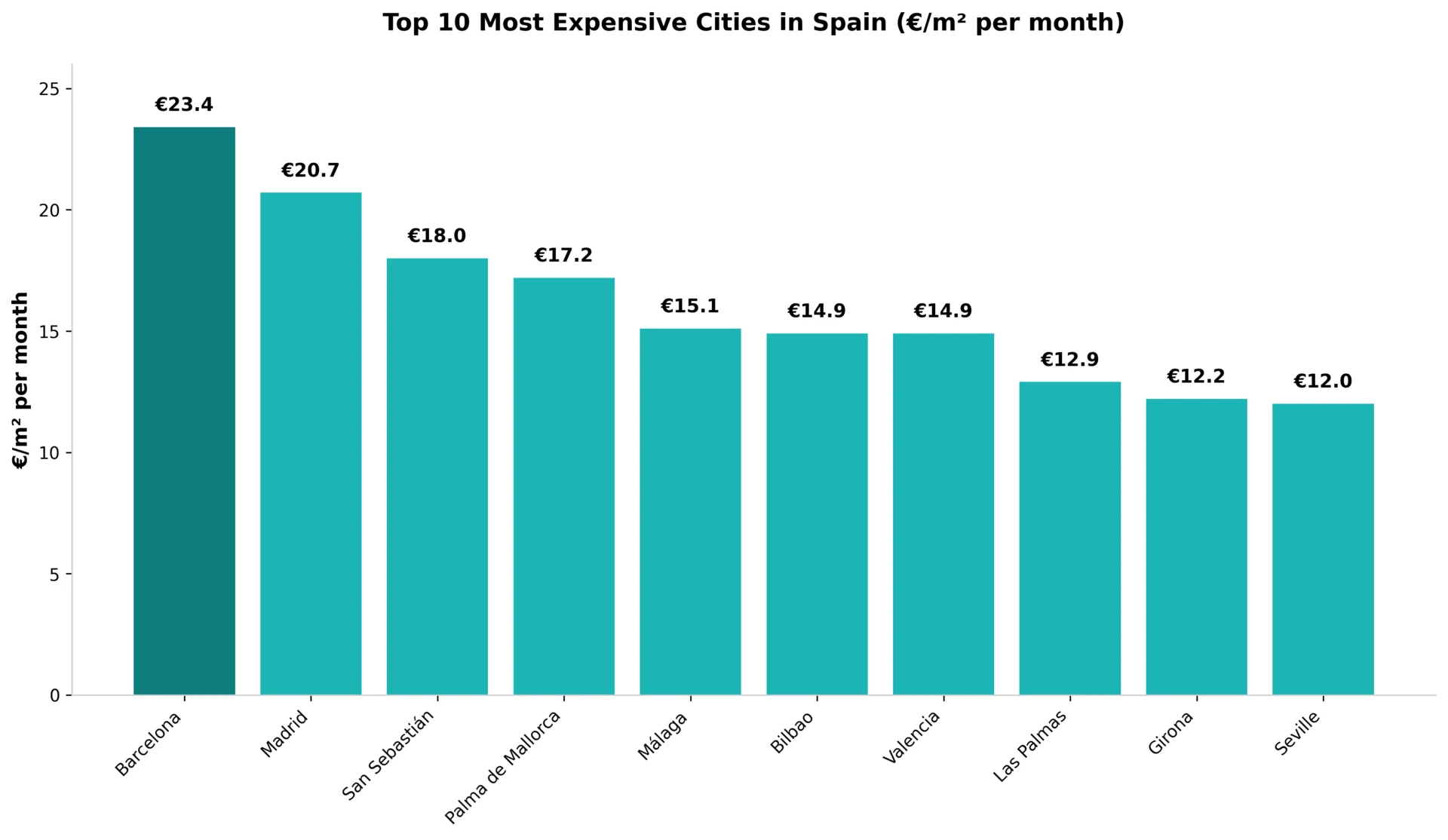
Here is the top ten Spanish cities where rent hits the pocket hardest:
|
City |
€/m² |
Growth per year |
|
Barcelona |
€23.4 |
+13.9 % |
|
Madrid |
€20.7 |
+15.3 % |
|
San Sebastián |
€18.0 |
+7.2 % |
|
Palma de Mallorca |
€17.2-20.0 |
+11.9 % |
|
Málaga |
€15.1 |
+11.4 % |
|
Bilbao |
€14.9-17.3 |
+9.2 % |
|
Valencia |
€14.9 |
+12.2 % |
|
Las Palmas |
€12.9 |
+10.9 % |
|
Girona |
€12.2 |
+3.8 % |
|
Sevilla |
€12.0 |
+9.5 % |
Barcelona is the Most Expensive, but There are Prospects
The price per square meter in Barcelona varies from €19.7 to €23.4 depending on the source (April 2025). A one-bedroom apartment in the center will cost approximately €950–1550 per month in the upper part of the range.
Important change: in March 2025 the Constitutional Court of Spain approved a gradual ban on tourist apartments in Barcelona. By November 2028 all licenses will be annulled.
Madrid — Second Place and Fast Growth
In Madrid the square meter costs €21.1 according to April 2025 data. Prices grow by 15 % per year — faster than in Barcelona.
A one-bedroom apartment in the center — €1000–1350, outside the center — €800–1100. Rent takes 39 % of average income.
Real salaries in Madrid:
- Gross: €31,230 per year (€2603 per month).
- Net: €1650–1900 per month after taxes.
- Unemployment: 8.58 %.
Valencia — Reasonable Compromise
The price of €14.9 per square meter makes Valencia one of the most balanced options. A one-bedroom apartment in the center costs €700–950, a three-bedroom — €1200–1800.
Rent takes about 40 % of income — higher than the international standard of 30 %, but noticeably less than in capitals.
Málaga — housing crisis
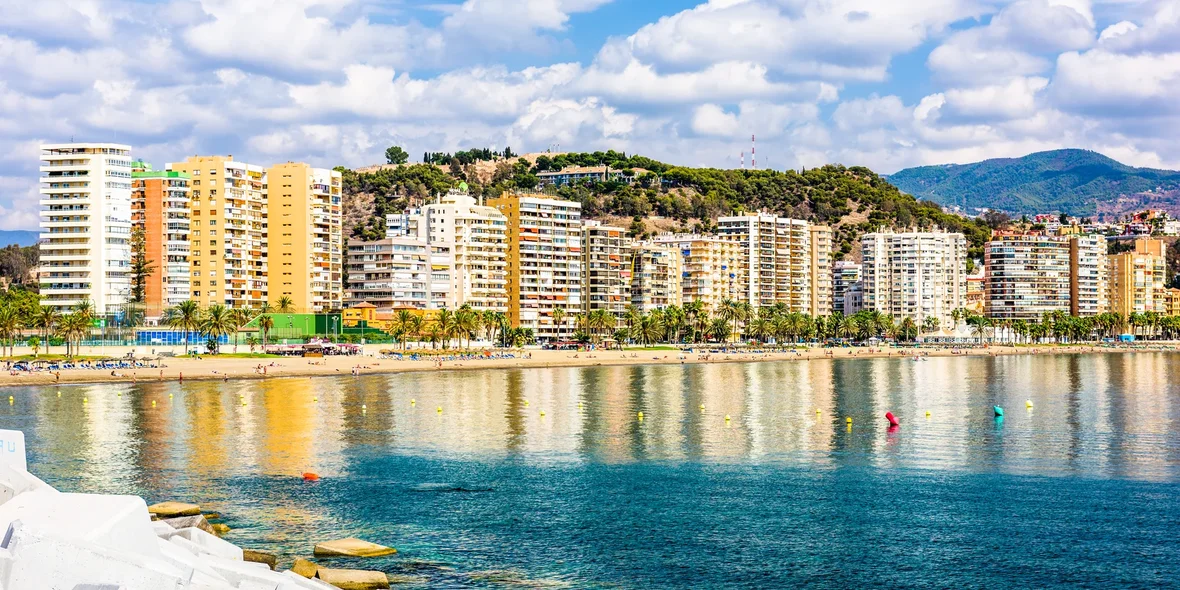
At a price of €15.1 per square meter (rent) Málaga is experiencing a real housing crisis. The province lacks about 15 thousand homes. Property prices (sales) grew by 17 % per year, while for rent the growth was 10 %, indicating a slowdown in rent growth compared to sales.
Examples of long-term rental properties in Malaga





The Most Affordable Cities for Rent in Spain
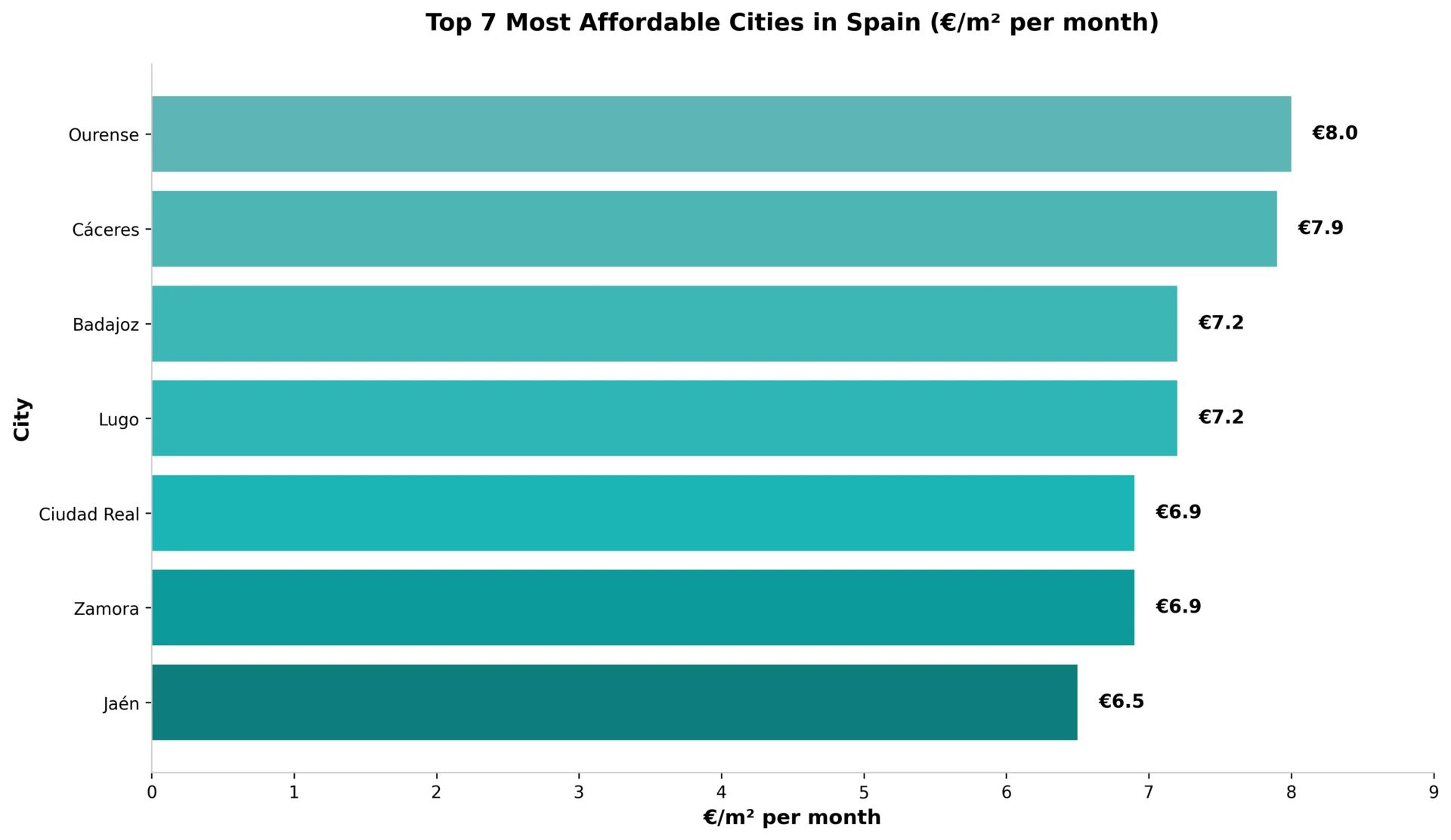
And here is where you can really live cheaply:
|
City |
€/m² |
Population |
|
Jaén |
€6.5-6.9 |
~113,000 |
|
Zamora |
€5.5-6.9 |
~60,000 |
|
Ciudad Real |
€6.5 |
~75,000 |
|
Lugo |
€7.2-7.3 |
~98,000 |
|
Badajoz |
€6.9 |
~150,000 |
|
Cáceres |
€7.9 |
~40,000 |
|
Ourense |
€8.0 |
~31,000 |
Important: Lugo is getting expensive quickly — prices grew by 18.8 % at the beginning of 2025 (based on available data, however the sample is limited due to the small number of offers). If you want to settle in a cheap city, act quickly.
Salaries in Spain by Region
To understand how realistic it is to live in one or another city, look at the ratio of salaries and prices:
|
Region |
Gross (year) |
Net (month) |
|
Spain (average) |
€30,500 |
€1600–1700 |
|
Madrid |
€31,230 |
€1650–1900 |
|
Basque Country |
€32,313 |
€1700–1950 |
|
Catalonia |
€28,774-29,978 |
€1500–1750 |
|
Valencia |
€24,510 |
€1300–1500 |
|
Navarre |
€29,189 |
€1550–1750 |
|
Andalusia |
€25,051-26,948 |
€1300–1450 |
|
Galicia |
€24,169 |
€1250–1400 |
|
Extremadura |
€21,922 |
€1150–1300 |
|
Minimum wage |
€16,576 |
€950 |
The difference between gross and net is 35–40 % due to taxes and social contributions.
What Percentage of Income does Rent Eat up
The international standard is no more than 30 % of income on housing. In Spain this indicator is exceeded almost everywhere:
|
City |
% of income |
|
Palma de Mallorca |
46 % |
|
Barcelona |
45 % |
|
Málaga |
41 % |
|
Valencia |
40 % |
|
Alicante |
39 % |
|
Madrid |
39 % |
|
Las Palmas |
34 % |
|
Santa Cruz de Tenerife |
33 % |
|
San Sebastián |
31 % |
|
Bilbao |
31 % |
In Barcelona and Palma rent takes almost half of income — this is a critical situation.
Why Such a Difference in Prices
Here are a few reasons:
- Shortage of housing. Between 2020 and 2024 350 thousand new households appeared in Spain, but far fewer homes were built. Annual deficit — 100–150 thousand housing units. Demand for 300 thousand apartments, supply — only 128–150 thousand.
- Employment and incomes. The lower the unemployment, the higher the rental rates: Madrid (unemployment 8.58 %): average rent expense €675 per month; Extremadura (unemployment 15.26 %): average rent expense €277 per month.
- Tourism. Cities with developed tourism have higher prices. Summer rental on the coast grew by 6–7 % in 2025.
- Regional development. Historically rich regions (Catalonia, Madrid, Basque Country) are 25–30 % more expensive than less developed ones (Extremadura, Castile-La Mancha).
Advice for Remote Workers
If you work remotely, pay attention to these cities:
Group A — the most advantageous
Lugo, Jaén, Zamora
- Rent: €400–600 for a two-bedroom apartment.
- Internet: high-speed.
- Total budget: €800–1000 per person with possibility of savings.
- Quality of life: good, but you need to get used to the calm pace.
Important: Lugo is getting expensive quickly (+18.8 % at the beginning of 2025, based on available data with limited sample). The window of opportunity is closing.
Group B — alternatives
Ávila, Ourense, Cáceres, Trujillo, Ciudad Real
- One-bedroom apartment in the center less than €600.
- Good internet.
- Calm atmosphere.
- Total budget less than €1200 per month.
Everything needed for remote work:
- Stable internet at least 100 Mbps.
- Co-working spaces (in large cities).
- Digital nomad communities.
Forecasts for 2025–2026
Price growth
- Country-wide: +9.6–10 % in 2025, +6.3 % in 2026 (CaixaBank Research forecast).
- Rent: +9.9 % in 2025 (slower than in 2024).
By cities:
- Madrid: will continue to lead with +15 % growth in 2025.
- Barcelona: slowed growth 3–5 % in 2026–2028 due to return of tourist apartments.
- Valencia: 10–12 % growth, will attract investors.
- Palma: fast growth +15.5 % in 2025.
Regional differences
The fastest real estate price growth:
- Madrid: +16.1 %.
- Balearic Islands: +14.4 %.
- Santa Cruz de Tenerife: +14.2 %.
- Málaga: +13.5 %.
Barcelona: ban on tourist apartments
In March 2025 the Constitutional Court of Spain approved a phased ban on tourist rental in Barcelona:
- Licenses will stop being renewed until November 2028.
- From November 2028 tourist apartments will completely disappear.
- About 10 thousand apartments will return to the long-term rental market.
Expected effect:
- Weak price growth in 2026–2028 (3–5 % instead of 13–15 %).
- Increased supply of long-term housing.
- Some relief of the affordability crisis.
What in the End
Spain’s rental market shows steady growth due to an acute housing shortage. The difference between expensive capital regions and affordable inland cities is huge — in a cheap city you can live 3–4 times cheaper.
Main conclusions:
- For remote workers: Lugo, Jaén, Zamora offer an optimal balance, but the window of opportunity is already closing.
- For city life: Valencia is a reasonable choice (40 % of income vs 45 % in capitals).
- For investors: Barcelona in 2026–2028 may offer interesting opportunities.
- For highly paid specialists: Madrid and Barcelona require income €3000+ (net €2000+).
The market will continue to grow, but the pace will gradually slow down. If you plan to move, study not only prices but also the ratio of incomes and expenses in the specific region.
Author

I am responsible for editorial work. I write expert interviews and guides.