










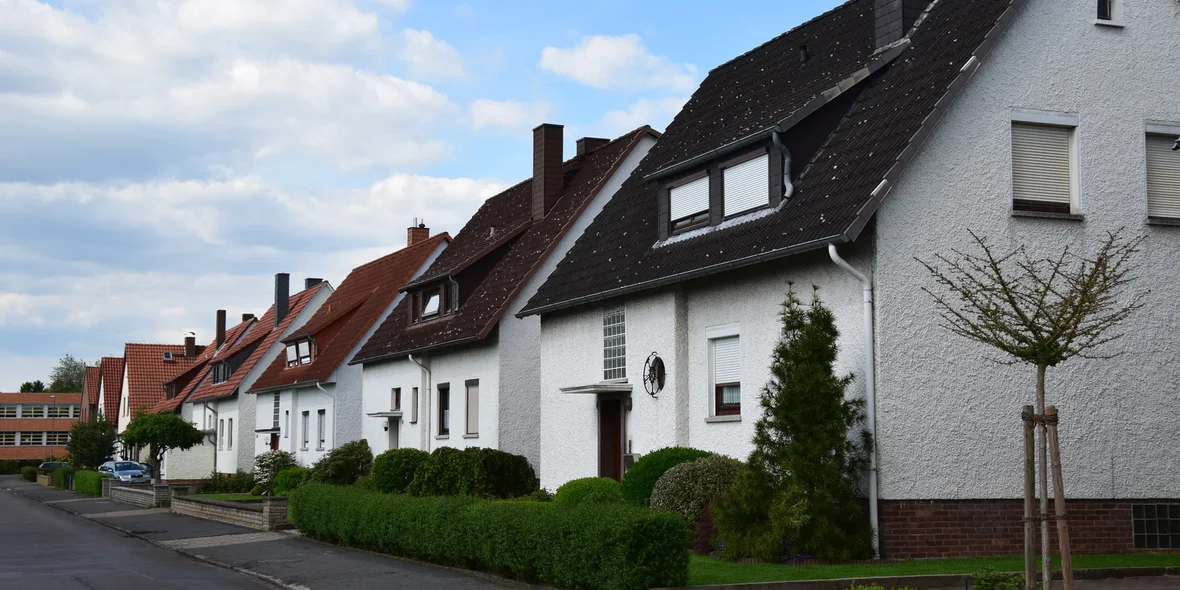
Cities of Germany with the Most Expensive and Affordable Rent


The rental market in Germany differs strongly by region. In Munich, one-room apartments cost on average from €1500 to €2100 per month, while in Chemnitz — from €450 to €650. Thus, the cost of rent in large cities can be 2.5–3 times higher than in small ones.
These data are based on the rental price index from GREIX for the third quarter of 2025, as well as studies by the companies InvestRopa, Cushman & Wakefield, JLL, and other authoritative German sources.
Crisis of residential construction in Germany
If we take into account that Germany must build 320,000 apartments per year to meet demand by 2030, and now builds only 251,900 (in 2024), then the deficit is 68,100 units annually. By 2025, the deficit may reach 120,000 units.
Reasons for the crisis:
- High interest rates (3.5-4.0% for 10-year mortgages).
- Doubling of the cost of construction materials and labor.
- The government reduced subsidies for construction after 2021.
- Stricter energy efficiency standards (KfW-40 and KfW-55 for new buildings).
- Average time from permit to completion: 26 months (in 2020, it was 20 months).
Forecast: the housing deficit will grow at least until 2027–2028, which will support demand and rental prices.
The Most Expensive Cities in Germany: Q3 2025
Ranking of the 8 largest German cities by rental cost:
|
Place |
City |
Rent €/m² |
1-room (Warmmiete) €/month |
Q3 vs Q2 |
Region |
Main industry |
|
1 |
Munich |
€22.96 |
€1724 |
+0.5% |
Bavaria |
Technologies, automotive |
|
2 |
Frankfurt |
€17.55 |
€1250 |
+0.5% |
Hesse |
Financial center (ECB) |
|
3 |
Stuttgart |
€16.11 |
€1330 |
+0.3% |
Baden-Württemberg |
Cars (Porsche, Daimler) |
|
4 |
Berlin |
€15.82 |
€1320 |
-0.3% |
Berlin |
Media, startups, culture |
|
5 |
Hamburg |
€15.62 |
€1266 |
-0.2% |
Hamburg |
Logistics, port services |
|
6 |
Cologne |
€15.21 |
€1200 |
+0.5% |
North Rhine-Westphalia |
Media, trade |
|
7 |
Düsseldorf |
€14.40 |
€936 |
+0.7% |
North Rhine-Westphalia |
Fashion, advertising, finance |
|
8 |
Leipzig |
€10.14 |
€850 |
+1.1% |
Saxony |
Logistics, startups, culture |
Source: GREIX Rental Price Index Q3 2025 (Kiel Institute for the World Economy)
Note on the table: Warmmiete prices (warm rent) include utilities. They can vary depending on the city center vs. the outskirts. The data are based on average indicators.

Munich
Munich remains the most expensive city in Germany. Rent here costs €22.96 per square meter, which is 126% higher than the national average (€14.16/m²). A one-room apartment in the center will cost on average €1724 per month.
Why is Munich so expensive?
Munich is an economic giant. The headquarters of BMW, Siemens, Allianz, Munich Re and HypoVereinsbank, as well as other major global companies, are located here.
Housing shortage is a serious problem. Vacancy is only 0.1-0.2%, which is the lowest rate in Germany. Demand for housing is constantly growing.
Limited construction is another factor. High construction costs (€3500-€4500 per m²) and strict environmental standards slow down the appearance of new residential facilities.
High demand from foreigners also affects prices. The city attracts specialists from IT companies and financial institutions, which intensifies competition in the rental market.
Many apartments are rented through Airbnb instead of long-term rentals. From 2025, this restriction is up to 8 weeks per year.
Cost of apartments in Munich by type (2025, Warmmiete):
|
Type |
Size |
Center (€/month) |
Outskirts (€/month) |
Difference |
|
Studio |
40-50 m² |
€1200–€1800 |
€700–€1100 |
2.2x |
|
1-room |
60-70 m² |
€1500–€2100 |
€900–€1300 |
2.1x |
|
2-room |
80-90 m² |
€1900–€2800 |
€1100–€2000 |
1.9x |
|
3-room |
100+ m² |
€2500–€4000 |
€1400–€2800 |
1.8x |
Frankfurt
Frankfurt ranks second in real estate cost, second only to Munich. It is not just the financial center of Germany, but of all Europe. The European Central Bank (ECB) and hundreds of offices of major financial and insurance companies are located here.
Renting a one-room apartment (Warmmiete) costs €1250 per month. This is approximately 28% cheaper than in Munich, but still makes Frankfurt one of the most expensive cities to live in.
Reasons for such high cost: constant influx of foreign specialists, high salaries in the financial sector (35-40% higher than the German average), shortage of quality housing (less than 1% vacant apartments), and the city’s attractiveness for young professionals.
Berlin
Berlin, where the average rental cost is €15.82 per square meter, shows an interesting paradox. New contracts offer a higher price — €16.35 per square meter. However, on existing contracts, rent costs only €7.67 per square meter thanks to strict rent control, which is in effect until December 31, 2025 (extended by the Berlin Senate on April 15, 2025).
Over the past five years, Berlin has become one of the leaders in rental payment growth among major cities, increasing by 36%. The city continues to attract migrants, but faces a housing shortage: demand significantly exceeds supply.
It is important to remember that after December 31, 2025, price regulation for new contracts may be lifted, which will lead to a 10–15% increase in rental costs.
Rental prices in different districts of Berlin (new contracts, €/m²):
|
District |
Price €/m² |
Character |
|
Mitte (center) |
€18–€23.40 |
Premium, modern, tourism |
|
Prenzlauer Berg |
€16–€20 |
Youth, cafes, culture |
|
Charlottenburg |
€14.00 |
Family, parks |
|
Kreuzberg |
€16–€20 |
Creative class, alternative |
|
Tempelhof |
€13.50 |
Affordable, developing |
|
Pankow |
€10.60 |
Suburban, family |
|
Marzahn-Hellersdorf |
€11.90 |
Outskirts, the cheapest |
Hamburg, Cologne, and Düsseldorf
Hamburg and Cologne attract highly qualified specialists due to, among other things, affordable housing rental prices. In these cities, the cost per square meter is €15.62 in Hamburg and €15.21 in Cologne. Here, specialists find work in port logistics, media and trade.
Düsseldorf (€14.40/m²) showed the fastest growth among major cities in the third quarter of 2025 (+0.7%). It is a center of fashion, advertising, and financial services, especially the banking sector. Despite the lower price per square meter, renting a one-room apartment here will cost €936, which is higher than in cities of the same size due to higher utility costs.
The Most Affordable Cities in Germany
Ranking of the most affordable German cities by rental cost:
|
Place |
City |
WG-Room €/month |
1-room €/month |
Monthly expenses |
Region |
Note |
|
1 |
Leipzig |
€400 |
€700–€900 |
€1450 |
Saxony |
Growing city, culture, startups |
|
2 |
Dresden |
€350 |
€450–€750 |
€1400 |
Saxony |
Architecture, culture, history |
|
3 |
Magdeburg |
€330 |
€600–€800 |
€1300 |
Saxony-Anhalt |
The cheapest state capital |
|
4 |
Erfurt |
€280–€380 |
€350–€600 |
€1250 |
Thuringia |
Medieval city, student |
|
5 |
Halle |
€350 |
€500–€750 |
€1350 |
Saxony-Anhalt |
Near Leipzig, price growth |
|
6 |
Jena |
€300–€400 |
€400–€600 |
€1300 |
Thuringia |
Student city, innovation |
|
7 |
Chemnitz |
€265 |
€450–€650 |
€1010 |
Saxony |
The cheapest in Germany |
Sources: GREIX Q3 2025, MMI/WG-Gesucht Study 2025, InvestRopa, Global Property Guide
Leipzig
Leipzig is considered one of the best affordable cities to live in. It occupies a high position in the GREIX index — €10.14 per square meter. A one-room apartment here will cost €700-900 per month, and a room in a shared apartment (WG) — approximately €400.
The city attracts young specialists and startups due to affordable prices and a rich cultural life. Leipzig is known for its music and theater scene. It is rapidly developing as a cultural center of Eastern Germany, attracting creative people and entrepreneurs.
Breakdown of prices by districts of Leipzig (2025):
|
District |
Price €/m² |
Dynamics |
Character |
|
Center (Mitte) |
€12.42 |
+6.2% per year |
Fashionable, fast-growing |
|
Plagwitz |
€11.12 |
+10.1% per year |
Youth, art, galleries |
|
Südvorstadt |
€10.15 |
+7.75% per year |
Students, families |
|
Connewitz |
€10.63 |
Growing |
Developing, new buildings up to €16.88 |
|
Gohlis-Nord |
€9.31 |
+5.63% per year |
Quiet, family |
|
Prohlis-Süd |
€6.64 |
Stable |
The cheapest in the city |
|
Grünau |
€6.97 |
Slightly growing |
Periphery, safe |
Note: new buildings in Leipzig built after 2015 cost significantly more — on average €13.67 per square meter. This is due to increased requirements for energy efficiency of modern construction.
Dresden
Dresden — a city with rich baroque architecture (for example, the Zwinger Palace and the Semper Opera) — attracts with its cultural treasures. The average rental cost here is €9.89 per square meter, and a one-room apartment will cost €450-€750 per month. A room in a WG (Wohngemeinschaft — shared living) costs about €350.
Over the past 15 years, housing prices in Dresden have grown by approximately 80-90%. Nevertheless, the city remains one of the most affordable large cities in Germany. It is rapidly developing as a center of attraction for young specialists.
Chemnitz
Chemnitz is a city where you can save significantly. The cost of a room in a communal apartment here starts from only €265 per month, making it the most affordable among large German cities. A full one-room apartment will cost €450-€650 per month.
Monthly expenses of one person in Chemnitz amount to about €1010, which is 2.5 times less than in Munich, where the average amount reaches €2524.
Reasons for such affordability:
- Economic decline in the region associated with industrial heritage.
- Low influx of migrants and expats.
- Population decline after German reunification.
- Less attractiveness for international companies.
- Structural problems of the Eastern German economy.
However, the situation is gradually improving. The city is actively investing in startups and cultural development, which leads to price growth.
Rental Cost Growth Rates by Cities
Here are the data relevant as of the 3rd quarter of 2025:
|
City |
Q3 vs Q2 2025 |
Q3 2025 vs Q3 2024 (y/y) |
Trend |
Forecast |
|
Leipzig |
+1.1% |
+3.5% |
Growing fast |
Will continue to grow, may attract investors |
|
Düsseldorf |
+0.7% |
+3.5% |
Growing |
It will become more expensive in the coming years |
|
Munich |
+0.5% |
+3.5% |
Stable growth |
Slow controlled growth |
|
Frankfurt |
+0.5% |
+3.5% |
Stable growth |
Slow controlled growth |
|
Cologne |
+0.5% |
+3.5% |
Stable growth |
Slow controlled growth |
|
Stuttgart |
+0.3% |
+3.5% |
Slow growth |
Will slow down, may stabilize |
|
Hamburg |
-0.2% |
+3.5% |
Slight decline |
Stabilization of prices |
|
Berlin |
-0.3% |
+3.5% |
Decline |
Stabilization of prices (Mietpreisbremse in effect) |
Thus, we can conclude that price growth has slowed significantly: +3.5% year-on-year — the lowest rate since the end of 2021.
At the national level, rental growth now coincides with inflation: the market has cooled after several years of rapid growth.
The fastest-growing cities (Leipzig, Düsseldorf) show that eastern cities are becoming increasingly attractive to investors and young specialists.
Berlin and Hamburg showed the first signs of stabilization: this is related to rent control and cooling demand.

Cold (Kaltmiete) vs Warm (Warmmiete) Rent
To correctly assess your financial capabilities, it is important to understand what is included in the rent:
Cold rent (Kaltmiete):
- Includes only the right to the apartment.
- This is the main indicator for comparing prices by city.
- In GREIX calculations, this figure is most often used.
Warm rent (Warmmiete):
- Adds utilities (heating, water, garbage removal) to the cold rent.
- This is the real amount that the tenant must pay, including electricity.
- On average, it is 20-30% higher than cold rent.
Additional expenses:
- Electricity: €60–€140 per month.
- Internet: €35–€50 per month.
- TV/radio tax: €18.36 per month, regardless of use.
For example, monthly housing expenses in Munich (€1,854) are approximately 3.1 times higher than in Chemnitz (€590). And moving from Munich to Leipzig can save €18,168 annually while maintaining a similar lifestyle.

The Best Cities in Germany for Investments
East German cities such as Magdeburg, Leipzig and Chemnitz attract investors due to higher yields, which are 30-50% higher than in western regions. At the same time, the purchase cost of real estate in these cities is lower.
|
City |
Purchase price €/m² |
Average rent €/m² |
Gross yield % |
Note |
|
Magdeburg |
€1300 |
€7.00 |
5.0% |
Highest yield |
|
Leipzig |
€2500 |
€10.14 |
4.9% |
High growth potential + yield |
|
Chemnitz |
€1000 |
€6.15 |
4.8% |
Maximum savings, stable yield |
|
Dresden |
€2800 |
€9.89 |
4.2% |
Cultural asset + yield |
|
Duisburg |
€2200 |
€8.17 |
4.2% |
Stable demand |
|
Frankfurt |
€5500 |
€17.55 |
3.8% |
Financial center, lower yield |
|
Berlin |
€6000 |
€15.82 |
3.2% |
Low yield, capital growth potential |
|
Munich |
€8500 |
€22.96 |
3.2% |
Premium, low investment yield |
Summary
The German rental market is characterized by deep geographical polarization. Munich (€22.96/m²) is almost 4 times more expensive than Chemnitz (€6.15/m²). This gap is due not only to economic factors, but also to the long history of the country’s division into two parts.
Three key trends of 2025:
- Slowdown in price growth: rental prices are slowing from 6–8% to 3.5% due to economic cooling and ECB policy keeping interest rates at 3.5-4.0%.
- Price growth in eastern cities: Leipzig and Düsseldorf show quarterly growth of 0.7-1.1%. At the same time, rent in Berlin and Hamburg either declines or remains stable.
- New construction crisis: in 2024, construction decreased by 14%, and in 202,5 a decline of 20% is expected. This will lead to a long-term housing shortage.
Frequently Asked Questions About Renting in Germany
Where is the cheapest rent in Germany?
The most affordable housing can be found in Chemnitz (Saxony) — a room in a WG costs from €265 per month, and a one-room apartment will cost €450–€650. Total expenses for one person amount to about €1010 per month, which is 2.5 times cheaper than in Munich.
Other affordable cities:
- Magdeburg — WG €330/month, apartment €600-800/month.
- Erfurt — WG €280-380/month, apartment €350-600/month.
- Halle — WG €350/month, apartment €500-750/month.
- Jena — WG €300-400/month, apartment €400-600/month.
- Dresden — WG €350/month, apartment €450-750/month.
All these cities are located in eastern Germany, where prices are historically lower due to the economic consequences of the country’s division.
How much does it cost to rent an apartment in Munich?
Munich is the most expensive city in Germany for rent.
The average cost per square meter is €22.96, which is 126% higher than the national average (€14.16/m²). Such high prices are explained by the headquarters of BMW, Siemens, Allianz, and minimal housing vacancy (0.1-0.2%).
What is Kaltmiete and Warmmiete?
These are two basic concepts of rent in Germany:
Kaltmiete (cold rent):
- Only the base cost of the apartment.
- Does not include utilities.
- Used for comparing prices by cities.
- Indicated in advertisements and statistics.
Warmmiete (warm rent):
- Kaltmiete + Nebenkosten (utility costs).
- Includes: heating, water supply, garbage removal, and house maintenance.
- This is the real amount you pay monthly.
- Usually 20-30% higher than the cold rent.
Example: apartment for €1000 Kaltmiete + €250 Nebenkosten = €1250 Warmmiete
Additionally, paid separately:
- Electricity: €60-140/month.
- Internet: €35-50/month.
- Rundfunkbeitrag (TV/radio tax): €18.36/month (mandatory for everyone).
Author

I am responsible for editorial work. I write expert interviews and guides.