









The Best Regions in France for Real Estate Investments


French residential real estate regained popularity in 2025 after a two-year market cooldown caused by rising interest rates and reduced credit availability. By the end of September 2024, the annual volume of transactions on the secondary housing market was estimated at around 780,000. In 2025, this figure increased to 892,000 transactions. For 2026, forecasts suggest further growth to approximately 920,000 transactions.
One of the drivers of this recovery is the continued availability of investment-attractive properties in France. In absolute terms, foreign buyers account for only about 3% of all transactions nationwide. However, in certain regions this share reaches up to 10%.
To better understand where capital allocation is most efficient, we have prepared a ranking of the top regions in France for real estate investment in 2026.
Top Regions of France for Real Estate Investment
France consists of 27 regions, each with its own specific real estate market dynamics. There is no universal strategy that fits all regions, as each market has distinct characteristics. These differences are reflected in the ranking below.
French Riviera, Marseille, Alps (Provence-Alpes-Côte d’Azur, PACA)
The PACA region effectively includes two distinct markets.
The first is the French Riviera, which attracts foreign capital. In 2024, non-residents accounted for approximately 15,490 transactions in this area.
The second is Marseille. With a population close to one million, the city forms a stable domestic market. A separate and significant contribution to rental demand comes from Aix-Marseille University, which enrolls around 80,000 students.
Key figures for the region:
|
Indicator |
Nice |
Marseille |
|
Average purchase price |
€5000–6500 per m² |
€3000–4000 per m² |
|
Rental rate |
€13.6–15.5 per m² per month |
€11.2–15.9 per m² per month |
|
Gross yield |
~4.5–5.0% |
~5.5–6.0% |
|
Net yield |
~3.2–3.8% |
~4.2–4.8% |
|
Preferred investment format |
studio/T1, T2 |
studio/T1, T2 (T3 selectively) |
In the PACA region, demand is consistently concentrated around smaller residential units.
- Nice. Studios and T1 apartments account for 24%, T2 units for 32%, T3 for 28%, and T4+ for 14%. Combined, studios, one-room, and two-room apartments represent around 56% of the total market, which makes them the most liquid asset class.
- Marseille. The structure differs. T1–T2 units account for 35% of the market, a figure comparable to the share of three-room apartments at 33%.
Market liquidity remains high. Properties vacant for more than two years represent only 1.6% of total supply. The average vacancy period for an investment property is between one and three months.
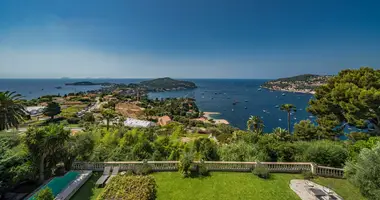
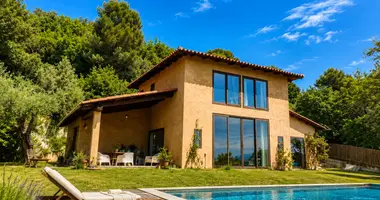
The Best Investment Objects in the PACA Region (Provence-Alpes-Côte d’Azur)





Paris Metropolitan Area, Île-de-France
Île-de-France is the most populous region in France, with a population of approximately 12 million. This region forms the core of the French real estate market.
The rental market is strongly supported by student demand. The region hosts the country’s leading higher education institutions, with around 700,000 students enrolled, representing roughly one third of all students in France.
Key investment advantages:
- Sustained rental demand from tourists, expatriates, and students. Paris alone attracts over 50 million visitors annually, with particularly strong demand in the premium segment.
- The region leads France in residential building permits issued at 16% and housing construction starts at 14%, ensuring a steady supply. In 2025, total real estate investment volume in France increased by 55% to €4 billion.
- Capital growth potential. Apartment prices in urban areas increase by approximately 1.0–1.3% per year, driven by ongoing infrastructure upgrades.
Key figures for the region:
|
Indicator |
Paris |
Greater Paris Area |
|
Apartment price |
€9650 per m² |
€6220 per m² |
|
Rental rate |
€26.6 per m² |
€17.7 per m² |
|
Estimated gross yield |
≈ 3.3% |
≈ 3.4% |
As a result, the region is best suited for investors with budgets starting from €300,000 who are focused either on higher-yield residential assets in the suburbs or on capital-preservation properties in central districts.
Occitanie, Toulouse and Montpellier
Occitanie is a fast-growing region due to the presence of large cities with a significant student population. Toulouse hosts over 120,000 students, while the University of Montpellier enrolls more than 50,000 students. For investors, this translates into stable demand for studios, T1, and T2 apartments, particularly in areas close to public transport and university campuses.
Key figures for the region:
|
Indicator |
Toulouse |
Montpellier |
|
Median rent (market level, excluding charges) |
€12.0 per m² per month |
€13.5 per m² per month |
|
Purchase price (apartments, notaries’ data, 2025 reference) |
€3170 per m² |
≈ €3269 per m² |
|
Estimated gross yield (based on medians) |
≈ 4.5% |
≈ 5.0% |
A key constraint for investors is rent regulation. Since July 1, 2022, the encadrement des loyers system has been in force, setting a legal ceiling on permissible rental levels under lease agreements.
Another critical factor is property quality and energy efficiency. Assets with low energy performance ratings require either a significant acquisition discount or a clearly budgeted renovation plan. Without this, the nominal gross yield is likely to decline sharply.
Hauts-de-France
Hauts-de-France is a northern region of France with a population of around 6 million. Its economic core is the Lille metropolitan area, where logistics, education, and technology hubs are concentrated.
In 2025, the regional real estate market expanded by 8% compared with 2023. The main growth drivers were ongoing urbanization and the construction of new energy-efficient residential stock.
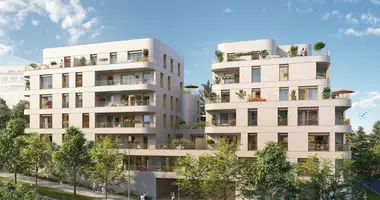
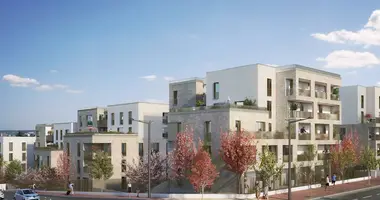
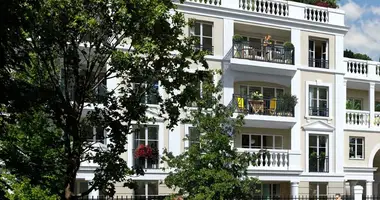
The Best Properties for Investment in O-de-France

Key investment advantages:
- Strong rental demand from students, expatriates, and business travelers.
- Local authorities provide renovation grants for aging housing stock and offer tax incentives for investors purchasing properties for rental purposes.
- Capital appreciation potential. Average payback period is 27.9 years, with higher yields achievable in more affordable districts.
Pricing and yield data:
|
Indicator |
Value |
|
Average price per m² in Lille (apartments/houses) |
€3920 |
|
Average transaction price (properties) |
€231,000 |
|
Average monthly rent |
€690 (1 bedroom €570, 2 bedrooms €800, 3 bedrooms €1,000, 4+ bedrooms €1,090) |
|
Rental yield (gross) |
5.24% on average, up to 6.38% in prime districts |
|
Expected price growth |
+0–3% |
|
Payback period |
27 years |
In Lille, there are measurable indicators of demand outpacing supply in the residential segment. While demand increased by approximately 20% year on year, supply grew by only 3%. This imbalance improves asset liquidity and shortens tenant acquisition periods.
Grand Est Region
The Grand Est region is located in northeastern France, at the intersection of Germany, Belgium, Luxembourg, and Switzerland. The regional real estate market is largely concentrated in several urban agglomerations, with Strasbourg as the primary hub.
The Strasbourg metropolitan area has a population of just over 500,000. Population growth remains positive, while the volume of foreign investment is relatively limited. This results in a high proportion of renter-oriented households and sustained demand for small- and medium-sized apartments.
Key figures for the region:
|
Indicator |
Value |
|
Median rental rate |
€11.1 per m² per month |
|
Maximum median by zone |
up to €12.8 per m² per month |
|
Median purchase price (apartments, secondary market) |
€3400 per m² |
|
Year-on-year price change |
−2.3% |
|
Gross yield (based on medians) |
≈ 3.9% |
Proximity to EU borders allows landlords to target tenants employed in neighboring EU countries. This cross-border workforce increases rental demand by an estimated 10–15% and is often willing to purchase properties at premiums of up to 15%.
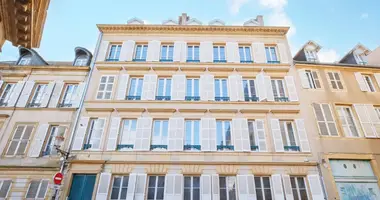
The Best Investment Opportunities in the Grand Est



Pays de la Loire
The real estate market in Pays de la Loire is concentrated primarily in the cities of Nantes and Angers. Nantes is the largest city in the region, with a metropolitan population of around 700,000. Demand there is driven mainly by owner-occupier households. In Angers, the university sector plays a significant role in demand structure. During the 2024–2025 academic year, the University of Angers enrolled approximately 30,000 students.
Key figures for the region:
|
Indicator |
Value |
|
Average apartment price |
€3544–3790 per m² |
|
Average house price |
€4111–4690 per m² |
|
Prices in other cities |
Around €2130 per m² |
|
Rental yield |
4–5% |
House prices in peripheral areas are adjusting downward by 3–5%, as buyers increasingly prefer urban properties with stronger infrastructure. This preference extends average selling periods by one to two months for suburban houses.
At the same time, limited new construction is creating a supply deficit of 10–15% in high-growth zones. This imbalance has the potential to support price growth but also increases competition in the rental market if supply begins to outpace effective demand.
Frequently Asked Questions About Investing in French Regions
Which regions of France are the most profitable for real estate investment in 2025?
If the analysis is based on figures rather than reputation, the most profitable regions are those with lower entry prices. In 2025, these include:
- Occitanie: Toulouse and Montpellier. Gross yields on standard apartments typically range from 4.5% to 5.0%.
- Hauts-de-France: primarily Lille. Similar yield levels, with a lower entry price compared with the capital.
- Grand Est: Strasbourg. Yields are closer to 4.0–4.5%, supported by stable rental demand.
- Provence–Alpes–Côte d’Azur: strong internal variation within the region. Nice is closer to 4.5%, while Marseille more often reaches 5.5% or higher.
- Île-de-France: the Paris region is usually not chosen for maximum yield. It is primarily a liquidity-driven market. Over the past year, prices in the capital region declined faster than in most other parts of France.
Where in France is rental yield the highest?
The highest yields are usually achieved not across entire cities, but in specific segments. Based on average figures in major cities in 2025:
- Marseille: around 5.5% on average; studios often exceed 6%.
- Nantes: approximately 5.0%.
- Montpellier: about 4.7–4.8%, with studios frequently reaching 6% or more.
- Toulouse: around 4.6%; studios close to 5.5%.
- Paris: average gross yield is around 5%, but this varies significantly by district. In practice, net yield is lower due to operating and ownership costs.
The average gross rental yield across France at the end of 2025 is approximately 4.8%.
Is it worth investing in French real estate in 2025?
Investment makes sense where rental income covers the transaction economics and the property complies with energy efficiency requirements. Key factors to consider:
- The transaction market began to recover in 2025 after the downturn of 2023–2024.
- Price dynamics vary by city. In some locations prices are rising, in others they are stagnating or declining.
- From January 1, 2025, properties with the lowest energy efficiency rating cannot be rented under new or renewed leases. This regulation directly affects asset selection and renovation budgets.
Which regions of France are best for foreign investors buying rental property?
Overall, the share of foreign buyers in France remains limited at around 2% of all transactions. However, certain regions show a more pronounced foreign presence:
- Provence–Alpes–Côte d’Azur, particularly the Alpes-Maritimes department including Nice and surrounding areas. In some zones, foreign buyers account for more than 10% of transactions.
- Île-de-France (Paris): the most transparent and liquid market for foreign investors, although yields are generally lower than in regional cities.
If the primary objective is rental income rather than capital preservation, foreign investors often find it easier to start in Occitanie (Toulouse, Montpellier), Grand Est (Strasbourg), or Hauts-de-France (Lille).
Foreign nationals can freely purchase real estate in France. Transactions are executed through a notary, starting with a preliminary sale agreement, followed by the final notarized deed of purchase.
Author

I write informative articles about real estate, investments, job opportunities, taxes, etc.