Translate
 Deutsch
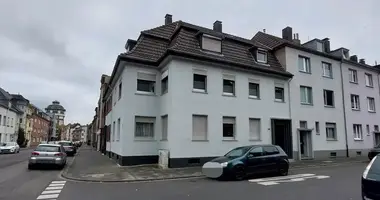
EFH DHH for sale in Pirmasens!
Very good condition! Top location!
66955 Pirmasens
Supplier:
IMMOBILIEN-ELBUS GmbH
Ringstr. 15 D-66953 Pirmasens
Mobile/WhatsApp/Telegram: + 49 0176/70242122
E-mail:
Internet: https://immobilien-elbus.de
Contact times: Throughout
HRB 31725 Legal form: GmbH
Location:
Location: Pirmasens, a circular city in Rhineland-Palatinate Germany, is located on the southwestern edge of the Palatinate Forest. It is surrounded by the province of Südwestpfalz and is located on the Westrand of the Palatinate Forest. Nearly larger places are within a distance of:
2 bridges approx. 24 km
Kaiserslautern about 37 km
Landau about 45 km
Karlsruhe ca.85 km
Mannheim approx. 92 km
Saarbrücken approx. 63 km
Pirmasens itself lies with an area of about 62 km2 at a height of 360-400 m above sea level. NN with 42.184 inhabitants (as at 31December 2017) giving a population density of 680 inhabitants per km2. The city is connected to the railway network and is located from airports as follows:
Saarbrücken approx. 47 km
Karlsruhe/Baden ca. 105 km
Frankfurt approx. 160 km
Environment (small location):
The object to be evaluated is located in a central street of Pirmasens. The city centre is about 800m away. Quickly accessible via L270 and the A8 by car. The nearest bus stop of the ÖPNV is within 2 minutes walking distance. Supermarkets, gas stations are located within 600 metres. Other shops for daily needs, supermarkets, restaurants, gas stations, doctors, car houses, etc. are within 3 km distance.
History of the town of Pirmasens!
Pirmasens is first mentioned by 850 as pirminiseusna. The name was the wandering preacher Pirminius, who founded the nearby monastery Hornbach (as well as the monastery Reichenau on Lake Constance).
Ludwig IX of Hessen-Darmstadt (1719-1790) is the founder of the city of Pirmasens. Under his reign, Pirmasens grew from a village with 30-40 houses to the Garnison and in 1763 to the residence town, which counted around 9000 inhabitants at Ludwig's death.
Out of existential need the so-called “slide”, the legend of shoes made from leather and uniforms, were of a simple kind. Through Jean Joss, which today reminds the Schusterbrunnen in the pedestrian zone, supraregional trade with shoes began.
In the beginning, the “Pirmasenser Shoe Girl” was still operated by the “Pirmasenser Shoe Girl”, the trade laid the foundation for the future global shoe export. This first “conversion” to be mastered by city and inhabitants was successful: The associated economic upheavals brought the pirmasensians an economic upheaval after a difficult start and build-up time, and already in the 1920s world-wide acquaintance as a “German shoe metropolis”.