
Zagorodnaya Street appeared at the dawn of the XIX century (the current name of the street since 1940 – September 17), where history left its imprint, in the form of architectural forms and the birth of outstanding people. Along the street there were various houses, for example: house No. 8 was a two-storey wooden house with an attic, a cross-shaped roof and four pediments. On the main facade there were two risalites, between them a balcony, the house was known as the “bakery of Lyubego”.
House No. 10a is known as Pritytsky’s House. Brick extension in the style of constructivism. Sergey Osipovich Pritytsky lived here.
House No. 12 is distinguished by a kind of architecture, one-storey, brick, with mezzanine. High, complex configuration roof covered with red clay tiles, which lived in the family Fedoruk. The owner – Vladimir Trofimovich, headed the Belarusian school in Grodno. His son Leonid in the 30s was a famous athlete-athlete, repeated champion and record holder of Poland in discus throwing and pushing the core.
Until the middle of 60-ies of the last century on the street 17 September preserved house No. 42, where lived the founder of Grodno zoo Jan Kokhanovsky.
In the depths of the street there are a number of houses No. 50 – 54, in the style of constructivism, where there was a large garden with fruit trees.
In the postwar years at the address: 17 September, No 59 was a furniture and mechanical factory, later was mastered the production of string musical instruments - balalaikas and guitars.
At the beginning of the twentieth century on the corner of today's streets Timiryazev and 17 September were state wine warehouses (now hypermarket "Euroopt"). In 1910, the Borovsky brothers in this territory opened locksmithing and mechanical workshops, where the later also mastered cast iron and aluminum casting.
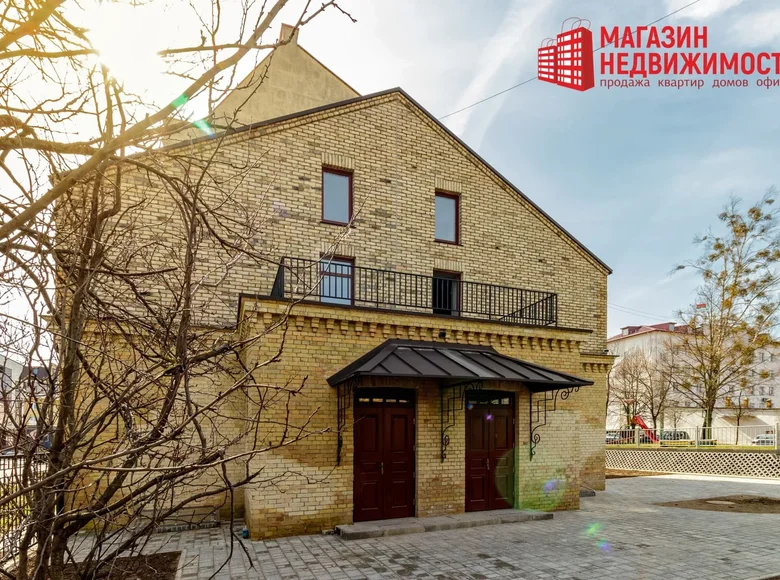
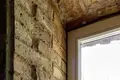
At the beginning of 1920, a complex of 4 residential buildings of characteristic yellow brick was built, which was made at the famous Stanislavovsky brick factory (district of modern streets of Dzerzhinsky-Pushkin). Its yellowness "Stanislav" brick owes the yellow color of the clay from which it was produced.
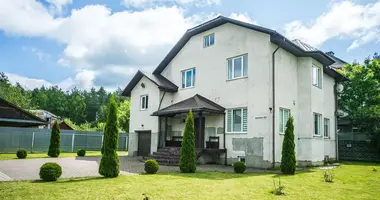
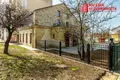
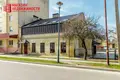
Today, one two-family house from this ensemble built in the style of brick electrics is offered for sale, which can become your cozy house in a quiet area of the city and continue the history of our city.
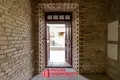
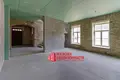
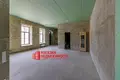
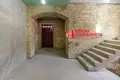
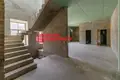
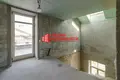
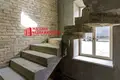
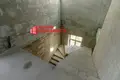
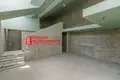
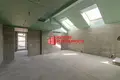
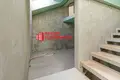
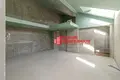
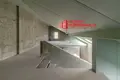
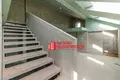
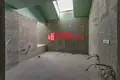
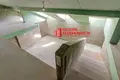
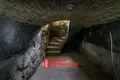
A house with beam lintels of windows with locks and a cornice, finished with bricks-"sukhariki". In February 2024, a complete reconstruction of the house was completed, as a result of which the historic building became a modern, technological and practical structure. As a result of the reconstruction, the roof, windows were completely replaced, doors were restored, wine cellars were waterproofed, all communications were replaced. The house has a modern heating system, a heating system is fully installed, there is the possibility of connecting a fiber optic line, preparation for clean finishing has been made.
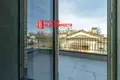
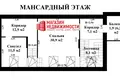
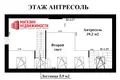
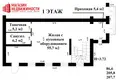
The building has a total area of 414 square meters, the house has only 2 apartments with a separate entrance to its courtyard. Each apartment is a living room with a free plan, 1 floor, attic with access to a spacious balcony overlooking the city, mezzanine and an authentic wine cellar.
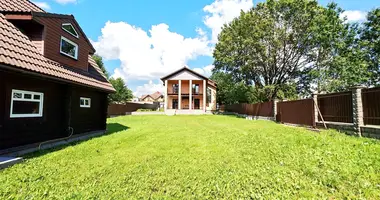
The land area is almost 7 acres, fenced, parking.
Within walking distance architectural sights of the royal city: City Park Jean Emmanuel Gilibert; Grodno Zoo, railway station; Cathedral of St. Francis Xavier; Cathedral of the Intercession of the Most Holy Virgin; Lutheran Church of St. John, where in the evenings there are mini concerts by organ of music on a mechanical organ, concerts of classical music and choral singing; Great Choral Synagogue; Grodno Palace – Stanislavovo, the former residence of the last king of the Polish-Lithuanian Commonwealth – Stanislav August Poniatovsky; Palace of the famous Quartetinsky family – Royal Medical Academy (now the oldest university in the Belarusian lands); The Puppet Theatre, the Oldest Pharmacy Museum; the two oldest water towers, and many other street objects of the Old Town.
For modern family life – a developed infrastructure with many social facilities.
The future owner of the building has the opportunity at his discretion to determine its purpose. On the one hand, it can be a beautiful home with history and soul in the city center. On the other hand, the building is an excellent investment commercial project, which can become a mini-hotel, office space, catering facility, medical center or have another purpose in accordance with the needs of the owner.