












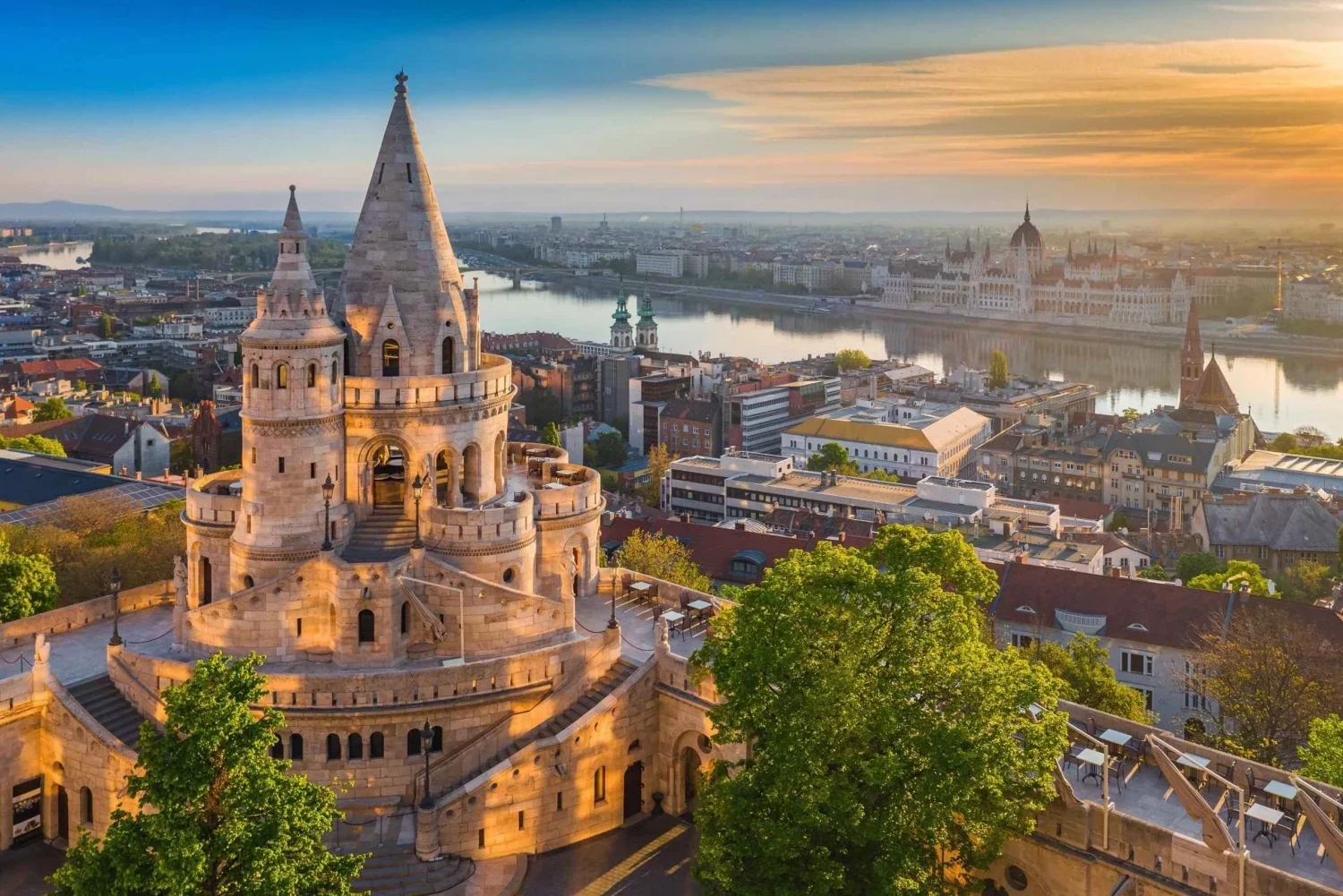


Budapest office market is emerging from a weak phase


📊 In Q4 2025, the vacancy rate in Budapest stood at 12.5%. This was 1.6 percentage points lower than a year earlier. According to Budapest Research Forum data for Q1 2026, the figure continued to decline and reached 12%.
🏙 This is an important signal for the market. After 2020, many companies reduced their office space due to remote and hybrid work. The situation is now gradually changing: more employers are bringing staff back to the office for at least part of the week, which supports occupancy in modern business centres.
📈 Budapest is also moving in the same direction as other capitals in Central and Eastern Europe. After vacancy rates increased in 2020–2023, many regional markets have started to show a decline in available office space. Based on current indicators, Budapest is close to Bucharest and Sofia, although it still lags behind Prague, where the vacancy rate is around 5.9%, as well as Warsaw.
🏗 Formally, new construction in Budapest remains significant. At the end of 2025, around 426,000 m² of office space was under construction in the city, equal to 9.6% of the existing stock. However, a significant part of these projects is intended for government institutions and will be purchased under a turnkey building model.
📌 This means that the impact of new construction on the open rental market will be limited. For private tenants, the supply of high-quality modern space may grow more slowly than the overall construction volume suggests.
🌱 At the same time, the market is becoming more selective. Companies increasingly choose modern, energy-efficient buildings that meet sustainability requirements. Older and less efficient properties, by contrast, continue to face persistently high vacancy rates.
🔑 The main factors currently shifting the balance in Budapest’s office market are:
— a decline in vacancy from 12.5% to 12%;
— the return of employees to offices after a period of active remote work;
— limited new supply for the private commercial market;
— growing demand for modern and energy-efficient buildings;
— gradual obsolescence of class B offices.
💼 The market may receive additional support from changes in Hungary’s economic strategy. The authorities are placing greater emphasis on developing high value-added services and attracting investors from Western Europe and the United States. If more service centres and business services companies enter the country, much of the office demand will be concentrated in Budapest.
🏦 The improving investment backdrop also plays a role. The yield on Hungary’s 10-year government bonds has declined from around 7% to 5.8%. This reduces the risk premium, supports investor perception of the country, and may increase the attractiveness of real estate compared with fixed-income instruments.
🏢 For owners of high-quality office buildings, this creates a stronger position. If demand continues to recover while new supply for the commercial market remains limited, the negotiating balance may gradually shift in favour of landlords.
📊 According to the review’s authors, in the next market cycles the vacancy rate in Budapest could fall below 10%. This scenario is possible if demand for modern buildings continues to grow, while outdated properties are gradually withdrawn from the market or adapted for other uses.
🏡 For investors, this means that Budapest is once again becoming a market worth watching closely. The most promising assets appear to be modern office buildings, properties that have undergone high-quality renovation, and real estate in locations with strong business activity and good transport accessibility.
🔎 You can explore real estate in Hungary for investment purposes or personal use on our website.
Posted at:
19/06/2026, 12:26


