










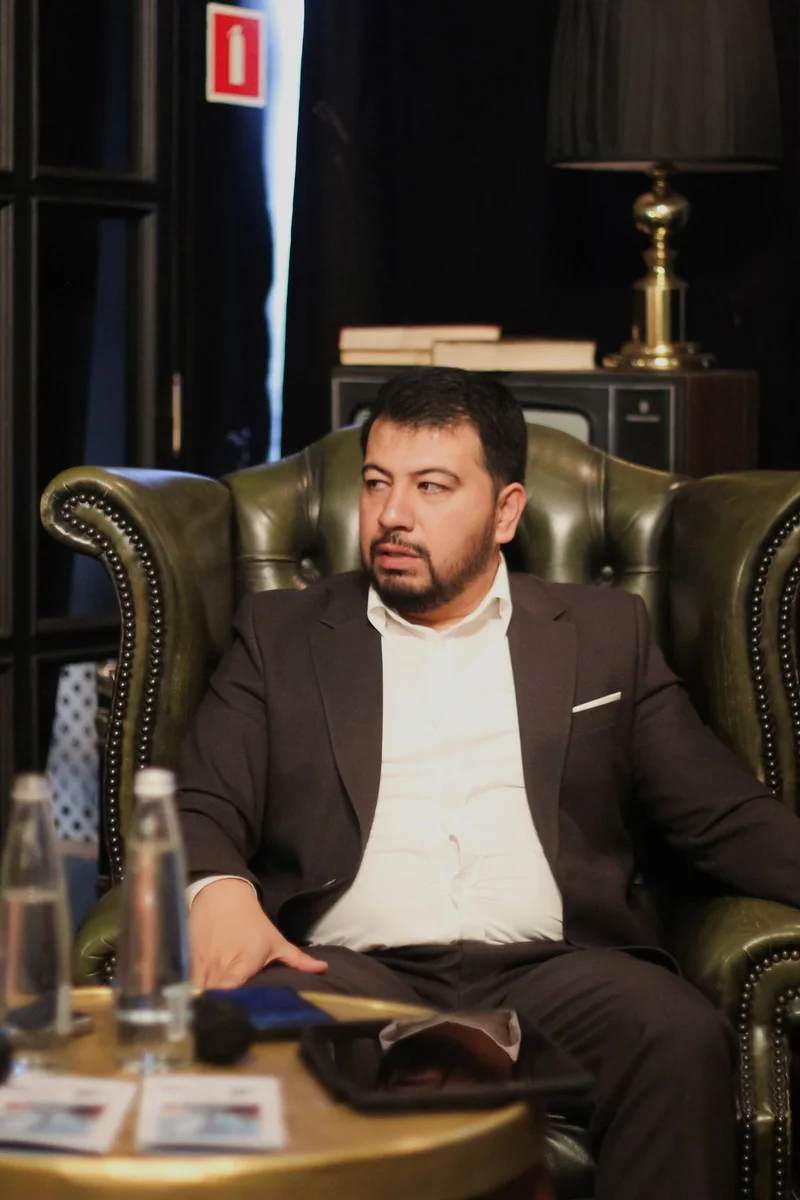
Dubai 2026: Where Capital Waits Out Volatility — Broker’s Perspective by Akmal Rustami


And I don’t see headlines — I see capital movement, decisions, and behavior under pressure.
With rising regional tension around the Strait of Hormuz, the same question keeps coming up:
Is this risk or opportunity?
The short answer is simple:
For an unprepared investor — it feels like risk.
For a structured investor — it becomes opportunity.
1. The system is adapting, not breaking
Yes, supply chains were affected and prices adjusted.
That is normal in any stressed environment.
But what matters is this: the UAE did not stall — it adapted.
Operations continue, supply remains stable, and the market is functioning without disruption.
This is the difference between fragile systems and structured ones.
2. Capital is not leaving — it is filtering
From real transactions, I see no exit from the market.
What I do see:
capital rotating from weaker assets into stronger ones
growing demand for liquid, income-generating properties
more rational and selective decision-making
This is not panic. This is filtration.
The market becomes sharper, not weaker.
3. Governance remains controlled and forward-looking
Daily life continues normally.
Infrastructure is stable.
Development plans, including Dubai 2040, continue on track.
This is not emotional reaction — this is structured execution.
4. Risk is not absent — it is managed
The UAE is not a “no-risk” market. No market is.
The difference is how risk is handled at a system level.
Even in a volatile regional environment, infrastructure, financial systems, and real estate activity continue with consistency.
That is the real advantage.
5. Where investors get it wrong
The biggest mistake is assuming: if the country is stable, every asset is safe.
That is not how this market works.
In this phase:
weaker projects lose liquidity first
overvalued assets slow down
selection matters more than timing
This is a quality-driven market, not a growth-at-any-cost market.
6. My role in this cycle
My job is not to present properties.
My job is to:
filter out non-liquid opportunities
focus on real demand-backed assets
define exit strategy before entry
Because in this environment, entry is not the risk.
The risk is entering without a plan.
7. Investor concern — and the real answer
I often hear from international investors:
“Dubai was always considered safe. Has that changed?”
The answer is simple.
The UAE has not become less stable.
It is operating in a more complex regional environment — without losing internal control or market continuity.
Risk exists everywhere.
The real question is not where it exists.
The real question is where it is managed.
And in Dubai, risk is managed through structure, not sentiment.
Conclusion
Dubai in 2026 is not a risk-free market.
It is a structured market operating under external pressure.
Capital does not disappear in environments like this — it becomes more selective.
And in that selection process, the market quietly separates noise from value.
The real question is no longer whether to invest in Dubai.
It is whether you truly understand what you are buying — and how you plan to exit it.
Because in this market, the mistake is not entry.
The mistake is lack of strategy.
— Akmal Rustami
Posted at:
22/04/2026, 11:42