











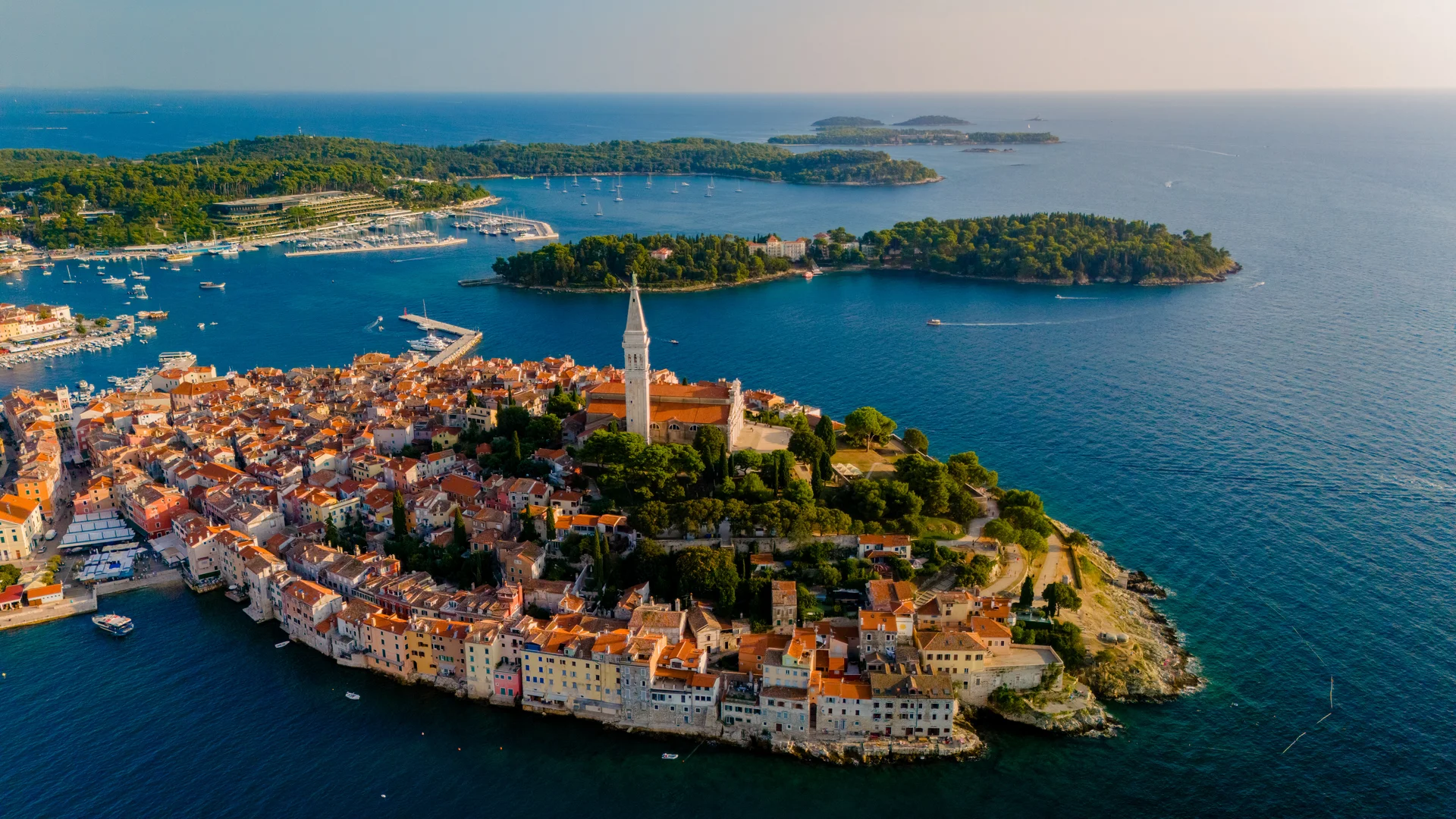


Croatia started 2026 with growth in tourist traffic


🏖️ The strongest result was recorded on the Adriatic coast. The region accounted for 12.2 million overnight stays, which is 8% more than a year earlier. Continental Croatia also showed growth, although at a more moderate pace, with overnight stays increasing by 3%.
🏠 For the real estate market, this is an important signal. Growth in the early season increases interest in properties that can generate rental income not only in July and August, but also in spring, early summer, and autumn. The longer the tourist season, the more sustainable the short-term rental model becomes.
📍 The strongest regions by overnight stays in the first five months of the year were:
— Istria: 4.1 million overnight stays;
— Split-Dalmatia County: 2.2 million overnight stays;
— Kvarner: 2.1 million overnight stays.
🌆 Among individual destinations, Dubrovnik, Zagreb, Rovinj, Split, Poreč, and Zadar led the market. This confirms that demand is distributed not only across seaside resorts. Zagreb remains an important urban destination, while the coast continues to serve as the main base for leisure, rentals, and second-home purchases.
👥 The key source markets for Croatian tourism remain Germany, the domestic market, Slovenia, Austria, the United Kingdom, and the United States. From January to May, German tourists accounted for 2.7 million overnight stays, Croatian tourists for 2.5 million, Slovenia for 1.3 million, Austria for 1.1 million, the United Kingdom for more than 670,000, and the United States for more than 540,000.
🏨 The accommodation structure shows where the main cash flow is formed. Hotels account for only 15% of total capacity, but generate 43% of all overnight stays. Private accommodation accounts for 52% of capacity, but generates 23% of overnight stays. This means that competition in the private sector remains high, so investors need to choose properties with a strong location, professional management, and clear demand.
🏡 Several types of properties remain especially attractive for investors:
— apartments in cities with stable tourist flows;
— seaside housing in Istria, Dalmatia, and Kvarner;
— properties in areas with year-round infrastructure;
— real estate suitable for short-term and medium-term rentals.
📊 Growth in overnight stays during the pre-season strengthens Croatia’s position as a destination not only for summer holidays. For property buyers, this reduces dependence on the two peak summer months and increases the value of properties that can operate for a larger part of the year.
⚠️ At the same time, the market remains price-sensitive. Croatian authorities have already pointed to more cautious demand for July and August compared with previous years. Tourism growth alone does not guarantee profitability. Returns will depend on the region, property format, management quality, seasonality, and competition in a specific location.
🔎 Current listings on Croatia’s real estate market are available on our website.
Posted at:
10/06/2026, 09:53


