











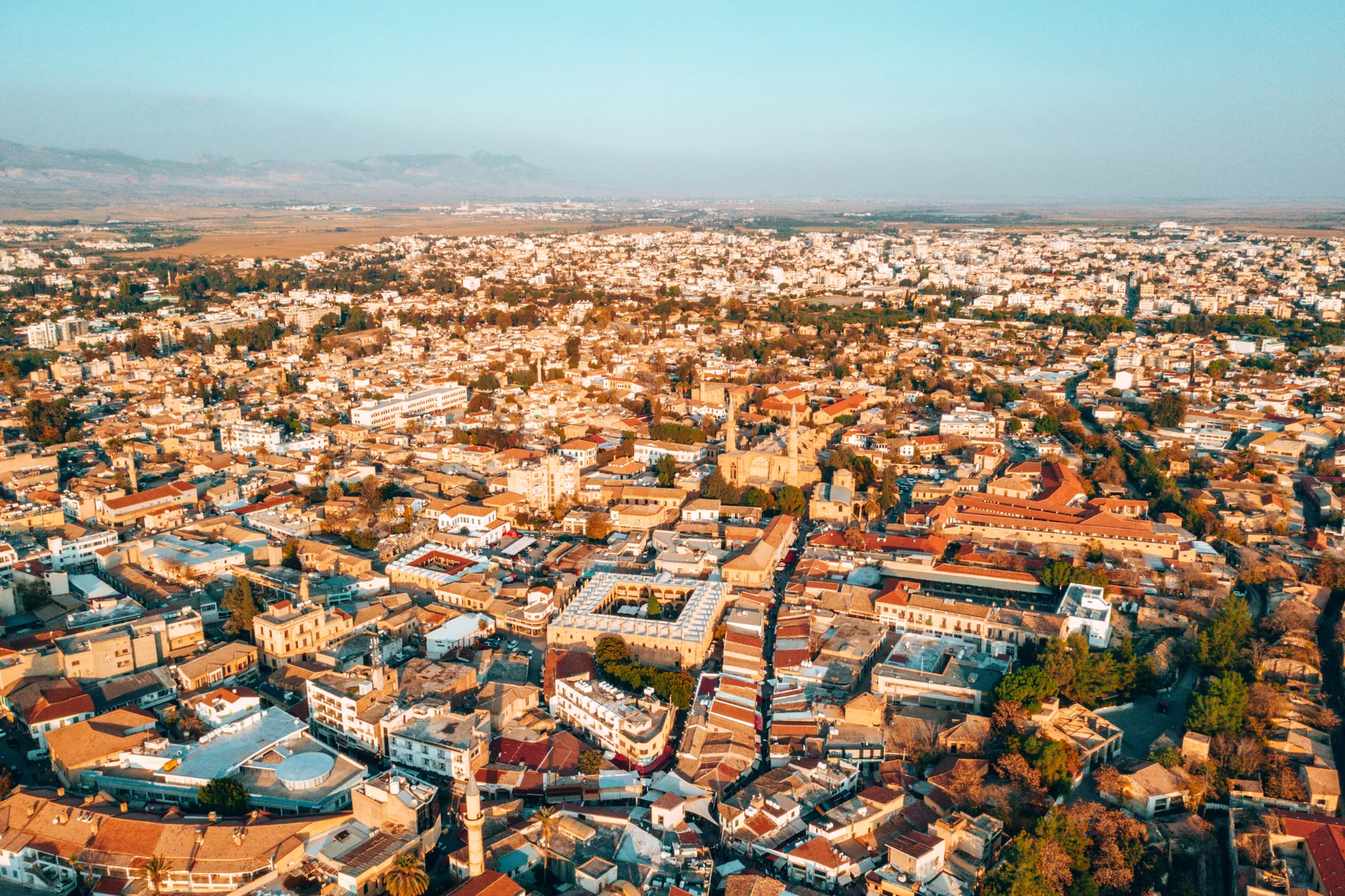

Nicosia Recorded the Highest Growth Among All Cities in Cyprus


For a long time, Nicosia was less visible to investors than Cyprus’s coastal cities. However, the 2025 data points to a shift in the structure of construction activity: the capital is strengthening its position as a center of new development, including in the residential segment.
💡 Nicosia’s growth is taking place against the backdrop of a broader recovery in Cyprus’s construction market. From January to October 2025, 6,490 building permits were issued across the island, compared with 5,955 during the same period in 2024. The total value of permits increased from €2.5 billion to €3.2 billion, reflecting the larger financial scale of new projects.
Licensed development area directly indicates the future volume of supply: the larger the approved area, the higher the potential delivery of new properties in the following periods. For the real estate market, this is a more practical indicator than the total number of permits, as it reflects the scale of projects, not only their quantity.
Construction activity in Cyprus after the first ten months of 2025:
— Nicosia recorded the highest growth in licensed development area: +45% year-on-year;
— a total of 6,490 building permits were issued nationwide;
— the total value of permits reached €3.2 billion;
— Nicosia and Limassol together accounted for 34% of the island’s total licensed development area;
— 84% of newly licensed development projects were in the residential segment.
💼 Nicosia is gradually moving out of the shadow of the coastal markets. Limassol, Larnaca, and Paphos have traditionally benefited from foreign demand, tourism, and premium housing, while the capital relies on a more stable urban base: employment, administrative functions, domestic demand, and the need for new housing.
The structure of new construction confirms this shift. According to PwC, 84% of newly licensed development projects in Cyprus are residential. This means that the growth in activity is linked not only to commercial real estate or infrastructure, but also to the expansion of housing supply. For Nicosia, this profile is especially relevant: demand here is shaped not by seasonal tourism, but by a permanent urban need for housing.
Other regions also showed growth, although at a more moderate pace. In Limassol, licensed development area increased by 35%, while Larnaca accounted for 19% of all licensed development area in Cyprus. Famagusta was the only district to record a decline, with the indicator falling by 15%. The report attributes this to a high comparison base after rapid expansion in construction activity a year earlier.
What this means for real estate investors:
— Nicosia is becoming a more visible market for buying property at early stages of the development cycle;
— the residential segment remains the main driver of new construction on the island;
— growth in approved development area may increase the supply of new apartments in the medium term;
— investors should assess not only the entry price, but also future competition from new projects;
— the capital may be attractive to buyers focused on stable urban demand, rather than only resort-driven liquidity.
⏱️ For investors, the news from April 20, 2026 is a fresh signal of redistribution in construction activity within Cyprus. Nicosia is showing a clear strengthening of its development cycle based on 2025 results. The 45% increase in licensed development area indicates that the capital is becoming a more significant market for new construction, especially in the residential sector.
Current listings in Nicosia, Limassol, Larnaca, and other cities across the Republic of Cyprus are available on our website.
Posted at:
27/04/2026, 06:53


