












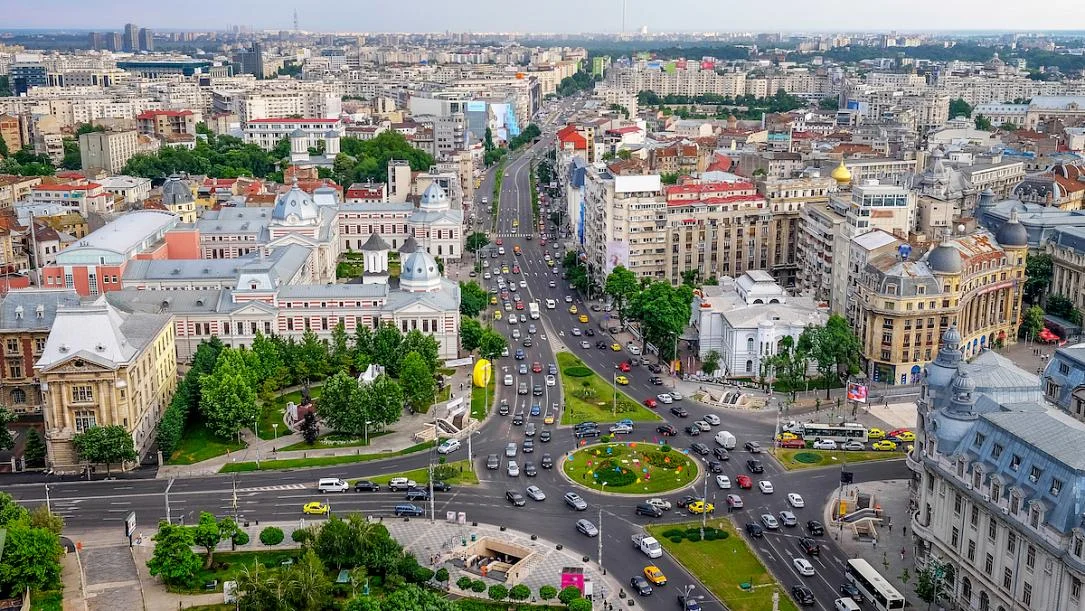


Romania Strengthens Its Position in the Short-Term Rental Market


This makes Bucharest a key destination for investors who view real estate not only as a property for personal use or long-term rental, but also as an asset with a recurring income model. Importantly, this is not a forecast or the launch of a new segment: the data published in April 2026 reflects an already established result for 2025.
💡 Bucharest’s performance confirms stable demand growth. In 2025, short-term rental revenue in the capital increased by 20% compared to 2024 and more than doubled the 2022 figure. The average number of properties on the market reached 5,507, which is 541 more than a year earlier.
This growth is linked to a combination of tourist, business, and event-driven demand. In 2025, Bucharest welcomed 2.06 million tourists, including more than 1.1 million international visitors. International tourist arrivals increased by 8% year-on-year, directly supporting demand for serviced apartments and short-term rental flats.
Major events also played a separate role. The strongest month for the market was September 2025, when Bucharest hosted the George Enescu International Festival. The event attracted more than 120,000 visitors, strengthening short-term housing demand during a period of increased urban activity.
Romania’s short-term rental market by the end of 2025:
— Bucharest led in total revenue with €66.8 million;
— Brașov became the leading regional market with €20.4 million in revenue;
— the average number of properties in Bucharest reached 5,507;
— in Brașov, the number of properties increased to 1,946, up 7% from 2024;
— Cluj-Napoca was among the largest regional markets, with 1,306 properties.
💼 Among regional destinations, Brașov held the strongest position. In 2025, short-term rental revenue there reached €20.4 million, while the average annual revenue per property stood at €10,471. This was the highest financial efficiency indicator among the regional markets covered in the Crosspoint Real Estate study.
Brașov’s advantage is linked to its year-round tourism profile. Unlike markets dependent on a single season, the city combines a historic center, proximity to mountain resorts, and stable domestic tourism. For investors, this reduces dependence on short peaks in demand and makes the short-term rental model more predictable.
Cluj-Napoca also remains an important regional market. In 2025, the city had 1,306 short-term rental properties, while average annual revenue per property reached €9,910. The city’s main driver is event-based demand: the Untold and Electric Castle festivals together attracted around 800,000 attendees.
Against this background, Romania’s short-term rental market is moving from simple supply growth toward a more professional model. According to Crosspoint Real Estate, demand for serviced apartments is growing steadily across all major urban centers, supported by domestic tourism, international visitors, and business mobility.
What this means for real estate investors:
— central areas of Bucharest retain strong potential due to the combination of tourism, business activity, and major events;
— Brașov looks like a strong destination for buyers focused on year-round tourist rentals;
— Cluj-Napoca remains a market where profitability depends heavily on the festival and events calendar;
— property management quality is becoming critical: results are influenced by the condition of the apartment, service, reviews, photos, flexible pricing, and the ability to work with high-demand dates.
Current listings in Bucharest, Brașov, Cluj-Napoca, and other cities across Romania are available on our website.
Posted at:
27/04/2026, 06:36


