











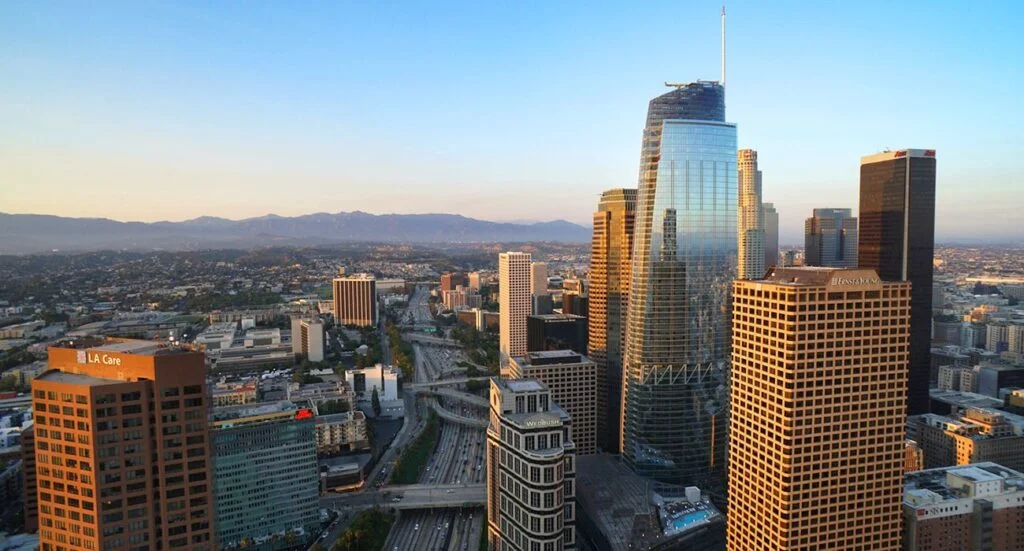


Los Angeles Allows Office-to-Residential Conversions Under New Rules


🏢 Previously, the adaptive reuse program mainly applied to buildings constructed before 1974 and was limited to specific areas, primarily Downtown. The updated version expands its geographic scope and lowers the eligibility threshold. Buildings that are at least 15 years old and located in certain commercial and mixed-use zones can now qualify under the simplified process.
The decision is driven by a sharp increase in office vacancy. More than 50 million square feet of office space in Los Angeles is currently vacant. The overall vacancy rate exceeds 20%. A significant portion of these assets no longer generates stable cash flow, leading to a decline in their market value.
📉 At the same time, the city faces a persistent housing shortage. High prices and limited new construction continue to put pressure on the rental market. This creates a structural imbalance, with an oversupply of office space and a shortage of residential units.
The updated rules reduce administrative barriers for conversion projects. Developments that meet the criteria can be approved at the departmental level without lengthy political procedures. This reduces regulatory risk and improves the predictability of project timelines.
📊 Early projects illustrate the potential scale of these changes. Jamison Properties is converting an office building into approximately 700 apartments. Another project involves redeveloping the former Sunkist Growers headquarters in Sherman Oaks into 95 residential units.
The economics of these projects are based on a change in asset function. Office buildings with high vacancy rates lose both income and value. After conversion into residential use, these assets can benefit from more stable demand and consistent rental income. Given the limited housing supply, this improves the investment profile compared to office use.
⚠️ Conversion is not a universal solution. High reconstruction costs, labor constraints, and local taxes remain key factors. In Los Angeles, Measure ULA increases the tax burden on large transactions, which affects overall project viability.
These changes reflect a broader shift in the market structure. Office real estate is losing its traditional role due to hybrid work, while demand for housing remains strong. Reusing existing buildings is becoming an alternative to new construction in cities with limited land and strict zoning.
📌 Los Angeles is shaping a model in which adaptive reuse becomes a tool for balancing the market. Converting offices into housing is evolving from isolated projects into a systemic strategy for both urban policy and real estate investment.
Posted at:
20/02/2026, 08:08


